


Blogpost keywords: clear mugs personalized, custom printed clear mugs, transparent personalized drinkware
Sourcing clear mugs personalized with a brand logo sounds straightforward until a buyer discovers that glass clarity, ink adhesion, and print precision vary wildly between factories. For procurement teams evaluating custom printed clear mugs, the real challenge is finding a supplier that delivers consistent results across an entire production run.
Why Clear Mugs Personalized Demand More Attention Than You Think
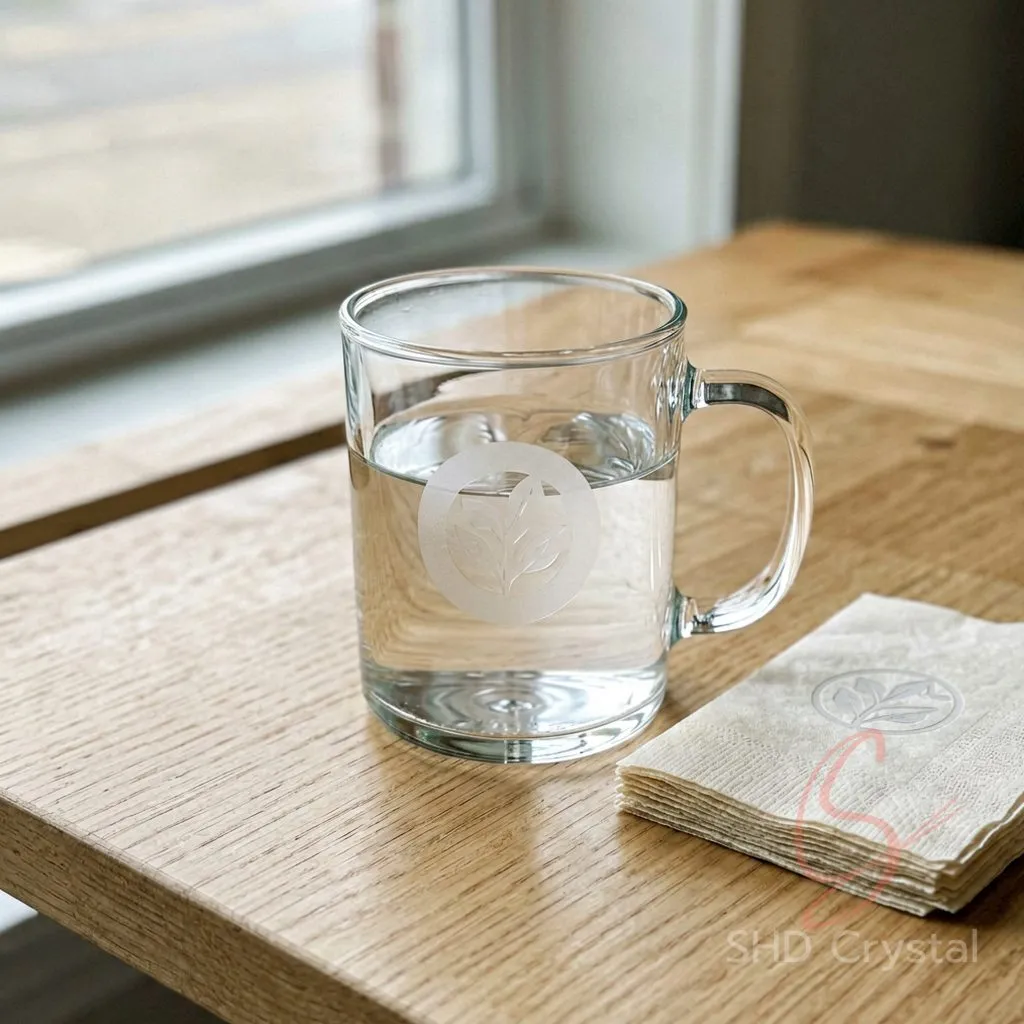
A transparent mug exposes everything: the quality of the glass, the sharpness of the print, and every surface imperfection. Unlike ceramic drinkware, where a thick glaze can mask flaws, clear glass leaves no room for error. Custom printed clear mugs demand precise surface preparation — a logo that looks crisp on white ceramic may appear distorted on a curved transparent wall if the factory uses low-viscosity ink or skips the pre-treatment step.
In practice, the difference between a good batch and a rejected one often comes down to glass composition and decoration method. A factory in the Boshan district of Shandong might produce soda-lime blanks for everyday use, while borosilicate lines handle thermal-shock-resistant orders. The decoration team may operate in a separate workshop — sometimes in a different town — creating coordination gaps that affect print alignment.
Decoration Methods Compared: What Works on Transparent Personalized Drinkware
Not all decoration techniques are equal on clear surfaces. The method a factory chooses determines durability, visual clarity, and per-unit cost.
Method | Best For | Main Risk |
Screen printing | Large runs, bold single-color logos | Ink peeling if surface prep is poor |
UV digital printing | Full-color designs, small batches | Higher cost; color drift between runs |
Laser engraving | Fine detail, permanent markings | No color; requires precise calibration |
Decal transfer | Complex multi-color artwork | Adhesion issues on curved walls |
Screen printing remains the most common choice for bulk orders of custom printed clear mugs because it balances cost and durability. Each color requires a separate screen, so a four-color logo means four passes. In-house lines manage this within a single shift, but outsourced decoration shops may introduce delays.
UV digital printing has gained ground for shorter runs because it eliminates screen setup. A hospitality group ordering 200 transparent personalized drinkware pieces might find UV printing the smarter move — lower minimums, faster turnaround. The trade-off: UV-cured inks can yellow slightly under prolonged exposure, a detail that rarely appears in supplier spec sheets.
Glass Quality: The Factor Most Buyers Underestimate
Soda-lime glass dominates the clear mug market because it is affordable and easy to form. But glass with higher iron content takes on a greenish tint visible against a white surface. Borosilicate offers better clarity and thermal resistance, but at a higher price point.
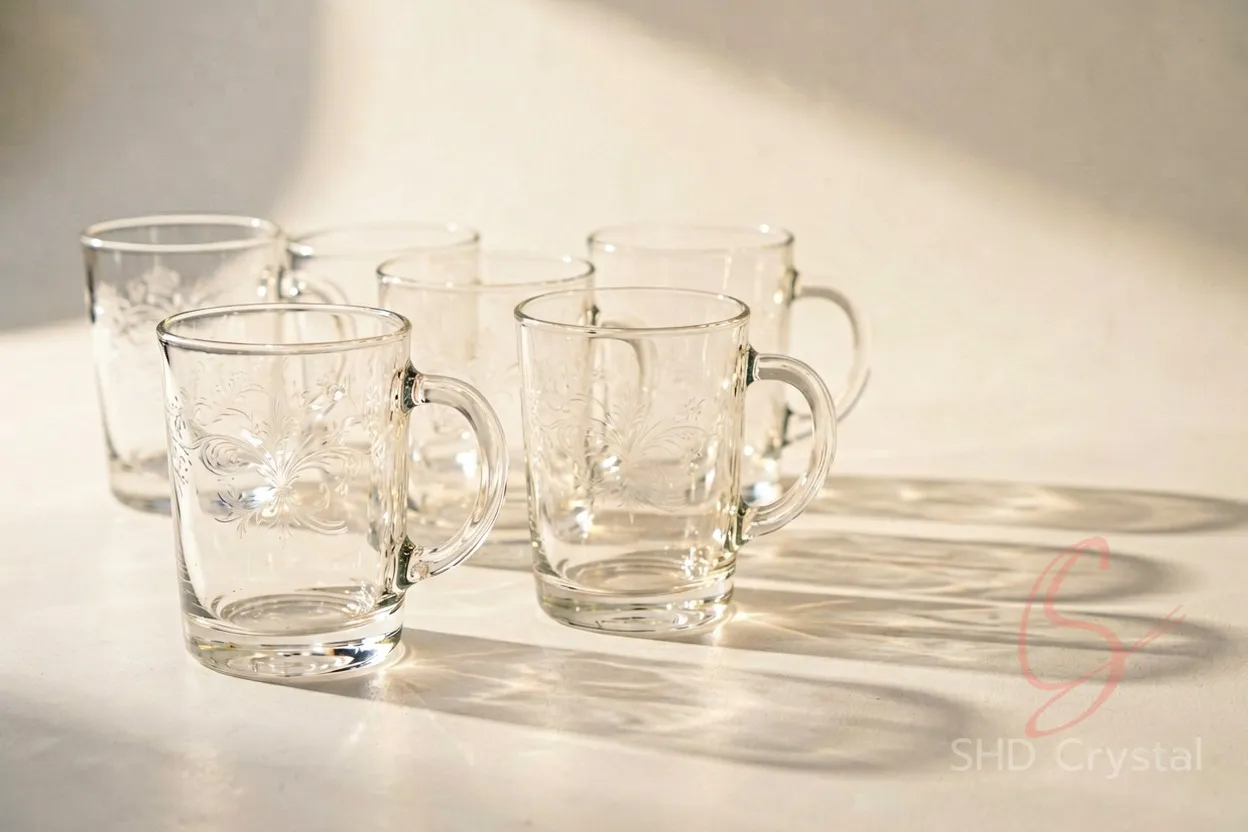
The real question is whether the end use justifies the upgrade. For corporate giveaways, soda-lime is usually adequate. For premium retail, the clarity difference is noticeable. Request samples under natural light before committing to a material specification for clear mugs personalized — it is worth specifying the glass type early in the RFQ.
MOQs, Lead Times, and the Hidden Cost of Small Orders
Minimum order quantities for clear mugs personalized from Chinese manufacturers typically start in the low hundreds. Screen printing demands higher MOQs because of tooling, while UV digital printing can accommodate smaller batches of transparent personalized drinkware. Suppliers often quote lead times from design finalization — artwork approval and sample confirmation can add days before production begins.
Packaging catches buyers off guard. Standard export packaging involves tissue wrapping, inner cartons, and corrugated outer cases. Premium gift packaging adds cost but transforms a commodity mug into a retail-ready product. The trade-off is worth specifying early in the RFQ process.
How to Evaluate a Supplier Before Placing an Order
Vendor evaluation for custom printed clear mugs should go beyond price quotes. Ask whether the supplier controls the full production chain — from blank forming through decoration to packaging — or uses subcontractors. Subcontracted decoration introduces communication gaps that show up as misaligned prints or inconsistent ink coverage.
Request defect-tier documentation and confirm AQL standards before issuing a PO. For transparent personalized drinkware, the most common defects include surface scratches, print misalignment, and dimensional variations in handle attachment — all things the receiving team should inspect on inbound shipment.
FAQ
What is the typical MOQ for clear mugs personalized with screen printing?
Most factories set MOQs starting around 500 to 1,000 pieces, depending on the number of colors. UV digital printing can accommodate smaller runs, sometimes as low as 100 pieces, though the per-unit price will be higher.
How does soda-lime glass compare to borosilicate for custom printed clear mugs?
Soda-lime is the standard for everyday drinkware — affordable and widely available. Borosilicate offers better thermal resistance and clarity but costs more. For most promotional and corporate gift applications, soda-lime is the practical choice.
What quality certifications matter when sourcing transparent personalized drinkware?
Look for ISO 9001 quality management certification and food-contact safety testing (FDA or EU compliance). For retail drinkware, LFGB testing for the German market is a useful benchmark even if the product will not be sold in Europe.
Can screen-printed logos on clear mugs withstand commercial dishwashers?
Screen-printed glass can survive commercial dishwashing if the ink is properly cured and the surface was correctly prepared. Request a wash-test sample and run it through several cycles before approving the full order.
Conclusion
Sourcing clear mugs personalized for corporate gifts, events, or retail requires more than comparing unit prices. The decoration method, glass composition, supplier integration, and packaging all shape the final product. Buyers who invest time in sample evaluation, AQL verification, and early artwork finalization consistently receive better results. The difference between a forgettable giveaway and a product people keep often comes down to sourcing decisions made before production starts.
Partner With a Team That Understands the Details
SHD Glassware works with procurement teams sourcing clear mugs personalized for brand promotions, hospitality programs, and retail distribution. Whether the order calls for screen-printed bulk runs or UV-printed short batches, their team can help navigate material selection, decoration trade-offs, and quality verification — so the finished product matches the specification, not just the sample.
If you are interested in our glassware or related products,
please feel free to contact us.

