


Blogpost keywords: custom glass cup with name, name engraved glassware, personalized glass cup set
A custom glass cup with name has become a popular choice for corporate gifting, wedding favors, and branded merchandise — but sourcing one at scale introduces variables most buyers do not anticipate. The engraving method, glass type, and factory workflow all influence the final product in ways that are difficult to reverse once a large batch has shipped.
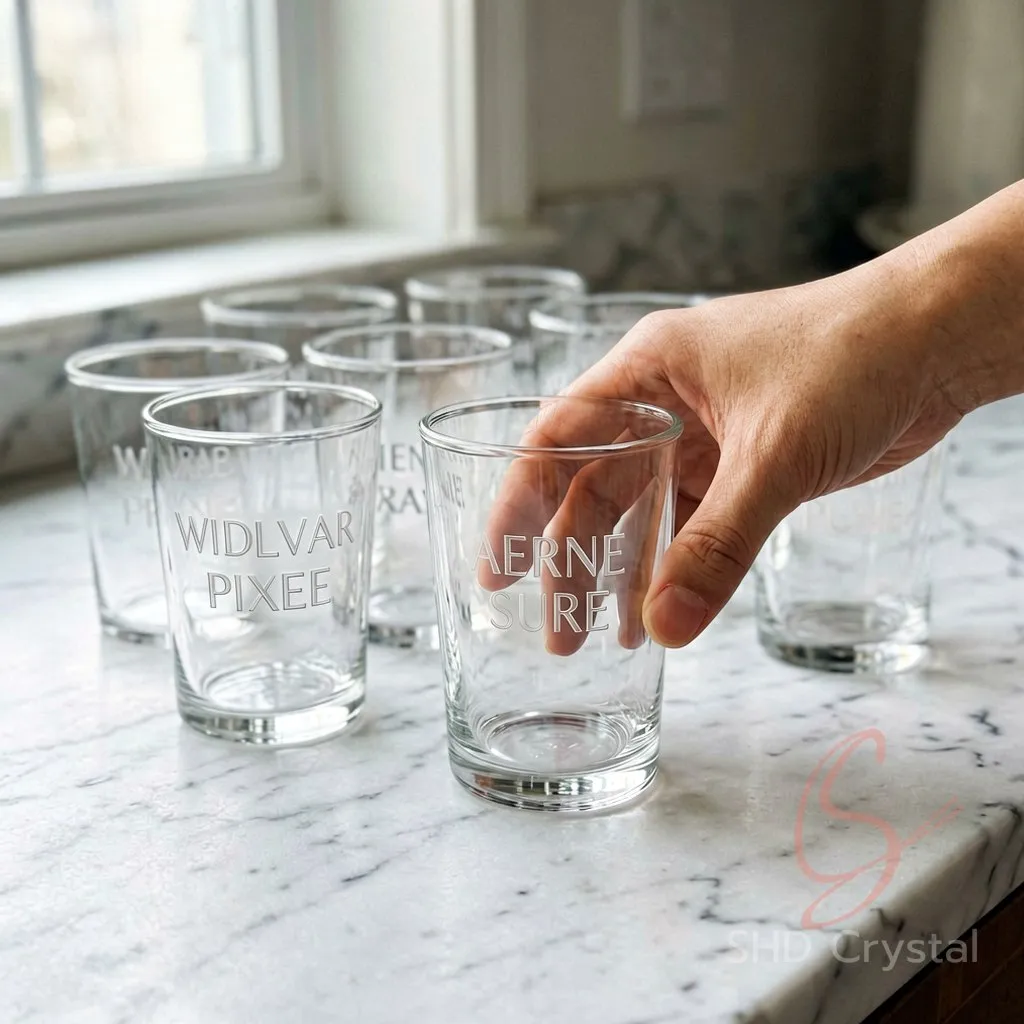
Why Custom Glass Cup with Name Orders Carry More Risk Than Standard Glassware
Personalization changes the production equation. Standard glassware follows predictable forming and finishing cycles, but personalized engraved glassware requires an additional decoration step that introduces alignment tolerances, font rendering issues, and surface-finish inconsistencies. A factory running a straightforward blank order on an IS machine can produce thousands of identical cups per shift. Add custom names to the workflow, and every cup demands individual attention — even if the engraving is automated.
The engraving method a factory uses matters more than many buyers realize. Sandblasting creates a deeper, more tactile finish that holds up under repeated washing, but it also carries a risk of micro-fractures on thin-walled glass. Acid etching produces a smoother, more uniform frosted look, though chemical concentration control on curved surfaces is demanding — a slight temperature drift in the acid bath can turn an even finish patchy. Laser engraving offers the finest detail and the cleanest lines, particularly for small fonts, but the per-unit cost rises noticeably when order volumes are moderate rather than high.
Engraving Method | Best For | Main Risk |
Sandblasting | Deep texture, bold branding on thick glass | Microfractures on thin-walled cups |
Acid Etching | Large batches needing smooth, uniform frost | Uneven opacity on curved surfaces |
Laser Engraving | Fine detail, small fonts, short production runs | Higher cost at moderate volumes |
In practice, the method that looks best on a single sample may not scale well. A procurement team evaluating samples should request test pieces from both a single-cavity mold and a multi-cavity setup — the difference in engraving consistency between the two can be significant.
Material and Manufacturing Variables Behind the Engraving
Glass material affects how engraving reads visually and how durable it proves over time. Soda-lime glass handles everyday use without complaint, borosilicate resists thermal shock if the cup will see hot liquids, and crystal offers the clarity luxury buyers expect. Each material makes a different trade-off between cost, resilience, and perceived value. Lead-free crystal is now the standard for food-contact applications, though some buyers still request lead crystal for specialty lines — a choice that carries regulatory implications worth discussing with the supplier early.
For high-volume personalized orders, material consistency across the batch matters as much as the engraving itself. A weight drift of several grams across cavities over a single shift is not unusual on older IS machines, and that variation can affect how deep the engraving appears on each cup. Buyers should verify whether the factory measures blank weight at the forming stage and whether that data feeds back into mold adjustments.
Quality Control During the Engraving Process
AQL sampling catches most gross defects, but subtle alignment issues and font rendering problems often slip through. A cup may pass a standard inspection yet still have a slightly off-center name that only becomes obvious when a customer holds it at arm's length. The better approach is usually to request a pre-production run of 10 to 20 pieces, inspect them under varied lighting, and test one or two through a full dishwasher cycle before approving the full batch.
Packaging is another area where personalized items face more risk than standard glassware. Scratches from glass-on-glass contact are common in poorly packed shipments, and a scratch across an engraved surface is more visible than one on plain glass. For international orders, double-wall corrugated cartons with individual cell dividers are worth specifying — the added packaging cost is modest compared with the expense of replacing scratched premium glassware.
Sourcing Name-Engraved Glassware at Volume
When a buyer needs a personalized glass cup set rather than individual pieces, the production logistics grow more complex. Engraving multiple names — each potentially different — means the factory must manage variable data without mixing up orders. Some factories handle this with a simple spreadsheet cross-referencing cup position to name; others use barcode tracking. Neither system is foolproof, and a beverage brand ordering 500 engraved glasses for a corporate event once discovered that two dozen cups had names swapped between batches — the supplier was outsourcing engraving to a separate facility with its own workflow.
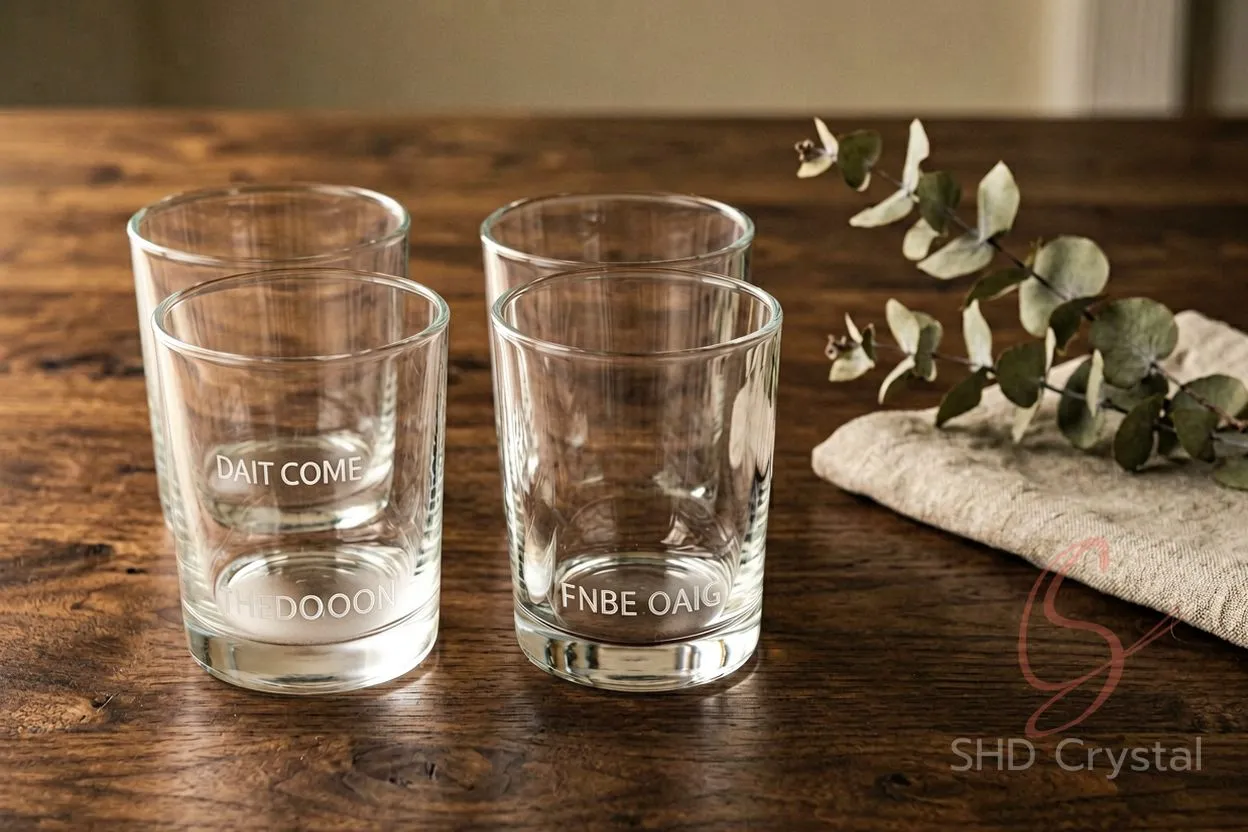
Chinese glass factories often separate the forming and decoration stages. Blanks may be produced in one workshop and sent to a specialized etching or engraving line in another town — sometimes in a different province. This split creates coordination challenges, particularly when quality standards differ between the two facilities. Buyers should ask directly whether decoration happens in-house or through a subcontractor, because the answer affects both lead times and consistency.
Inspection and Receiving for Engraved Orders
A typical receiving checklist for personalized glassware covers chip detection, scratch inspection, engraving alignment, font clarity, and overall surface finish. The receiving team should also verify that the engraving depth meets specification — shallow engravings may look acceptable initially but fade after repeated washing. Running a fingernail across the engraved area is a quick field check: a smooth transition suggests the depth may be insufficient for long-term durability.
FAQ
What is the typical MOQ for a custom glass cup with name from Chinese manufacturers?
Most factories set minimums between 300 and 1,000 pieces for engraved orders, depending on the complexity of the design and the engraving method. Laser engraving may allow lower minimums than sandblasting, since the tooling setup is simpler. Buyers should request a clear MOQ breakdown at the RFQ stage.
Is borosilicate glass worth the premium for name engraved glassware?
Soda-lime glass works well for cold beverages and general-purpose use, and it is significantly less expensive than borosilicate. Borosilicate is worth specifying if the cups will regularly hold hot liquids or face temperature swings — it handles thermal shock much better. For most corporate gifting and event applications, soda-lime is the practical choice.
What quality checkpoints matter most when inspecting a large engraved order?
Beyond standard chip and scratch checks, buyers should verify engraving alignment, font clarity, and engraving depth. AQL sampling catches major defects, but subtle misalignment requires a more hands-on approach. Pre-production samples are the most reliable way to confirm quality before committing to a full batch.
How do I reduce the risk of errors when ordering a personalized glass cup set with multiple names?
Request a proof sheet or digital mockup before production begins, and confirm each name against the source list. Ask the factory how they track variable data during engraving — barcode systems are more reliable than manual spreadsheets. A small pilot run of 20 to 30 pieces with a subset of names can reveal process issues before the full order is at risk.
Conclusion
A custom glass cup with name carries more sourcing complexity than a standard glassware order. Engraving technique, material selection, factory capability, and quality control all influence whether the final product meets expectations. Buyers who invest time understanding these variables before placing an order — requesting samples, verifying in-house versus outsourced decoration, and specifying packaging standards — consistently achieve better outcomes. The difference between a successful personalized glassware order and an expensive lesson usually comes down to preparation, not price.
Ready to Source Personalized Glassware for Your Next Project
SHD Glassware works with procurement teams evaluating custom glass cup with name options for corporate gifts, events, and retail lines. Whether you need name engraved glassware in small batches or a full personalized glass cup set for distribution, the team can help you navigate material choices, engraving methods, and supplier selection. Reach out to discuss your specifications and get guidance on the approach that fits your timeline and budget.
If you are interested in our glassware or related products,
please feel free to contact us.

