


Blogpost keywords: custom latte glass, wholesale coffee glasses, branded latte glassware
A custom latte glass that arrives with clean lines, consistent wall thickness, and a logo that survives daily washing is harder to source than most buyers expect. The tapered profile that makes a latte look good in the glass also makes mold development more complex. Procurement teams ordering wholesale coffee glasses for hospitality, retail, or branded promotions need to understand what separates a reliable supplier from one that delivers uneven results.
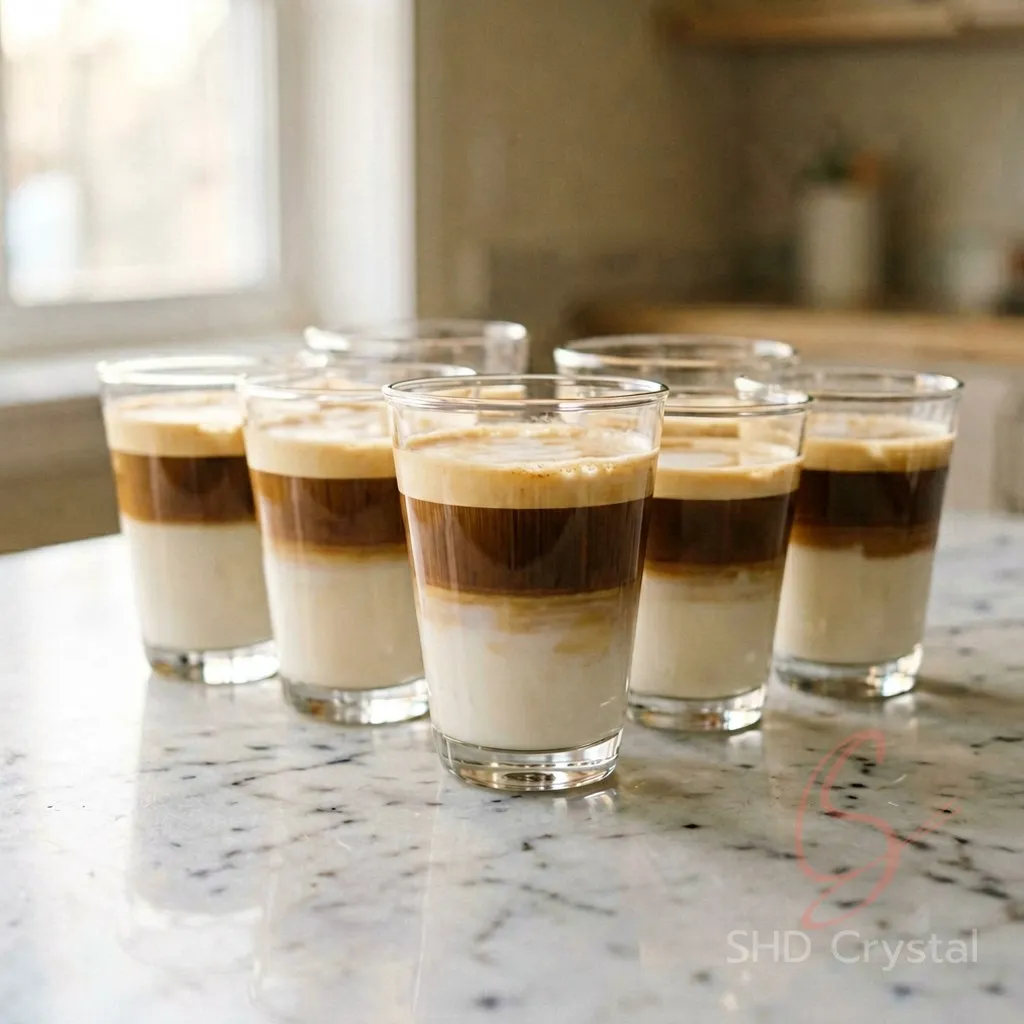
Material Selection for Custom Latte Glass Production
The two dominant materials for wholesale coffee glasses in this category are soda-lime and borosilicate. Soda-lime glass handles everyday cafe use, tolerates the thermal range of hot coffee poured into a room-temperature vessel, and keeps per-unit costs manageable for large-volume orders. Borosilicate offers superior thermal shock resistance — a latte glass can go from cold storage to a hot pour with less risk of cracking. The trade-off is higher material cost.
Crystal enters the picture for premium glassware destined for upscale restaurants or luxury retail. Lead-free crystal delivers the clarity and weight that signals quality without regulatory concerns. Crystal demands more careful handling throughout the supply chain, from factory floor to inbound inspection.
Wall Thickness and Thermal Performance
A common misconception is that thicker walls always mean better durability. In practice, a well-proportioned latte glass with proper annealing will outperform a heavy, thick-walled glass cooled too quickly during forming. The annealing process — controlled cooling that relieves internal stress — matters more than raw wall thickness.
Customization Methods for Branded Latte Glassware
Branding a latte glass requires matching the decoration method to the brand’s visual requirements, expected wash cycles, and order volume. The three primary approaches each carry distinct advantages and production risks.
Decoration Method | Best For | Main Risk |
Screen Printing | Large-volume orders, bold single-color logos | Edge wear visible after repeated dishwasher cycles |
Acid Etching | Permanent frosted finish, subtle branding | Uneven opacity on curved surfaces if bath concentration varies |
Laser Engraving | Fine detail, small to medium runs | Higher per-unit cost at volume, limited to single-color finish |
Screen printing is the most economical path for wholesale coffee glasses with straightforward logos. Acid etching produces a frosted effect that feels premium — run a fingernail across the etched edge, and a clean transition signals proper bath control. Laser engraving suits detailed brand marks where precision matters more than color variety.
Sourcing Pitfalls in the Wholesale Coffee Glasses Market
The biggest mistake procurement teams make when ordering custom latte glass is treating unit price as the primary decision factor. A low per-unit quote often hides trade-offs in glass quality, decoration durability, or packaging — and the cost of replacing a defective batch far exceeds the savings on a cheaper quote.
Chinese glass manufacturing clusters in Hebei and Shandong handle the majority of global production. Boshan district in Shandong has a long history of glassware manufacturing, while Hebei factories focus on daily-use glass. Many factories there separate forming from decoration — blanks are produced in one workshop and sent to a specialized etching line nearby.
What a Glass Supplier Will Not Tell You Upfront
A practical consideration that rarely surfaces in initial RFQ responses: mold age. After enough impressions, a mold cavity starts to show wear — subtle shifts in wall thickness or lip profile. A responsible supplier tracks mold life and rotates tooling before quality drifts, but not every factory does. Asking about mold maintenance schedules is a reasonable request.
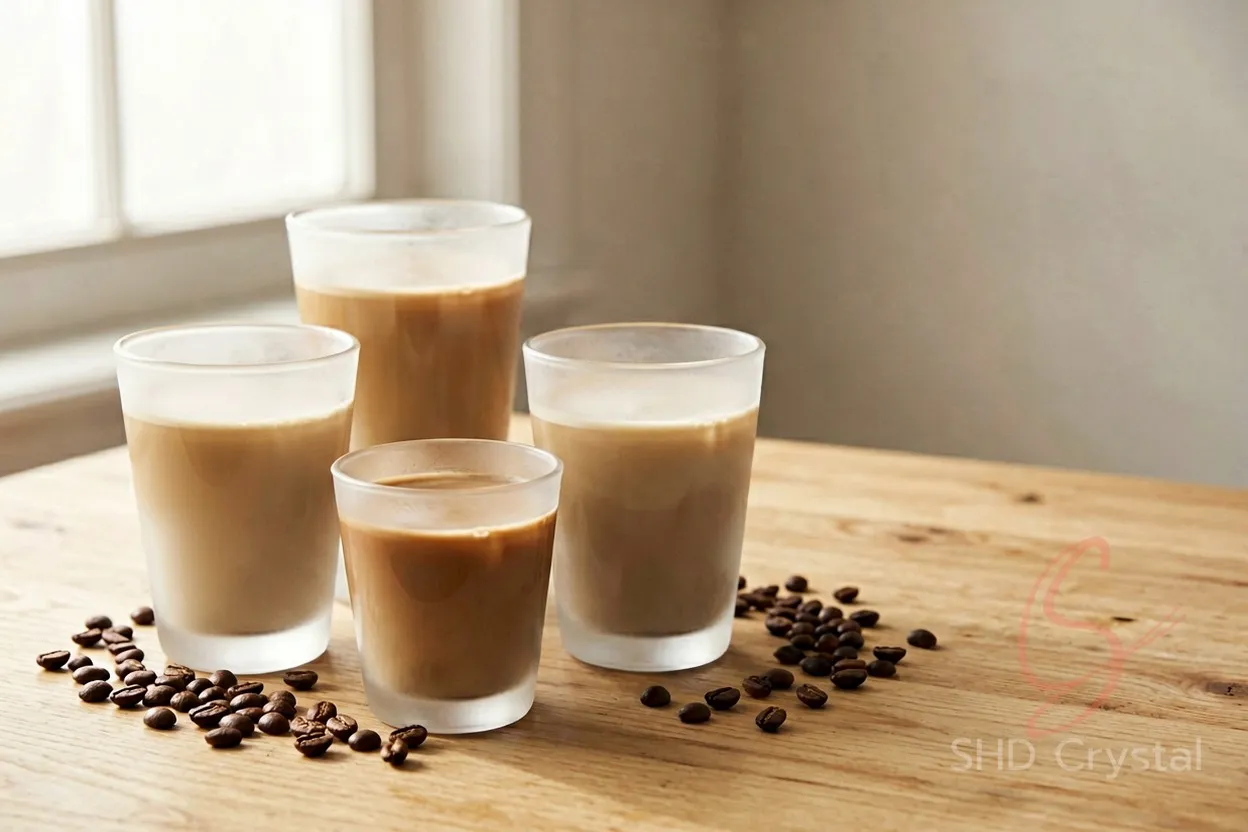
Quality Inspection and Lead Times
When evaluating suppliers for branded latte glassware, material certifications are worth requesting — particularly food-safety documentation for the glass composition and decoration materials. AQL sampling is standard practice for glassware orders; buyers should specify AQL 2.5 for critical defects or AQL 4.0 for cosmetic issues.
Standard production lead times typically run three to five weeks, depending on order complexity. Custom molds add development time before production begins. Building buffer into the schedule is a reasonable hedge against production uncertainty, particularly for orders tied to a product launch.
FAQ
What Is the Typical MOQ for Custom Latte Glass Orders from Chinese Manufacturers?
MOQs vary by supplier and customization complexity. Standard soda-lime latte glasses may have lower minimums, while custom molds or premium crystal options typically require larger commitments. It is worth asking about MOQ flexibility for initial trial orders.
How Does Soda-Lime Glass Compare to Borosilicate for Latte Glasses?
Soda-lime is more cost-effective and handles everyday cafe use well. Borosilicate offers better thermal shock resistance for environments with frequent temperature changes. The choice depends on the intended use case and budget.
What Quality Certifications Should I Look for When Sourcing Wholesale Coffee Glasses?
Food-safety certifications for the glass composition and decoration materials are essential. FDA compliance is standard for US-market products. ISO certifications indicate a factory’s quality management system, though they do not guarantee product quality on their own.
Can Branded Latte Glassware Survive Commercial Dishwasher Cycles?
It depends on the decoration method. Acid-etched and laser-engraved branding typically outlasts screen printing under commercial dishwasher conditions. Specifying dishwasher durability requirements during the RFQ stage helps suppliers recommend the right method.
Conclusion
Sourcing a custom latte glass that meets quality, branding, and budget expectations requires more than a price comparison across suppliers. Material selection, decoration method, mold condition, and lead time all influence the final result. Procurement teams who verify supplier capabilities and specify requirements clearly in the RFQ stage consistently receive better outcomes.
Start Your Latte Glass Sourcing Project
SHD Glassware works with procurement teams across hospitality, retail, and branded merchandise sectors to source custom latte glass solutions that match specific quality and branding requirements. Whether the project calls for high-volume soda-lime production or a premium branded latte glassware line in crystal, a detailed RFQ with material specs, decoration method, and lead time expectations will set the sourcing process on the right track.
If you are interested in our glassware or related products,
please feel free to contact us.

