


Blogpost keywords: cutting chai glasses wholesale, bulk chai glass cups, tea glass tumblers supplier
Sourcing cutting chai glasses wholesale sounds straightforward — until the first shipment arrives with inconsistent wall thickness, mismatched rims, and a finish that looks nothing like the samples. The problem is rarely the glass itself. It is the gap between what a buyer assumes about production and what actually happens on the factory floor.
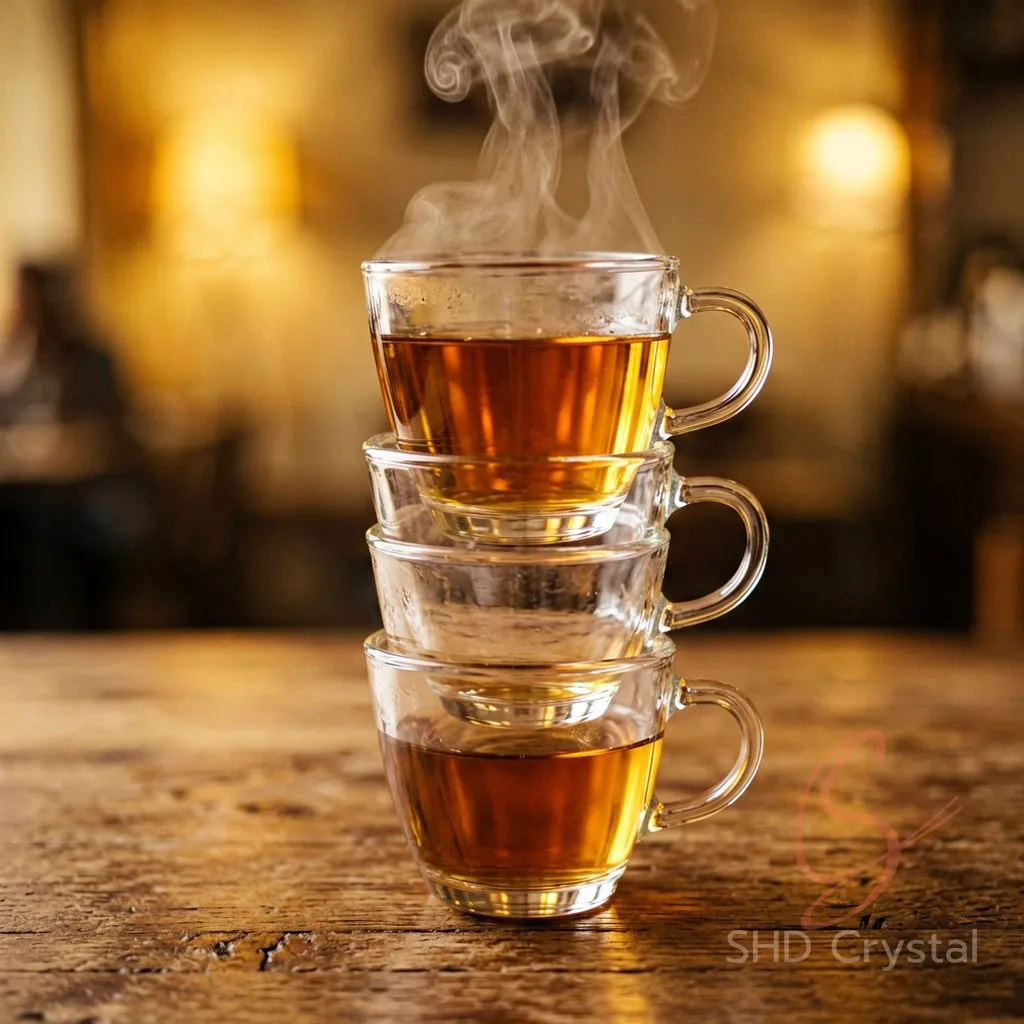
Why Cutting Chai Glasses Wholesale Demand More Attention Than Standard Tumblers
Chai glasses occupy a specific niche in the drinkware market. They are smaller than standard tumblers, typically holding 100 to 150 milliliters, and they carry a cultural expectation of clarity and weight that generic cups do not. A procurement team sourcing for a hospitality group or a specialty tea brand needs to understand that these glasses are not interchangeable with small juice glasses or cortado cups. The proportions, the lip feel, and the way light passes through the glass all matter to the end user.
In practice, the best results come from factories that produce chai-style glassware as a core product line — not as an afterthought alongside beer mugs or wine stems. A factory in the Boshan district of Shandong, for instance, may run dedicated molds for small-volume tea glasses, which means the cavity geometry and the annealing cycle are tuned for that specific shape. A generalist facility pressing the same mold across multiple product categories will typically produce wider variation in wall thickness and rim trueness.
Bulk Chai Glass Cups: Material Choices That Shape the Final Product
The material decision for bulk chai glass cups is not just about cost — it directly affects clarity, thermal resistance, and how the glass handles repeated commercial dishwashing. Soda-lime glass is the most common choice for everyday use, offering a reasonable balance between price and durability. Borosilicate glass brings better thermal shock resistance, which matters if the glasses will hold boiling masala chai directly from the stove. Crystal glass, whether lead or lead-free, delivers the optical clarity that premium tea houses expect, but at a higher price point and with more care required during handling.
How Material Choice Plays Out in Real Sourcing Decisions
Soda-lime glass handles everyday use well, borosilicate withstands thermal shock without cracking, and crystal offers the clarity luxury brands expect — each material makes a different trade-off between cost, durability, and perceived value. A tea brand targeting the mid-market might find soda-lime sufficient for retail sales, while a high-end chai bar would lean toward borosilicate to avoid replacement costs from thermal stress. The real question is not which material is best in the abstract, but which one fits the buyer’s actual use case and price tolerance.
Choosing the Right Tea Glass Tumblers Supplier
Not every supplier that lists chai glasses on their catalog actually understands the product. A practical consideration is whether the factory controls the full production chain — blank forming, decoration, and packaging — or relies on subcontractors for finishing steps. Factories that outsource decoration often have longer lead times and less control over consistency, because the blanks travel between workshops in different towns before reaching the final packing line.
Supplier Factor | What to Look For | Common Pitfall |
Mold ownership | Factory owns dedicated chai glass molds | Generic molds shared across product lines produce inconsistent proportions |
Annealing control | Dedicated annealing lehr for small glassware | Rapid cooling causes internal stress and spontaneous breakage |
Decoration capability | In-house etching, printing, or cutting | Outsourced finishing adds days and introduces handling damage |
QC protocol | Written AQL standards with defect tier documentation | No formal inspection — defects caught only at destination |
Lead times for chai glass orders typically run 20 to 25 working days from PO confirmation, though tooling and mold setup for custom shapes can add another week or two. Buyers should factor in pre-shipment inspection time, especially for orders going through third-party logistics. A responsible supplier will share their production schedule and allow a QC agent to inspect before the containers are sealed.
Customisation Options and What They Actually Cost
Customisation is where many buyers either save money or overspend without realising it. Acid etching produces a smooth, uniform frosted finish ideal for large batches, while sandblasting creates deeper texture but carries a higher risk of micro-fractures on thin walls. Laser engraving suits fine detail and small runs, though the per-unit cost rises sharply above a few thousand pieces. Screen printing is the most economical option for logos and branding, but the printed surface will show wear long before etched or engraved designs show any degradation.
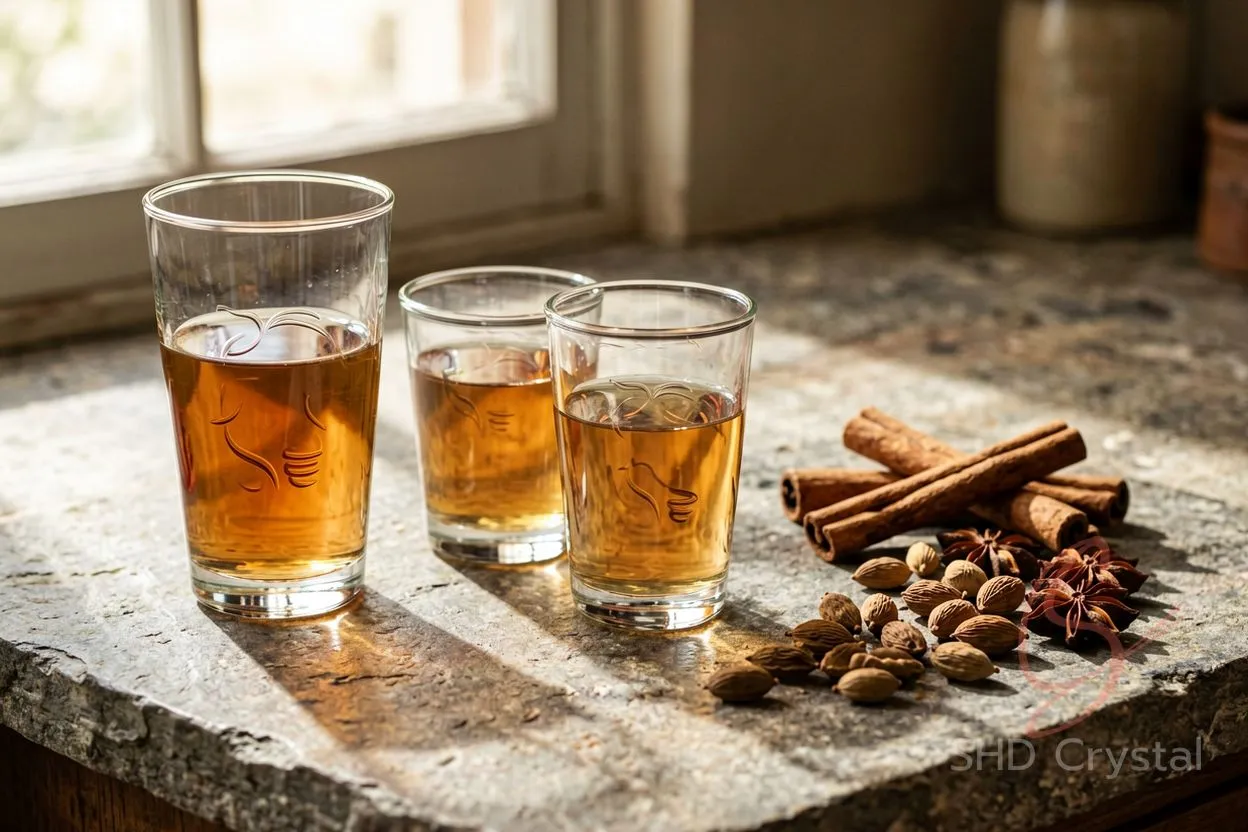
A hospitality group ordering chai glasses for a chain of cafés might find that screen-printed logos hold up well for two to three years under regular commercial dishwashing, while an etched design would last considerably longer — the difference is measured in years of service, not weeks. The trade-off is upfront cost versus lifecycle replacement, and the right answer depends on how the glasses will be used and how often the buyer wants to reorder.
Packaging and Shipping Considerations for Glass Export
Glass export packaging is a detail that separates experienced buyers from those learning the hard way. Inner cartons should be corrugated with individual cell dividers, not bubble wrap stuffed around loose glasses. Export cartons need a minimum burst-strength rating, and pallets should be shrink-wrapped with corner protectors. The added packaging cost is usually modest compared with the expense of replacing scratched or broken premium glassware on arrival.
FAQ
What is the typical MOQ for cutting chai glasses wholesale from Chinese manufacturers?
Minimum order quantities vary, but most factories producing cutting chai glasses wholesale accept orders starting at around 3,000 to 5,000 pieces per design. Custom shapes or unique finishes may require higher MOQs to justify tooling costs. Buyers with smaller volume needs should ask about stock mould options, which can reduce or eliminate tooling fees.
How do soda-lime and borosilicate compare for bulk chai glass cups?
Soda-lime glass is more affordable and adequate for most commercial tea service, but it is less tolerant of sudden temperature changes. Borosilicate glass handles boiling liquids without thermal stress, making it a better choice when glasses will be filled with piping-hot masala chai. The price difference is modest, but it compounds across large orders.
What quality certifications should a tea glass tumblers supplier provide?
Buyers should look for ISO 9001 quality management certification and food-contact safety compliance. FDA and EU food-contact standards are common requirements for export orders. A supplier with documented AQL inspection protocols and defect tier classification demonstrates a more mature quality system than one that relies solely on visual checks.
Can I order samples before committing to a full production run?
Most reputable factories offer pre-production samples, either from existing stock or as a small custom run. Sample fees are standard and often refunded against the first production order. Reviewing samples before placing a bulk order is a reasonable request and a smart move for any buyer new to a supplier relationship.
Conclusion
Sourcing cutting chai glasses wholesale is not just about finding the lowest per-unit price — it is about matching material, finish, and quality standards to the actual demands of the buyer’s market. The better approach is usually to invest time in supplier evaluation up front, verify quality through pre-shipment inspection, and build a relationship with a factory that understands the nuances of small-format tea glassware.
Start Your Sourcing Conversation
SHD Glassware works with procurement teams sourcing cutting chai glasses wholesale, bulk chai glass cups, and specialty tea glass tumblers supplier configurations for commercial and retail channels. Reach out to discuss material options, customisation possibilities, and lead times for your next order.
If you are interested in our glassware or related products,
please feel free to contact us.

