


Antique crystal bowls marketing works best when the product is presented as a deliberate style choice rather than simply "old-fashioned" glassware. In current retail, hospitality, gifting, and decorative tableware programs, buyers are often looking for pieces that combine nostalgic forms with cleaner production quality. Cut-style patterns, pedestal bases, scalloped rims, and heavy visual proportions can connect naturally with popular retro tableware, while high-transparency glass keeps the product bright enough for contemporary display.
Antique Crystal Bowls Marketing Starts With a Recognizable Visual Language
The strongest retro bowl collections usually share a few recognizable cues. Footed structures suggest formal dessert service. Fluted walls and repeating geometric cuts create stronger reflections. A wider rim gives fruit, desserts, or decorative arrangements more visual presence.
The goal is not to reproduce every historical detail. Too much ornament can make the bowl look costume-like. For popular retro tableware, buyers often respond better to a controlled combination of vintage proportions and cleaner surfaces.
Material clarity changes this balance. High-transparency glass allows deep patterns to remain visible without making the bowl feel visually heavy. Under natural light, the bowl can still carry a traditional shape while producing a cleaner, brighter impression that fits modern interiors.
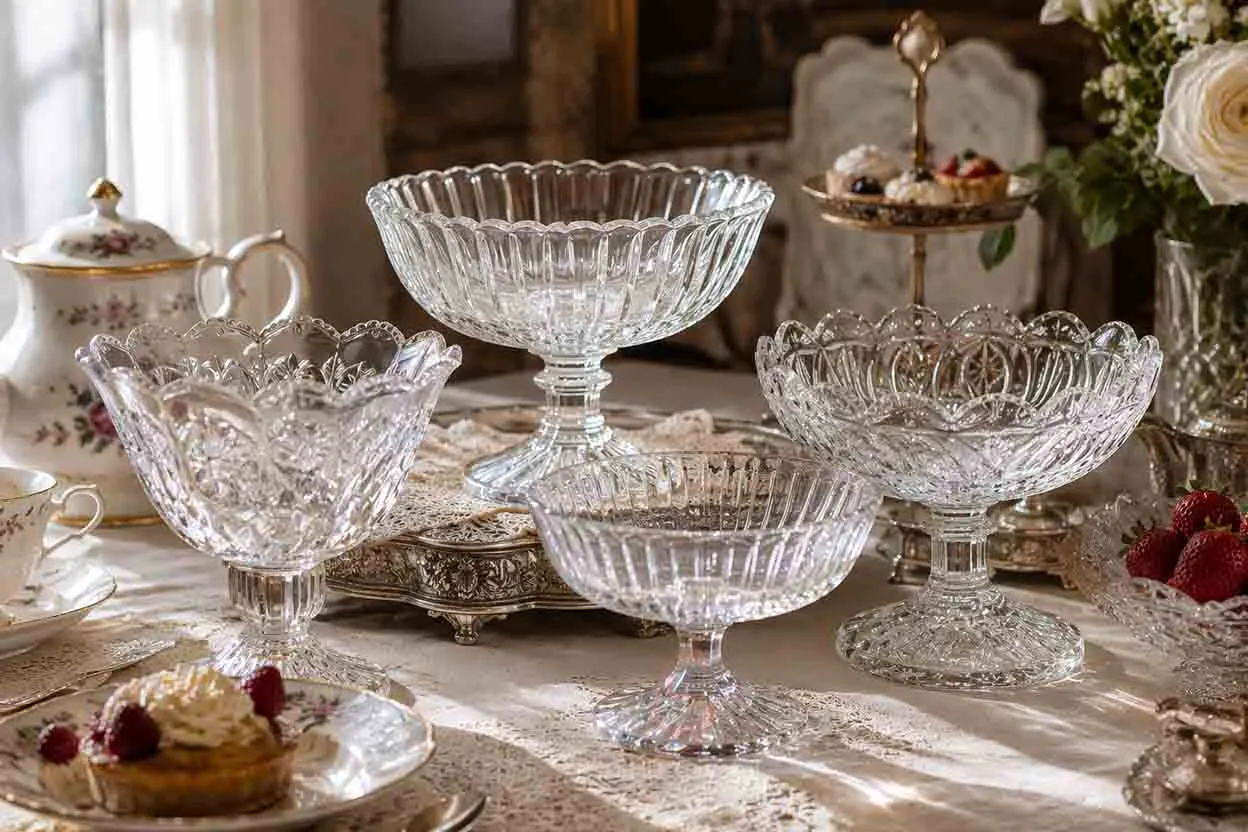
Retail Styling Changes How the Same Bowl Is Perceived
A crystal-style bowl can feel very different depending on context. On a lace-covered tea table, it reads as nostalgic. On a neutral stone surface with contemporary flatware, it can feel more editorial.
This is where antique crystal bowls marketing becomes a merchandising decision. Retailers and hospitality buyers should consider whether the bowl will be used for desserts, fruit, candy displays, gifting, or decorative centerpieces. The same silhouette can support different markets when photography and presentation are adjusted carefully.
A common mistake is assuming that retro styling depends entirely on amber or smoky color. Clear high-transparency glass can be just as effective because it emphasizes pattern depth, polished edges, and optical contrast.
Customization Usually Happens in Familiar Areas
For brands developing popular retro tableware, the most practical customization points are usually bowl diameter, pedestal height, rim profile, decorative pattern, and glass tone. These changes create visible differentiation without forcing the project into an unnecessarily complex structure.
Manufacturing still sets boundaries. Deep pressed patterns require stable mold definition. A thick foot combined with a thinner upper bowl creates a wall thickness transition that must be managed during forming and annealing. With high-transparency glass, surface defects and uneven polishing are also easier to notice, so clarity increases inspection expectations rather than reducing them.
FAQ About Antique-Style Crystal Bowl Collections
Q1: Does Antique Crystal Bowls Marketing Mean the Product Must Look Historically Exact?
No. Antique crystal bowls marketing can use recognizable retro cues such as pedestal bases, scalloped rims, and geometric patterns without reproducing a specific historical object. Modern collections often simplify these details for easier production and broader market use.
Q2: Why Is High-Transparency Glass Important for Retro Bowl Designs?
High-transparency glass makes pressed or cut-style details easier to see and allows light to travel through thicker decorative areas. It can give retro forms a cleaner appearance while preserving the reflective character associated with crystal-style tableware.
Q3: Which Features Are Most Commonly Customized in Popular Retro Tableware?
Popular retro tableware projects commonly adjust bowl size, foot height, rim shape, pattern depth, glass color, and surface finishing. These features usually provide enough visual differentiation while keeping the basic serving function practical.
Conclusion
antique crystal bowls marketing is strongest when retro styling, material clarity, and real serving use support the same product direction. Popular retro tableware does not need excessive decoration to feel distinctive; proportion, pattern control, and high-transparency glass can create a more convincing balance between nostalgia and current market presentation.
Developing Retro Crystal Bowl Collections With SHD Crystal
For brands planning antique crystal bowls marketing projects, SHD Crystal can support bowl design review, mold development, forming, annealing, polishing, inspection, and export packing. Early discussion of pattern depth, pedestal structure, glass clarity, and target market helps translate popular retro tableware concepts into more production-ready collections.

