


The apothecary jar has survived far beyond the old pharmacy shelf. Its recognizable combination of a clear or colored glass body, generous opening, and fitted lid now appears in home fragrance, candles, bath products, confectionery displays, decorative storage, hospitality interiors, and lifestyle collections.
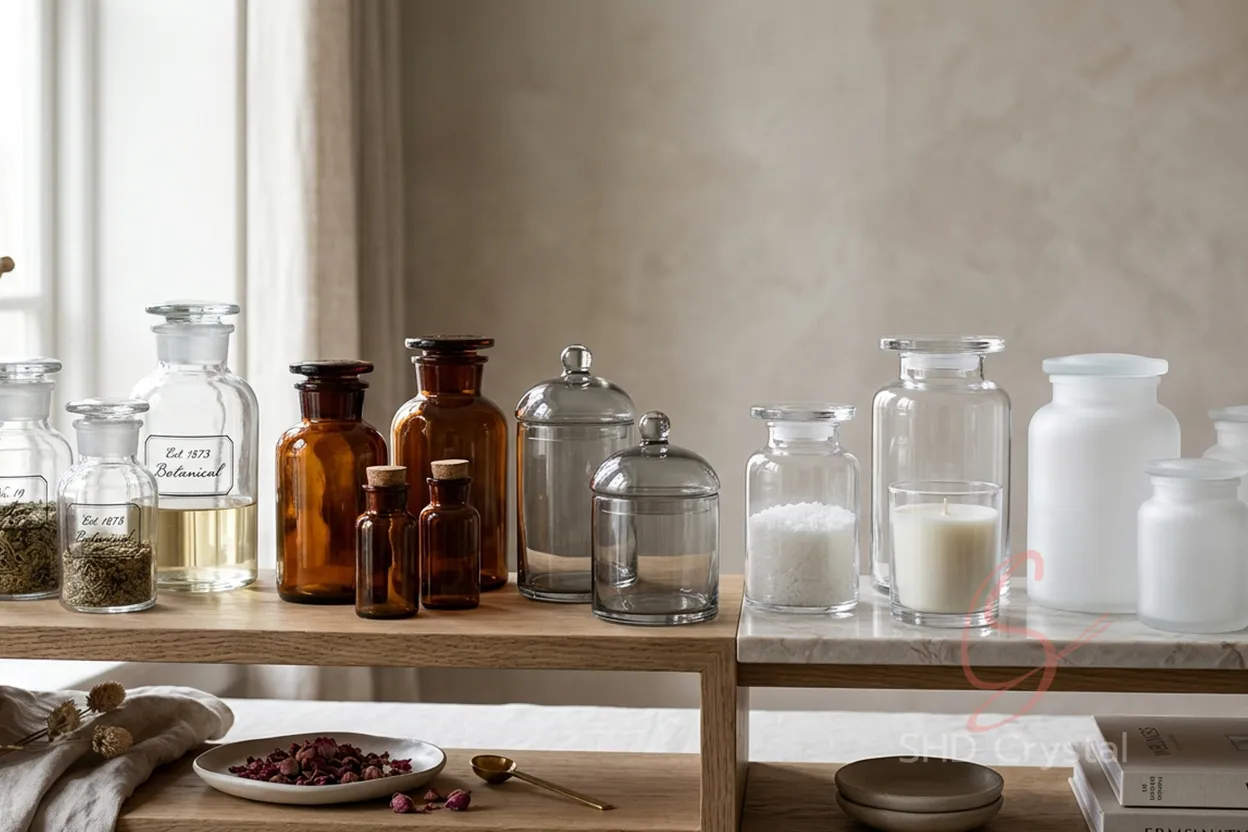
Apothecary Jars With Lids: Design, Markets and Future Use
The apothecary jar has survived far beyond the old pharmacy shelf. Its recognizable combination of a clear or colored glass body, generous opening, and fitted lid now appears in home fragrance, candles, bath products, confectionery displays, decorative storage, hospitality interiors, and lifestyle collections.
What keeps apothecary jars with lids relevant is not nostalgia alone. The form is visually familiar, easy to reinterpret, and flexible enough to move between decorative and practical uses. But once a classic silhouette becomes a commercial glass product, lid fit, weight, glass distribution, surface finish, and intended contents all need much closer attention.
Apothecary Jars With Lids Depend on the Relationship Between Body and Lid
The lid is what gives an apothecary jar much of its character. A domed lid with a tall knob creates a traditional pharmacy-inspired look. A flatter lid can make the same jar feel more contemporary. Heavy glass lids add visual substance, while mixed-material closures can shift the product toward home décor or premium lifestyle applications.
However, the lid cannot be designed independently from the jar. The rim diameter, lid seating area, wall thickness, shoulder proportion, and overall height all influence how the two pieces look and feel together. If the lid sits too high, the jar can appear unfinished. If the fit is too tight, normal handling becomes inconvenient. Too much movement can make the product feel unstable. For custom apothecary jars, the first useful sample is therefore usually the complete jar-and-lid combination rather than the body alone.
Classic Proportions Still Need Modern Production Control
Apothecary jars often look simple because the form is symmetrical, but large transparent surfaces make production differences easy to notice.
Wall distribution, rim geometry, mold definition, base stability, and annealing all influence the finished piece. A heavier lid introduces another dimensional relationship that needs to remain reasonably consistent throughout production.
The knob or handle on the lid can also become a visual inspection point. Its alignment, surface quality, and proportion become more noticeable because users naturally handle this area every time the jar is opened.
With glass apothecary jars, clarity can make these differences more obvious. Colored, frosted, or textured glass may soften some visual variation, but those finishes introduce their own consistency requirements.
The goal is not to remove every small characteristic of formed glass. It is to control the details that affect lid movement, stability, appearance, and repeatability.
Where Apothecary Jars Are Moving in Today's Market
The interesting part of this product category is how widely the same basic form can travel.
Home fragrance remains a natural direction. A larger apothecary-style jar can become part of the visual language of candles or decorative scent collections, although any jar intended for candle use still needs to be evaluated specifically for the intended thermal conditions rather than selected by appearance alone.
Bath and wellness collections use the form differently. Salts, powders, solid products, and decorative bathroom storage benefit from the wide opening and the familiar premium-container appearance.
In confectionery, dry-food display, and specialty retail environments, glass apothecary jars can create a more traditional presentation, provided the actual container and closure specification are suitable for the intended food-contact application.
Home décor is another important route. Some products are purchased almost as much for the jar as for what originally sits inside it. Once empty, the container may continue to be used for storage, display, flowers, craft materials, or small household items.
That longer visual life is one reason heritage-inspired glass forms continue to attract attention in modern packaging and product design.
Custom Apothecary Jars Can Move Between Vintage and Contemporary Styles
The basic silhouette does not force a brand into one aesthetic. Clear glass with a tall knob lid feels traditional. Smoke grey or amber glass can create a warmer interior style. Frosting reduces transparency and moves the product toward cosmetics or wellness. A restrained embossed detail can reference older pharmacy containers without reproducing them literally.
More contemporary custom apothecary jars may use simplified lids, cleaner shoulders, heavier bases, or subtle color instead of elaborate decoration.
This flexibility explains why the form continues to appear across different markets. The jar has a recognizable identity, but its final character depends heavily on proportion and finishing.
Decoration should still follow the glass structure. A coating that works well on a straight body may behave differently around curved shoulders or raised details. Printing and embossing also need enough stable surface area to remain visually balanced.
Sample Review Usually Reveals the Most Important Lid Details
Apothecary jars are a good example of why a rendering does not tell the whole story.
The lid may look perfectly proportioned in a drawing but feel heavier than expected in the hand. A knob may appear elegant from the front yet seem oversized once the complete jar is viewed from above. The contact between lid and rim may also need adjustment after several samples are opened and closed repeatedly.
Stacking is another issue when jars and lids are packed separately for production or shipment. Glass-to-glass contact should be considered carefully because raised knobs and polished lid edges create their own pressure points. These are usually small development issues rather than reasons to redesign the entire jar. Physical samples simply reveal where the original proportions need refinement.
The Next Challenge Is Balancing Decoration, Reuse, and Simplicity
The future of apothecary jars with lids will probably involve an interesting tension. On one side, brands continue to want distinctive colors, coatings, metallic effects, special lids, printing, and tactile finishes. These details help transform a familiar jar into something recognizable.
On the other side, consumers and packaging systems are placing more attention on reuse, recyclability, and material simplicity. Glass itself can be repeatedly reused and recycled, but complex decorations or mixed-material components may make that circular story less straightforward.
Weight creates another challenge. Traditional apothecary jars often gain part of their visual appeal from thick glass and substantial lids, yet excessive weight increases material use, handling burden, and transportation cost. Future designs will therefore need to answer a more difficult question:
How much glass and decoration are actually necessary to preserve the character of the jar?
The strongest designs may not be the heaviest or most elaborate. They may be the ones that keep the recognizable apothecary silhouette while using proportion, color, lid design, and restrained decoration more intelligently.
Conclusion
Apothecary jars with lids have moved far beyond their historical pharmacy associations. Today they sit comfortably across home fragrance, wellness, decorative storage, specialty retail, hospitality, and lifestyle product collections.
Their continued appeal comes from a useful combination: a recognizable glass form that can still be redesigned in many different ways.
For custom apothecary jars, the details that matter most remain surprisingly practical—lid fit, rim structure, weight balance, glass clarity, surface finishing, and repeatability. As markets place more attention on reuse and material simplicity, glass apothecary jars will also need to balance their decorative heritage with lighter, more thoughtful, and more adaptable design.
Developing Apothecary Glassware With SHD Crystal
SHD Crystal supports the development of custom apothecary jars through jar and lid structure review, mold development, sampling, glass color and surface finishing, inspection, and repeat production.
For projects involving apothecary jars with lids, we recommend reviewing the jar body and lid as one complete glass product from the beginning. That makes it easier to evaluate proportion, fit, weight, finishing, and intended use before the design moves into regular production.
FAQs
Q1: Are Apothecary Jars With Lids Airtight?
Not necessarily. A fitted glass lid can provide a stable cover, but it should not automatically be treated as an airtight or hermetic seal. If the contents require stronger protection against moisture, air, or leakage, the closure structure may need an additional gasket, liner, or other sealing component. The required sealing level should be confirmed according to the actual product.
Q2: How Should Brands Choose the Capacity of Custom Apothecary Jars?
Capacity should be considered together with product density, intended fill level, opening diameter, overall jar proportions, and how the container will be displayed or handled. For custom apothecary jars, two containers with similar nominal capacity may feel very different depending on body width, height, and lid size, so physical samples are useful before final dimensions are approved.
Q3: Can Glass Apothecary Jars Be Designed for Frequent Opening and Closing?
Yes, but frequent use places more attention on rim smoothness, lid handling, knob shape, and the contact between the lid and jar body. For glass apothecary jars intended for everyday storage or hospitality use, the lid should be comfortable to lift repeatedly without creating unnecessary glass-to-glass impact or awkward handling.
Q4: What Should Be Considered When Adding Labels or Printed Graphics to Apothecary Jars?
The usable decoration area depends on the jar profile. Strong shoulder curves, embossed details, and changes in diameter can limit label placement or make printing more difficult to keep visually consistent. For apothecary jars with lids, artwork should also be reviewed together with the lid proportion so branding does not make the complete container look visually top-heavy or crowded.

