


Applications of borosilicate glass are closely connected with one defining material advantage: relatively low thermal expansion. Compared with ordinary soda-lime glass, borosilicate is better suited to situations involving temperature change, chemical exposure, or lightweight glass structures. This is why the material appears not only in laboratories, but also in drinkware, cookware, lighting, pharmaceutical containers, and technical glass components.
Applications of Borosilicate Glass Depend on Thermal and Chemical Performance
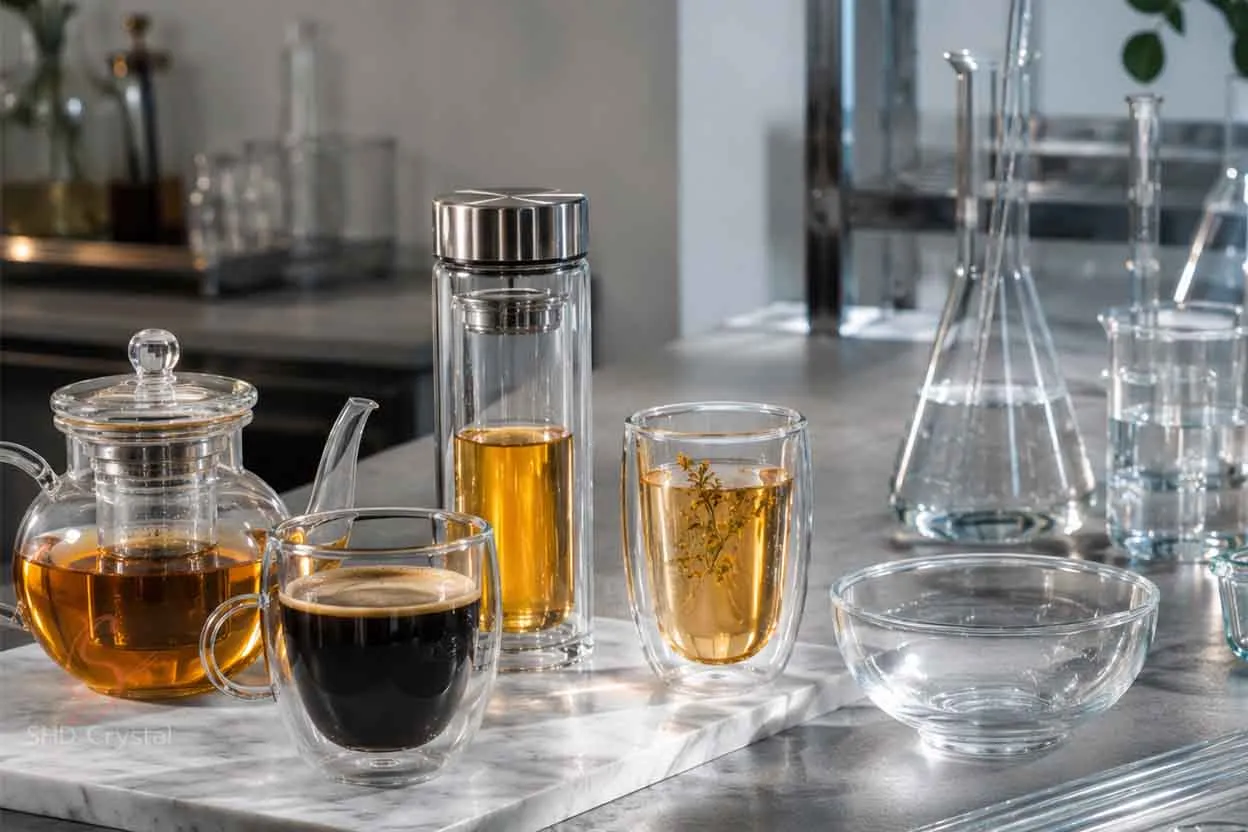
One of the most familiar uses is borosilicate glassware for tea, coffee, and hot beverages. Thin tea cups, coffee servers, kettles, and double-wall glasses benefit from the material's ability to tolerate temperature changes more effectively than conventional glass.
This does not mean every drinking glass needs borosilicate. A heavy whiskey tumbler or decorative charger plate may gain little from the additional thermal performance. Material selection still needs to match the actual product.
Tea, Coffee, and Double-Wall Drinkware
Modern borosilicate glassware is particularly common in products where transparency and lightweight construction are both important. Double-wall cups are a good example. The inner and outer glass layers create thermal separation while keeping the drink visible.
For manufacturers, these thin structures require good forming control. Wall thickness, sealing quality, and annealing behavior all affect the finished product.
Laboratory and Pharmaceutical Glass
Laboratory equipment remains one of the best-known applications of borosilicate glass. Beakers, flasks, tubes, and other vessels may encounter heat, chemical substances, and repeated cleaning. The same material properties also support selected pharmaceutical packaging and technical containers. In these areas, heat resistant glass products are chosen because performance requirements are more important than decorative weight or brilliance.
Cookware and Food Preparation
Bakeware, measuring vessels, kitchen containers, and some food-preparation products also use borosilicate glass. Here, thermal performance becomes directly relevant because the product may move between different temperature environments.
However, the final suitability still depends on the complete product design. Glass thickness transition, forming quality, edge condition, and intended temperature range all matter. Calling a product "borosilicate" alone does not guarantee unlimited thermal-shock resistance.
Lighting and Technical Components
Another less obvious category is lighting. Transparent tubes, lamp components, protective glass parts, and certain technical lighting structures can benefit from thermal stability and dimensional consistency.
In these heat resistant glass products, the material may need to remain stable near a heat source while maintaining optical clarity. This gives borosilicate an advantage in applications where ordinary decorative glass may not provide the required thermal behavior.
When Borosilicate Is Not Necessary
One common misconception is that borosilicate is automatically a more premium choice for every glass product.
It is not.
For decorative bowls, wine glasses, charger plates, heavy tumblers, or bottles used under normal temperature conditions, soda-lime glass may provide greater forming flexibility and a better cost-to-appearance balance. Borosilicate glassware makes the most sense when its material properties solve a genuine functional requirement.
Conclusion
The most valuable applications of borosilicate glass are found where low thermal expansion, chemical durability, transparency, and lightweight construction directly improve product performance. From hot-drink vessels and laboratory equipment to cookware and technical components, the material earns its place through function rather than material prestige.
Developing Borosilicate Glass Products
For brands evaluating applications of borosilicate glass, SHD Crystal can support product development according to vessel shape, wall structure, thermal-use requirements, finishing expectations, and production feasibility. Selecting borosilicate for the right heat resistant glass products helps ensure that material performance supports the intended application rather than adding unnecessary complexity.

