


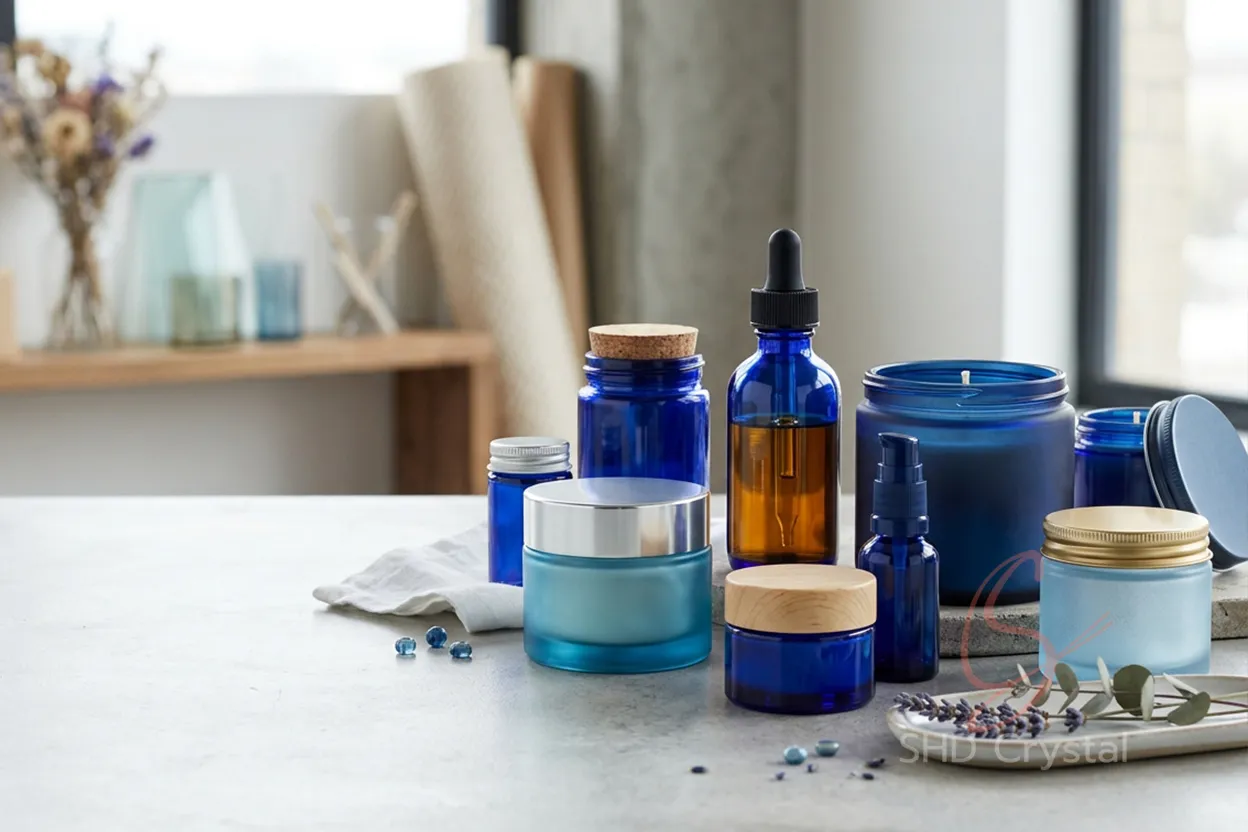
Color can turn a glass container into a recognizable part of a product line before a customer even reads the label. Among colored container options, blue glass jars offer a distinctive combination of transparency, depth, and visual identity that can work particularly well for skincare, wellness, aromatherapy, candles, and premium specialty products.
Blue Glass Jars for Custom Packaging Development
Color can turn a glass container into a recognizable part of a product line before a customer even reads the label. Among colored container options, blue glass jars offer a distinctive combination of transparency, depth, and visual identity that can work particularly well for skincare, wellness, aromatherapy, candles, and premium specialty products.
For brands developing custom glass jars, however, selecting blue is more than a styling decision. Color depth, glass thickness, jar shape, closure coordination, surface decoration, product application, and production consistency all influence whether the finished container can support both brand presentation and commercial production.
Blue Glass Jars Combine Brand Identity With Manufacturing Requirements
The visual character of blue glass jars depends on more than a color reference selected on a screen. The appearance of the finished jar is influenced by glass composition, material distribution, wall thickness, transparency, lighting, and the shape of the container itself.
A deep blue jar with thicker walls may appear darker in some areas, while a thinner or more transparent structure can create a brighter visual effect. Curved shoulders, heavy bases, and wide jar bodies can also change how light travels through the glass. For this reason, a color reference should usually be treated as the beginning of the development process rather than the final production standard.
Physical samples give brands a better opportunity to evaluate color depth, transparency, shape, and how the jar appears when empty or filled with the intended product.
Where Blue Glass Jars Fit in Different Sales Markets
Blue glass has developed a useful position in markets where packaging needs to communicate more than basic containment.
In skincare and personal care, blue containers can create a clean, calm, clinical, or premium impression depending on the shade, jar geometry, and closure design. Colored glass is also increasingly used as a visual differentiator in premium beauty packaging, where container appearance contributes directly to brand positioning.
Aromatherapy and wellness products are another natural application. Cobalt and deep blue glass are commonly associated with essential oils, botanical products, calming formulations, and apothecary-inspired presentation. This gives brands an alternative to the more traditional amber packaging commonly seen in the same category.
For candles and home fragrance products, a blue jar can become part of the decorative object itself. Once the product is placed in a bathroom, bedroom, hotel room, spa, or living space, the container remains visible as part of the environment. This makes color, glass thickness, surface finish, and closure or lid selection important parts of the product experience.
Premium gift, boutique lifestyle, and specialty product lines can also use blue glass when brands want stronger shelf recognition without relying entirely on printed graphics.
Different Audiences Respond to Blue Glass in Different Ways
The same blue jar does not communicate exactly the same message to every market. For premium skincare audiences, darker blue tones combined with restrained printing, matte closures, or frosting can create a controlled and sophisticated appearance. For wellness and aromatherapy products, transparent cobalt or ocean-blue tones may communicate freshness, calmness, or botanical positioning.
Lifestyle and home-fragrance buyers may respond more strongly to the decorative qualities of the container. In these markets, a jar may remain useful or visually appealing after the original product has been consumed, so color and tactile quality can contribute to perceived value.
Packaging research also suggests that material, color, attractiveness, and functionality can influence cosmetics purchase decisions, particularly where packaging forms part of premium product presentation. For brands, this means glass packaging design—or, in this article's context, the design of the glass container packaging itself—should consider the target audience alongside manufacturing feasibility.
Custom Glass Jars Should Be Developed Around the Actual Product
Color should not distract from the primary role of the container: holding and protecting the product inside.
Different applications place different demands on custom glass jars:
-A skincare cream jar may need a wide opening, comfortable access, suitable closure, and a shape that supports premium visual presentation. A balm or solid cosmetic may have different filling and opening requirements.
-For candle applications, heat exposure, wall structure, base configuration, and the intended candle-making process need separate evaluation. A container that is appropriate for a cosmetic product should not automatically be assumed suitable for candle use.
-Aromatherapy or specialty formulations may introduce another set of requirements involving closures, liners, product compatibility, and storage conditions.
Project Experience Shows Why Physical Samples Matter
In practical blue glass container projects, one of the most common differences between a reference image and an actual sample is the way color behaves in three dimensions.
A customer may provide a preferred blue tone, but the physical jar can appear darker around the base, lighter along thinner walls, or different again after frosting or coating is added. The closure color may also change the overall impression once the complete package is assembled.
During sampling, these differences can usually be reviewed together rather than individually. Jar geometry, glass color, transparency, closure style, and decoration can then be adjusted while the project is still at the development stage.
For blue glass jars, this physical review is especially useful because color is one of the primary features customers will notice across an entire product collection.
Surface Finishing Changes How Blue Glass Is Perceived
Blue glass can be used in a relatively pure form, allowing transparency and reflections to provide most of the visual effect. It can also be combined with finishing processes to create a different market position.
Frosting can soften the transparency and create a more subdued appearance. Printing can introduce branding while still allowing the colored glass to remain visible. Selected coatings, decorative details, or contrasting closures can create a stronger premium presentation. However, finishing needs to be evaluated on the actual jar. White printing, metallic decoration, dark graphics, and translucent finishes can behave very differently against blue glass than they do against clear glass. Curved surfaces and changes in wall thickness can further influence visual results. For custom glass jars, decoration should therefore work with the underlying glass color rather than simply covering it.
Color Consistency Becomes More Important Across Product Collections
A single blue jar may look attractive on its own, but commercial programs often involve dozens, hundreds, or thousands of containers displayed together.
At that scale, differences in blue tone, transparency, wall distribution, surface quality, or finishing can become easier to notice.
Manufacturing conditions, material control, forming stability, and annealing all contribute to repeatability. Approved physical samples and clear appearance references can help establish the expected result before regular production.
This becomes particularly important when colored glass packaging solutions are used across several products within the same brand family. A skincare collection, for example, may use jars of different capacities while still expecting them to communicate a coordinated blue color identity.
Blue Glass Does Not Automatically Mean the Same Functional Protection as Amber Glass
Brands should also separate visual positioning from technical performance. Blue glass may reduce some light transmission compared with clear glass depending on its composition and color depth, but it should not automatically be treated as equivalent to amber glass for products with specific light-protection requirements. Industry packaging guidance generally positions cobalt blue as offering some light protection while emphasizing its aesthetic and branding value.
For light-sensitive products, the formulation, glass composition, color, closure system, storage requirements, and relevant validation should therefore be considered together. This distinction is important because a brand may select blue glass jars primarily for market identity while still needing separate technical verification for the product inside.
Colored Glass Packaging Solutions Can Support Broader Brand Families
One advantage of developing a recognizable colored glass system is that it can extend beyond a single SKU. A brand may use different sizes of custom glass jars for creams, masks, balms, candles, or other products while retaining the same blue color family. Differences in closure finish, printing, frosting, or container proportions can then help distinguish individual products without losing the overall visual connection. This approach is particularly useful for brands building a coordinated collection rather than sourcing unrelated containers one product at a time.
Well-planned colored glass packaging solutions can therefore support both individual container development and broader packaging architecture across a brand portfolio.
Conclusion
Blue glass jars offer more than a distinctive color. Their value comes from the way glass tone, transparency, container shape, product application, decoration, and market positioning work together.
Skincare, wellness, aromatherapy, candles, home fragrance, and premium lifestyle products can each use blue glass differently depending on the intended audience. For brands developing custom glass jars, physical sampling remains essential for evaluating color depth, product compatibility, finishing, closures, and production repeatability before larger-scale manufacturing begins.
Developing Blue Glass Packaging With SHD Crystal
SHD Crystal supports the development of blue glass jars for brands seeking distinctive glass container packaging for solid and liquid products. Project support can include jar structure review, mold development, color and sample evaluation, closure coordination, frosting, printing, other surface finishing, inspection, and production management.
For brands developing custom glass jars or broader colored glass packaging solutions, early communication about target market, product application, preferred blue tone, transparency, decoration, and expected production requirements can help turn a visual packaging concept into a more practical commercial glass container.

