


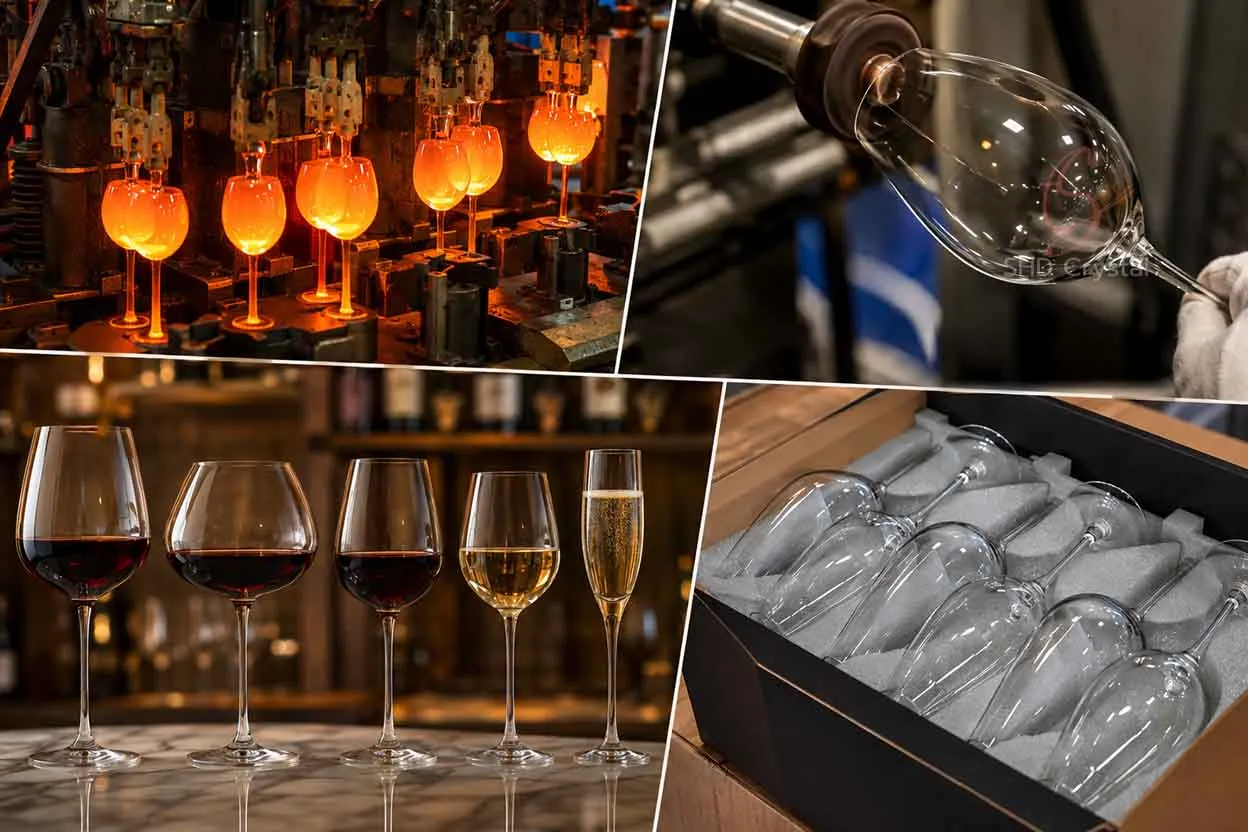
A Cabernet Sauvignon dinner does not begin only when the wine is poured. It often begins when the glass is placed on the table. The tall bowl, smooth rim, balanced stem, and clear body all help shape how the wine looks, breathes, and reaches the drinker. For brands, hotels, restaurants, and custom stemware projects, cabernet wine glasses production is not only about making a beautiful red wine glass. It is about producing a glass that matches the character of full-bodied red wine service.
How Cabernet Wine Glasses Production Begins
Cabernet wine glasses production usually starts with the target glass profile. A Cabernet glass is commonly designed with a relatively tall bowl, generous capacity, slightly narrowed rim, stable stem, and balanced base. This structure gives red wine enough space for swirling while helping guide aroma toward the opening.

From a manufacturing perspective, the first step is design review. The supplier needs to confirm the bowl height, widest diameter, rim diameter, stem length, base width, total capacity, glass thickness, and intended use. A glass for hotel service may need stronger durability, while a retail gift set may place more emphasis on elegant proportions and packaging presentation.
After the design is confirmed, mold development or forming preparation begins. Depending on the production method and product positioning, wine glasses may be machine-made, semi-automatic, or hand-finished. For commercial projects, consistency is especially important because each glass in the same set should have similar height, bowl shape, rim appearance, and standing balance.
Simple Production Flow for Cabernet Wine Glasses
In a modern glassware factory, cabernet wine glasses production usually follows a controlled workflow. The glass material is melted, formed into the required bowl and stem structure, annealed to reduce internal stress, then inspected and packed.
The bowl is the most important part of the Cabernet glass. It needs enough volume for red wine to open, but it should not become overly round like a Burgundy glass. The rim should be smooth and slightly narrower than the widest part of the bowl. This helps maintain the visual identity of a Cabernet or Bordeaux-style glass.
The stem and base also need attention. A long stem gives the glass a formal appearance and helps reduce direct hand contact with the bowl. The base must be wide and stable enough to support the taller structure. If the base is too small, the glass may look elegant but feel unstable in restaurant or banquet service.
After forming, annealing helps reduce stress in the glass. Then the cold-end process checks appearance, dimensions, rim quality, stem alignment, base stability, and packaging safety. For custom red wine glass manufacturing, these inspection steps are essential because a small defect can affect both appearance and user experience.
Why Cabernet Glass Shape Matters
A Cabernet glass is usually designed for full-bodied red wines with stronger aroma, structure, and tannin. The larger bowl gives the wine more surface area during swirling. The narrowed rim helps gather aroma and makes the drinking experience feel more focused.
This is why cabernet wine glasses production should not copy every red wine glass shape blindly. A glass that is too small may limit aroma development. A bowl that is too wide and round may feel closer to a Burgundy glass. A rim that is too thick may reduce drinking comfort. A stem that is too thin may look refined but increase breakage risk during commercial use. For SHD Crystal, the production review of Cabernet wine glasses often focuses on the connection between shape and real use. The glass must look elegant on the table, feel comfortable in the hand, and remain practical for packing, shipment, and repeated service.
How to Identify Cabernet Wine Glasses and Other Wine Glasses
The easiest way to identify a Cabernet glass is to look at its overall proportion. It is usually tall, with a large but not balloon-like bowl, a slightly tapered rim, and a formal stemmed structure. It often looks more vertical than a Burgundy glass and more spacious than a white wine glass.
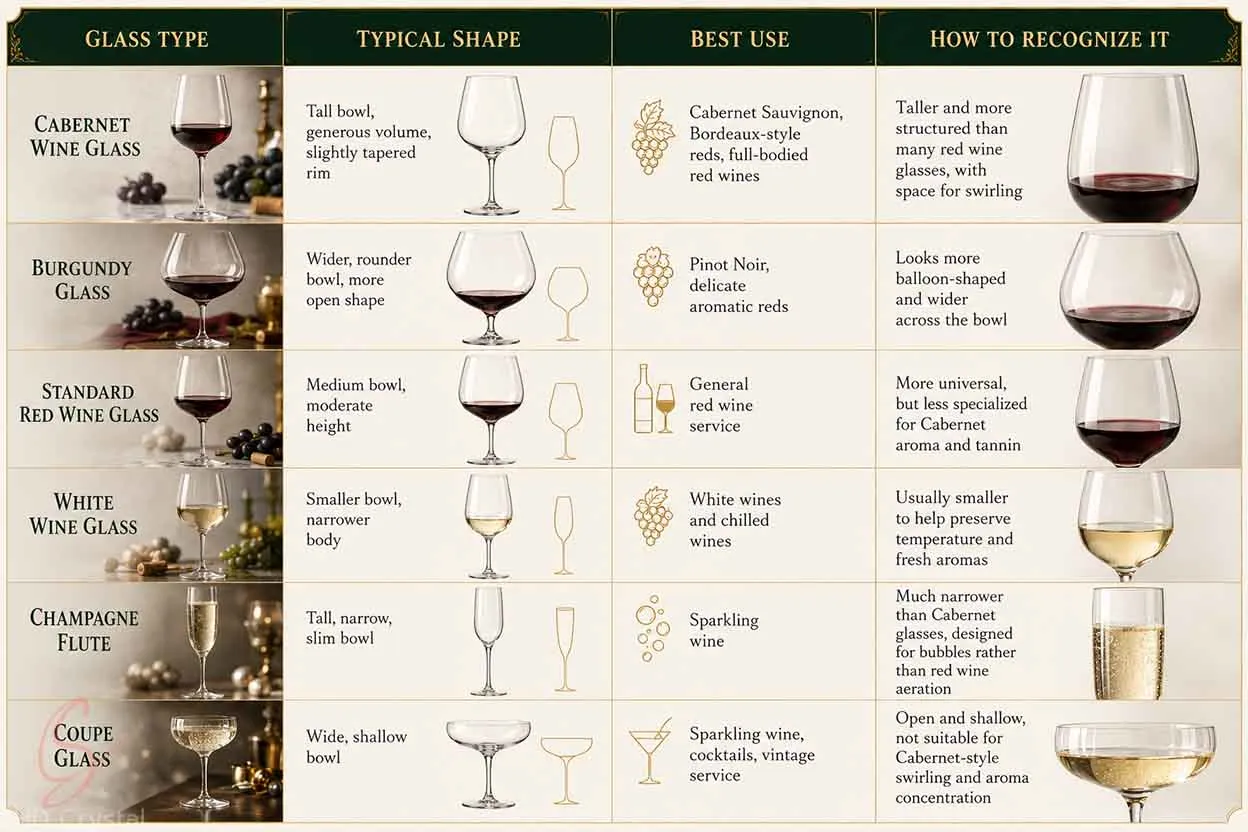
This comparison helps buyers avoid a common mistake: treating all stemmed glasses as interchangeable. In custom projects, the right Cabernet wine glass shape should match the drink, table setting, brand position, and final service environment.
Manufacturing Details Buyers Should Review
For cabernet wine glasses production, the rim is one of the most important details. It should be smooth, even, and comfortable. A refined rim improves the drinking experience, while uneven finishing can make the glass feel lower quality.
The bowl shape should also be checked carefully. If the bowl wall is uneven, the glass may look distorted under light. If the bowl is too heavy, it may feel clumsy. If it is too thin, it may not meet the durability expectations of hospitality or event use.
Stem alignment is another practical point. A slightly tilted stem can make the whole glass look unstable. For hotels and restaurants, this matters because many glasses are displayed together. Batch consistency is important in red wine glass manufacturing, especially for table settings, tasting rooms, and retail sets.
Packaging should also be reviewed before shipment. Cabernet glasses are usually taller than ordinary tumblers, so the stem, bowl, and rim all need proper protection. For gift sets, the inner tray and box structure should hold the glass firmly without scratching the surface.
SHD Crystal Notes for Custom Wine Glass Projects
SHD Crystal can support custom wine glass development from design discussion to sample review, production coordination, inspection, and protective packaging. For Cabernet glass projects, the team can review bowl capacity, rim diameter, stem height, base width, glass clarity, decoration options, and packaging method.

In related stemware projects, buyers often request coordinated wine glass sets for hotels, restaurants, wedding suppliers, or retail drinkware collections. Some projects focus on clear elegant wine glasses, while others include gold rims, engraved logos, colored stems, or customized gift packaging. These project experiences help SHD Crystal evaluate not only whether a glass looks attractive, but also whether it can remain consistent and practical in commercial use.
For brands planning cabernet wine glasses production, the most important goal is to connect wine function with glass manufacturing control. A good Cabernet glass should support aroma, table presentation, handling comfort, and reliable delivery.
FAQs
Q01 | Can Cabernet wine glasses be customized with logos or gold rims?
Yes. Cabernet wine glasses can be customized with logo engraving, printing, gold rim decoration, colored stems, or gift packaging. The decoration area should be reviewed carefully so it does not affect rim comfort, glass balance, or the premium appearance of the bowl.
Q02 | Are Cabernet glasses suitable for restaurant and hotel service?
Yes, but the design should consider durability, washing, storage, and replacement needs. For hospitality use, buyers may choose a slightly stronger stem, stable base, and practical capacity instead of an extremely delicate tasting-only design.
Q03 | What information should buyers provide before developing Cabernet wine glasses?
Buyers should provide target capacity, height preference, bowl shape reference, rim requirement, stem style, base size, decoration needs, packaging style, and final use scene. These details help the manufacturer evaluate production feasibility and sample direction.
Conclusion
Cabernet wine glasses production combines glass forming, shape control, rim finishing, stem balance, inspection, and packaging review. A Cabernet glass is different from other wine glasses because it is usually taller, more structured, and designed to support full-bodied red wine service.
For brands developing Cabernet wine glass collections, red wine glass manufacturing projects, or custom stemware sets, SHD Crystal can support design evaluation, sample development, production coordination, quality inspection, and packaging preparation for practical commercial use.

