


Chinese inspired glass decanters can express cultural identity through much more than printed symbols or decorative labels. The overall vessel shape, embossed motifs, stopper design, color treatment, cutting, and presentation packaging can all communicate a Chinese visual language while keeping the product suitable for contemporary spirits and gifting programs.
At SHD Crystal, we usually look at cultural customization as a complete design system. For custom crystal decanters, the strongest result often comes from selecting a few recognizable elements and distributing them carefully across the glass body, stopper, and packaging rather than placing every idea on the same surface.
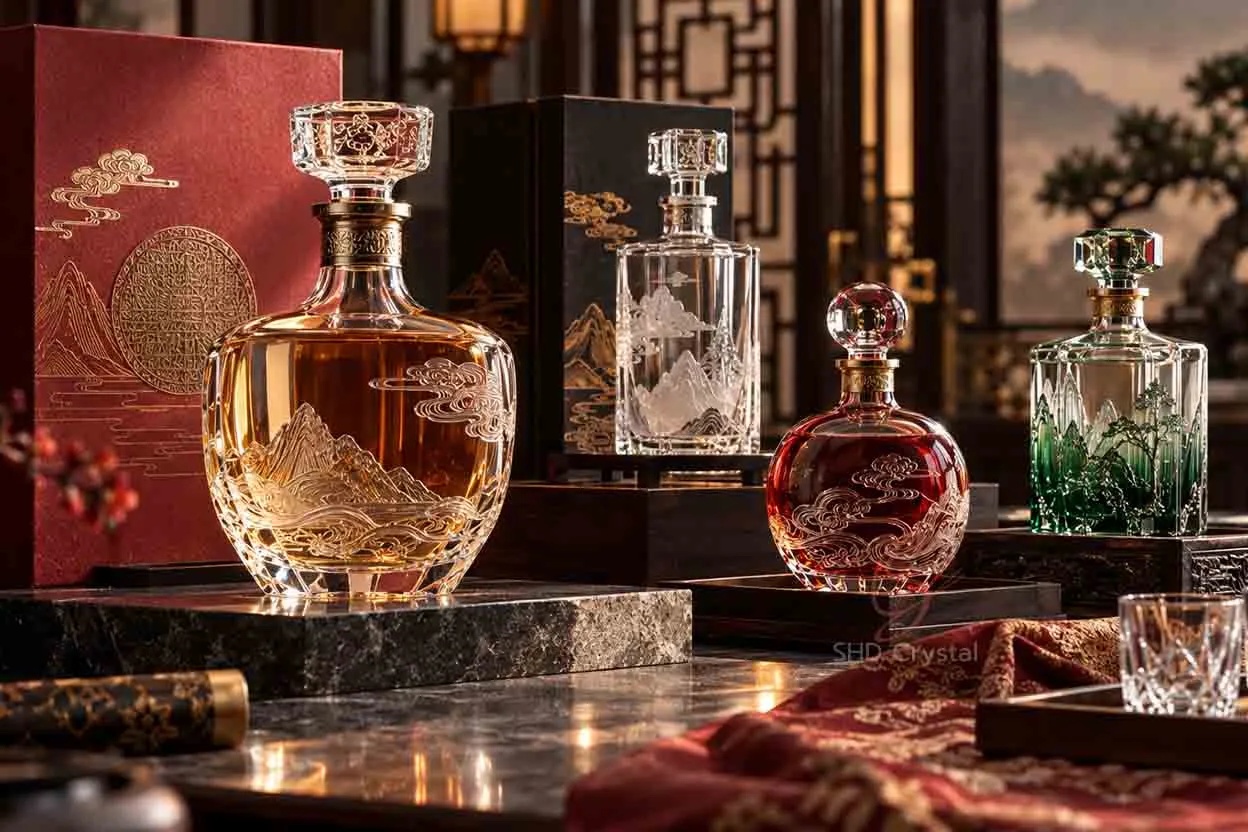
Chinese Inspired Glass Decanters Can Express Culture Through Form and Detail
The first cultural reference can come from the silhouette itself. Rounded shoulders, broad bases, elongated necks, balanced symmetry, and proportions inspired by traditional vessels can give Chinese inspired glass decanters a distinctive character even before surface decoration is added.
The goal does not need to be a literal reproduction of an antique ceramic or bronze object. A modern decanter can borrow the rhythm, balance, or contour of traditional forms while remaining clearly designed as functional contemporary glassware. This often produces a more refined result than relying only on obvious printed cultural symbols.
Embossed Relief Can Become Part of the Glass Structure
An embossed glass decanter design allows cultural motifs to become part of the vessel itself.
Possible directions include cloud patterns, mountain silhouettes, flowing-water lines, geometric borders, floral motifs, seal-inspired frames, or other abstract references associated with Chinese decorative traditions. These details can be positioned around the shoulder, lower body, side panels, or base rather than covering the entire decanter.
Relief depth needs control. A shallow pattern may lose definition under normal lighting, while an excessively deep or dense pattern can make the vessel visually heavy and create more difficulty during forming. For this reason, embossed decoration should be reviewed as part of the glass structure rather than treated as a simple surface graphic.
Surface Finishing Adds a Second Cultural Layer
Not every visual element needs to come directly from the mold. Cutting, frosting, engraving, polishing, color coating, and selective decorative treatments can add another design layer to custom crystal decanters. A clear vessel may use a frosted mountain silhouette across one side. Another design may introduce restrained amber, red, jade-green, or smoky accents while keeping most of the body transparent.

Cutting can also create patterns inspired by architectural geometry or traditional decorative borders without making the overall product feel overly ornate. The important point is hierarchy. One technique should usually carry the main visual message while the others support it.
The Stopper Can Carry a Strong Cultural Reference
The stopper is often one of the most effective areas for customization. A faceted stopper can echo geometric relief on the body. A rounded or sculptural form can soften a more angular vessel. Seal-inspired proportions, architectural references, or subtle color accents can also give the stopper its own identity.
For Chinese inspired glass decanters, this provides a useful way to introduce a recognizable cultural detail without redesigning the entire vessel.
The stopper still needs to work with the neck geometry, overall proportion, and visual weight of the decanter. A culturally distinctive stopper is most successful when it looks intentional rather than simply attached as an ornament.
Gift Packaging Can Complete the Cultural Story
Presentation packaging can extend the same visual language beyond the glass. For commemorative spirits, festival gifts, cultural collections, or corporate presentation programs, the box may use restrained red, black, gold, warm wood tones, textured paper, or other materials that support the design direction.
The opening structure, internal presentation, stopper position, and bottle orientation can also influence how ceremonial the final product feels. A highly decorative decanter may work better with restrained packaging. A simple vessel with subtle relief may benefit from a stronger presentation box. The bottle and box should feel like one coordinated object rather than two separately designed products.

Cultural Customization Is Not Limited to Chinese Themes
The same design logic can be applied to many cultural or seasonal projects. For example, in a representative holiday glassware development scenario, a brand may want a set of red wine glasses for a Western Christmas collection. Instead of printing obvious seasonal graphics across the bowl, the design could use restrained molded snowflake details around the lower section, subtle red or gold accents, and coordinated gift packaging.
During sample review, the first concept might appear too decorative once several glasses are placed together. Reducing the relief density, limiting color treatment to one area, and simplifying the packaging could make the final collection feel more refined. The lesson is transferable to custom crystal decanters: cultural identity often becomes stronger when the design uses fewer, better-integrated elements.
Physical Samples Help Control Cultural Detail
Artwork can make intricate decoration look effortless. Glass production introduces practical limits. Complex embossed patterns may lose definition. Heavy decorative bases can affect glass distribution. Deep cutting needs sufficient material. Frosting and coating require suitable application areas.
For an embossed glass decanter design, physical samples help confirm whether the motif remains clear, balanced, and repeatable once it moves from artwork into real glass. At SHD Crystal, we prefer to review the complete object together: silhouette, relief, stopper, surface finish, and packaging. This helps prevent one decorative element from overpowering the rest of the product.
Conclusion
Chinese inspired glass decanters can express cultural identity through vessel proportion, embossed relief, stopper design, surface treatment, color, cutting, and presentation packaging.
The strongest designs do not rely on simply adding more decorative symbols. They translate cultural references into the structure and visual rhythm of the glass itself. For custom crystal decanters, a well-planned embossed glass decanter design can make the cultural element feel integrated, recognizable, and suitable for repeat production.
Developing Culturally Inspired Decanters With SHD Crystal
SHD Crystal supports Chinese inspired glass decanters through shape development, mold evaluation, relief design review, stopper coordination, cutting, polishing, frosting, color finishing, sample confirmation, inspection, and presentation packaging discussion.
For brands developing custom crystal decanters, cultural references can be introduced through one element or across several coordinated layers. Whether the concept emphasizes vessel shape, stopper identity, packaging, or embossed glass decanter design, early physical review helps keep the final product visually balanced while preserving the intended cultural character.

