


Color can shape how a product is recognized long before a customer reads the label. In packaging development, cobalt blue glass bottles are often chosen because they create a stronger visual identity than ordinary clear containers while still fitting many mainstream product categories. They are commonly used for essential oils, wellness products, fragrance items, cosmetics, beverage packaging, and other specialty applications where both appearance and container character matter.
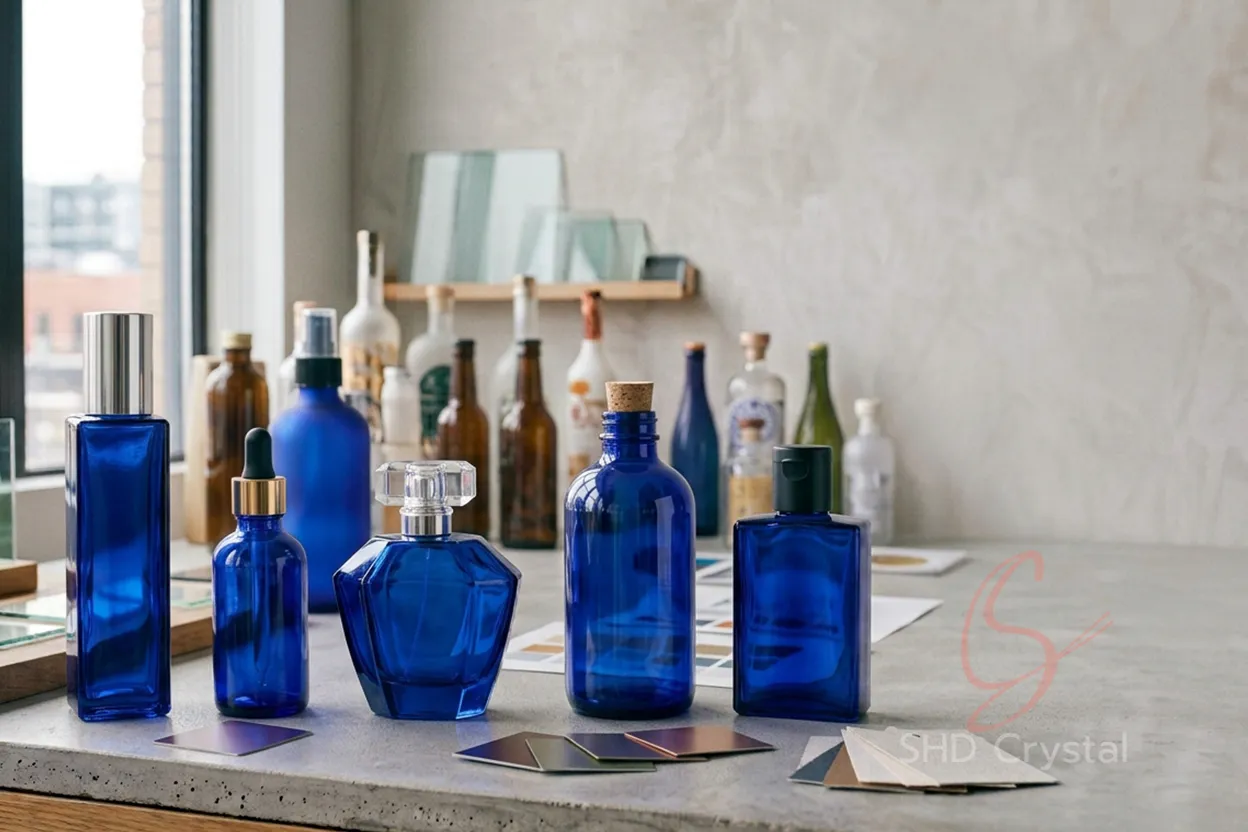
Cobalt Blue Glass Bottles for Distinctive Packaging Development
Color can shape how a product is recognized long before a customer reads the label. In packaging development, cobalt blue glass bottles are often chosen because they create a stronger visual identity than ordinary clear containers while still fitting many mainstream product categories. They are commonly used for essential oils, wellness products, fragrance items, cosmetics, beverage packaging, and other specialty applications where both appearance and container character matter.
For packaging projects, cobalt blue should not be treated as only a decorative choice. Bottle shape, wall thickness, closure matching, surface finishing, and batch consistency all influence how the final blue bottle will look and perform in real use.
Cobalt Blue Glass Bottles Need Color and Structure to Work Together
One of the main reasons brands choose cobalt blue glass bottles is their distinctive visual effect. Compared with clear glass, cobalt blue creates a deeper and more memorable appearance. Depending on the bottle form and decoration style, it can feel technical, premium, calming, apothecary-inspired, or wellness-oriented.
However, the same blue color does not look identical on every bottle. Glass thickness, shoulder curves, base weight, and overall shape all affect how the color appears. A slim cylindrical bottle may show a brighter and more transparent blue tone, while a heavier bottle with a thicker base may appear deeper and richer. This is why physical samples are so important. In actual development, a color direction that looks suitable in theory may need adjustment after the first sample is reviewed in real glass.
Cobalt Blue Works Across Several Main Packaging Markets
Although cobalt blue is visually distinctive, it is not limited to one niche category. It has become a practical option across several mainstream packaging markets.
In essential oil and wellness packaging, cobalt blue is often selected because it feels clean, focused, and consistent with product categories that emphasize concentration, purity, or botanical identity. In fragrance and cosmetic packaging, it can help a product line feel more refined or differentiated, especially when combined with polished closures, droppers, or pumps.
For beverage and specialty liquid products, cobalt blue can also create a more recognizable shelf presence than standard flint glass. In some cases, brands use it to support a premium or artisanal presentation, especially when the bottle itself is meant to become part of the brand story. This broad use is one reason colored glass bottle packaging remains relevant. Color is not only about decoration. It can also help define product positioning within a crowded market.
Custom Cobalt Blue Bottles Should Match the Product, Not Only the Visual Theme
A bottle may look attractive in blue glass, but it still needs to work with the actual product and closure system. Custom cobalt blue bottles may be developed with droppers, pumps, screw caps, cork-style closures, metal caps, or other component combinations. Each option affects neck finish requirements, sealing surfaces, dimensional tolerances, and how the finished package performs during filling, storage, and transport.
A wellness brand may need a smaller blue bottle with a dropper and a reliable seal. A cosmetic line may prefer a more structured bottle with a pump or decorative cap. A fragrance or room-scent project may focus more on silhouette and the relationship between the bottle and closure.
In all of these cases, the bottle and closure should be considered together. If not, a project can look visually complete but still need repeated adjustment at the sampling stage.
Surface Finishing Changes the Way Blue Glass Is Perceived
The final impression of cobalt blue glass is also influenced by surface finishing. Frosting can soften the transparency and create a more subdued tone. Printing can add clear brand information or decorative graphics. Coating, metallic accents, or other details may create contrast and make the bottle feel more premium or more decorative depending on the project direction.
But these effects should always be reviewed on real samples. A printed logo that looks balanced on clear glass may appear different on a deep blue surface. Frosting may reduce the intensity of the color. Decorative elements can also change how light moves across the bottle.
For this reason, colored glass bottle packaging should be reviewed as a complete visual system rather than as separate decisions about bottle color, printing, and finishing.
Quality Standards for Blue Glass Need to Be Set Early
Color depth, transparency, wall distribution, and surface quality all affect the finished result. This does not mean blue glass is unreliable, but it does mean that realistic standards should be confirmed early.
For repeated orders or product families with several bottle sizes, buyers should define acceptable color range, appearance expectations, dimensional tolerance, closure compatibility, and packaging protection before regular production begins. This becomes especially important when several sizes are intended to look like one coordinated collection. For custom cobalt blue bottles, consistency matters not only for function but also for shelf presentation.
Sample Review Helps Connect Creative Intent With Real Production
The most useful stage in many blue glass projects is sample review. A physical sample allows brands to check color depth, transparency, weight, closure fit, decoration effect, and packing method in a way that drawings alone cannot. It also helps reveal whether the intended bottle still feels correct once the product moves from concept into an actual container.
In some projects, only small changes are needed. The base may need slight adjustment because the blue tone looks heavier than expected. A printed element may need repositioning. A closure finish may need to be changed so it works better with the glass color. These are normal improvements, and they are much easier to solve before larger production begins.
Conclusion
Cobalt blue glass bottles offer brands a strong combination of visual identity and practical packaging value. Their appeal comes not only from the color itself, but from how that color works with bottle shape, closure selection, surface finishing, and the intended product market.
For brands developing custom cobalt blue bottles, the most reliable path is to evaluate color, structure, and decoration together. When that process is handled carefully, colored glass bottle packaging can become both visually distinctive and commercially practical.
Developing Custom Blue Glass Packaging With SHD Crystal
SHD Crystal supports packaging projects involving cobalt blue glass bottles, including sample review, mold coordination, closure matching, surface finishing, quality inspection, production planning, and export packaging.
For fragrance, wellness, cosmetic, beverage, and specialty packaging programs, early discussion of bottle shape, target blue tone, closure type, decoration method, and shipping requirements can help turn a strong visual idea into a more workable commercial package.

