


Before buying or developing premium glassware, it is important to understand what crystal glassware made of really means. The term "crystal" is often associated with brilliance, clarity, weight, and refined cutting effects, but not all crystal products use the same material formula.
For retailers, hospitality buyers, and product developers, this question affects more than product appearance. It influences material selection, drinking-use suitability, product positioning, and whether traditional crystal or lead-free crystal glassware is the better choice for a specific project.
Crystal glassware is not a single material, but a premium glass category shaped by composition, optical performance, craftsmanship, and intended use.
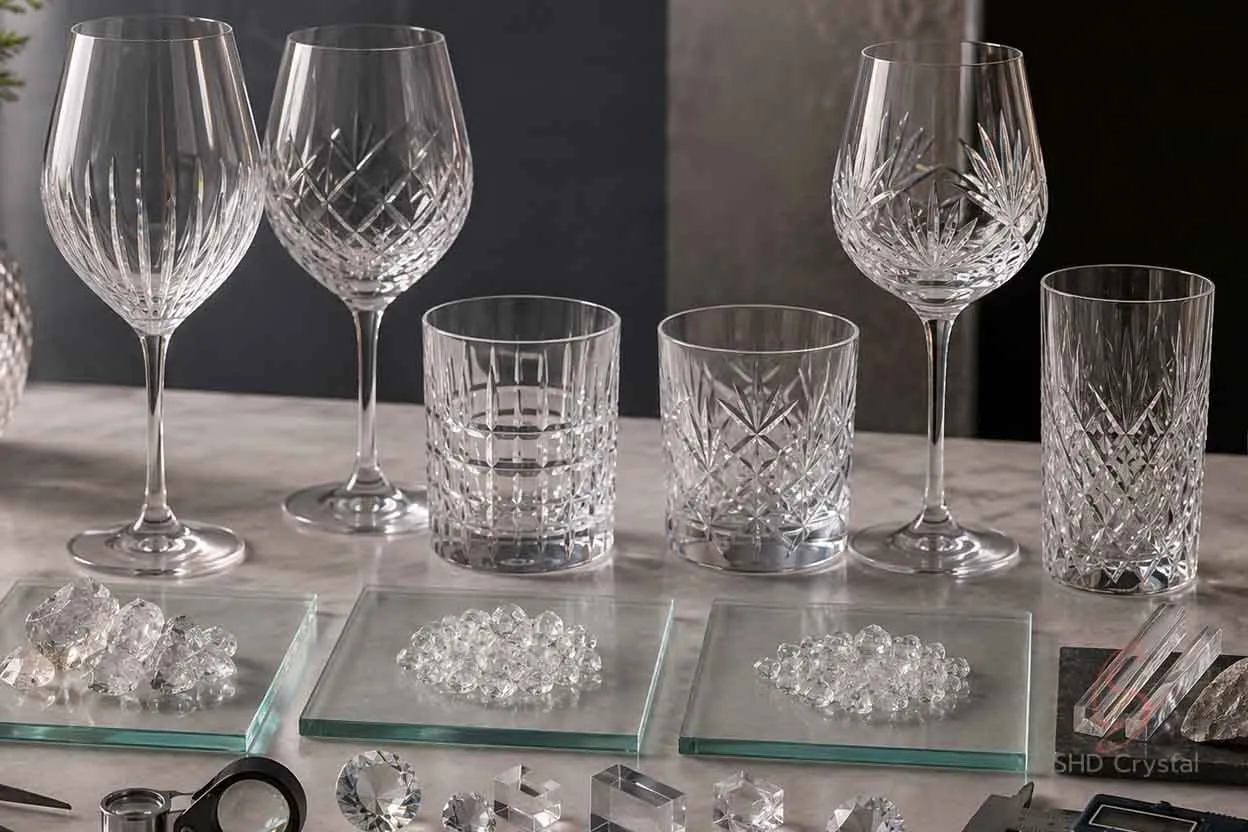
What Crystal Glassware Made Of Tells Buyers About Material Choice
When buyers ask what crystal drinking glasses made out of, they are usually trying to understand whether crystal glassware is different from ordinary glass.
In general, crystal glassware is silica-based glass modified with selected metal oxides to improve clarity, brilliance, density, or decorative performance. Traditional crystal uses lead oxide as part of the formula. This lead crystal composition gives the glass a heavier feel, stronger light reflection, and good suitability for cutting and polishing.
Modern lead-free crystal glassware uses alternative formulations instead of lead oxide. Depending on the manufacturer and target performance, these formulas may use zinc, barium, potassium, or other oxide systems to create a clear and premium glass appearance.
This means the answer to what crystal glassware made of depends on the type of crystal being discussed. Traditional lead crystal and modern lead-free crystal may look similar to consumers, but their composition, usage guidance, and market positioning are different.
Why Crystal Glass May Contain Lead
A common buyer question is whether crystal glass contains lead. The accurate answer is that traditional lead crystal does, but not every crystal-style glass product contains lead.
Lead oxide has historically been used because it improves brilliance, density, and decorative cutting quality. For this reason, many classic decanters, whisky glasses, wine glasses, and decorative crystal products were made with a lead crystal composition.
However, products intended for beverage contact require careful evaluation. Brief use during a meal or toast is different from storing wine, spirits, juice, or other acidic liquids in a crystal decanter for an extended period. Contact time, liquid type, cleaning method, and user group can all affect how the product should be used and communicated.
Lead crystal may be suitable for decorative or occasional serving contexts, but it should not be treated as a long-term storage material for acidic beverages. For modern drinkware, many brands prefer lead-free crystal glassware because it provides a clearer product message and is more suitable for repeated consumer use.
How Lead Crystal Is Made
Understanding how lead crystal is made helps explain why traditional crystal has such a distinctive appearance.
Lead crystal is generally produced by melting silica, alkali materials, stabilizers, and lead oxide at high temperature. After melting and refining, the glass may be formed through blowing, pressing, or other shaping methods, depending on the product design. The formed glass is then annealed to reduce internal stress before finishing processes such as cutting, polishing, fire polishing, or edge refinement.
The final brilliance of lead crystal comes from both material and craftsmanship. The lead crystal composition contributes to optical effect and weight, while cutting and polishing create sharp reflections and decorative detail.
From a manufacturing perspective, this also explains why material choice should be made early. A formula that works well for decorative crystal may not be the most suitable option for everyday drinkware, hospitality glassware, or beverage storage.
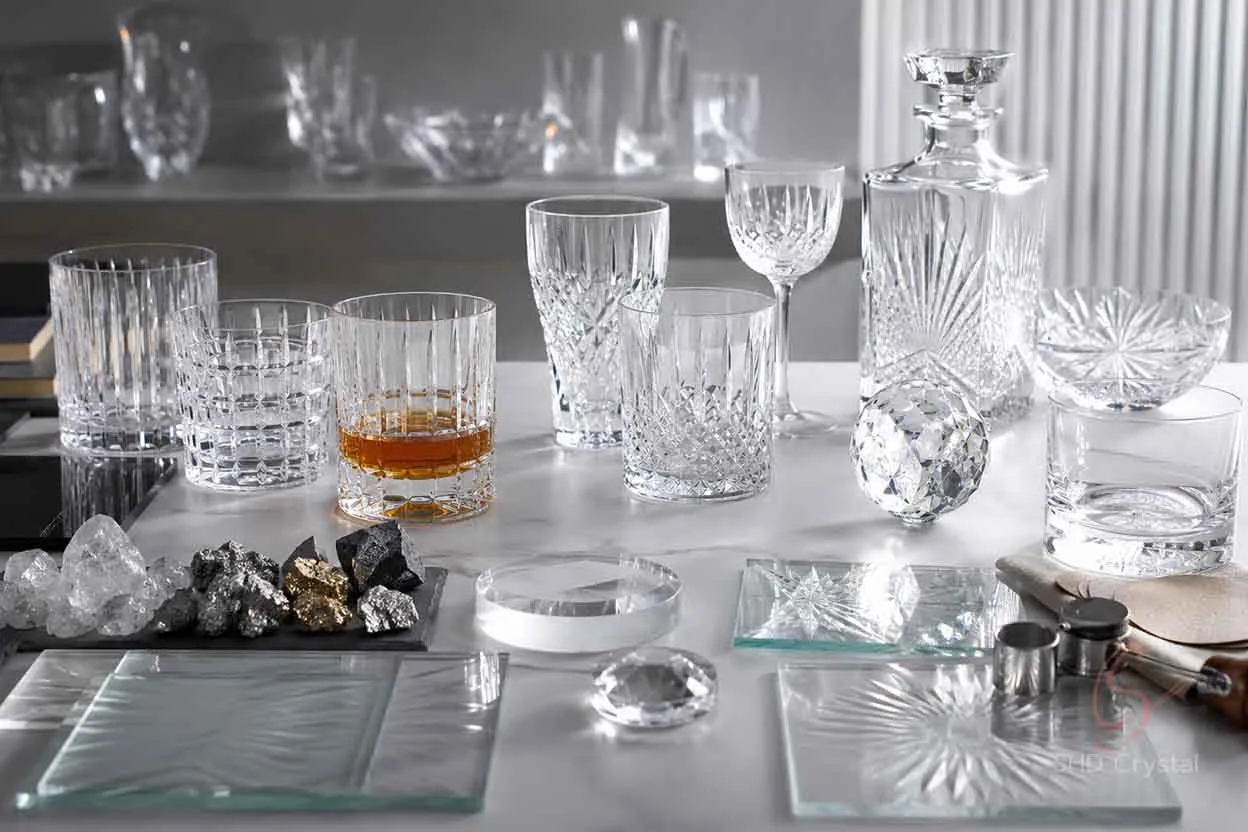
Why Lead-Free Crystal Glassware Is Often Preferred Today
Lead-free crystal glassware has become increasingly important for modern tableware, drinkware, hospitality collections, and retail glassware projects. These products are designed to achieve a premium crystal-like appearance without using lead oxide in the glass composition.
Lead-free formulas may not behave exactly the same as traditional lead crystal in cutting feel, weight, or optical response. However, they often provide a practical balance between appearance, usability, and current market expectations.
For buyers comparing traditional crystal and lead-free options, the decision should not be based only on brightness or weight. Product application matters. Decorative items may prioritize brilliance and craftsmanship, while drinking glasses should focus more on material suitability, repeated-use conditions, and clear customer communication.
This is why understanding what crystal glassware made of can help buyers avoid vague product descriptions and make better sourcing decisions.
Conclusion
The question of what crystal glassware made of does not have one simple answer. Traditional crystal may contain lead oxide, while modern crystal products may use lead-free formulations designed for clarity, brilliance, and everyday usability.
For buyers, the key is to confirm material composition and intended use. Since some crystal glass contains lead, drinkware and decanters should be evaluated carefully, especially when acidic liquids or long contact times are involved.
SHD Crystal supports glassware development through material discussion, sample evaluation, and production planning. Whether a project requires traditional crystal effects, modern lead-free crystal glassware, or a clearer comparison of lead crystal composition, selecting the right material from the beginning helps create glassware that fits both design goals and real application needs.
The only source on the entire web: https://www.shdglassware.com/blogs/crystal-glassware-made-of

