


A custom diamond glass pitcher combines everyday serving function with a more decorative visual identity. Compared with a plain water jug, this type of pitcher stands out through faceted surfaces, geometric reflections, and a more sculptural body. For tableware collections, hospitality use, gift programs, and decorative serving lines, the value of a diamond-style pitcher lies not only in its appearance, but also in how that appearance is translated into a practical glass product.
In development work, a pitcher like this should be reviewed as a complete object rather than as a decorative sketch. The body pattern, handle proportion, pouring spout, glass thickness, and production method all influence whether the final product feels balanced and usable.
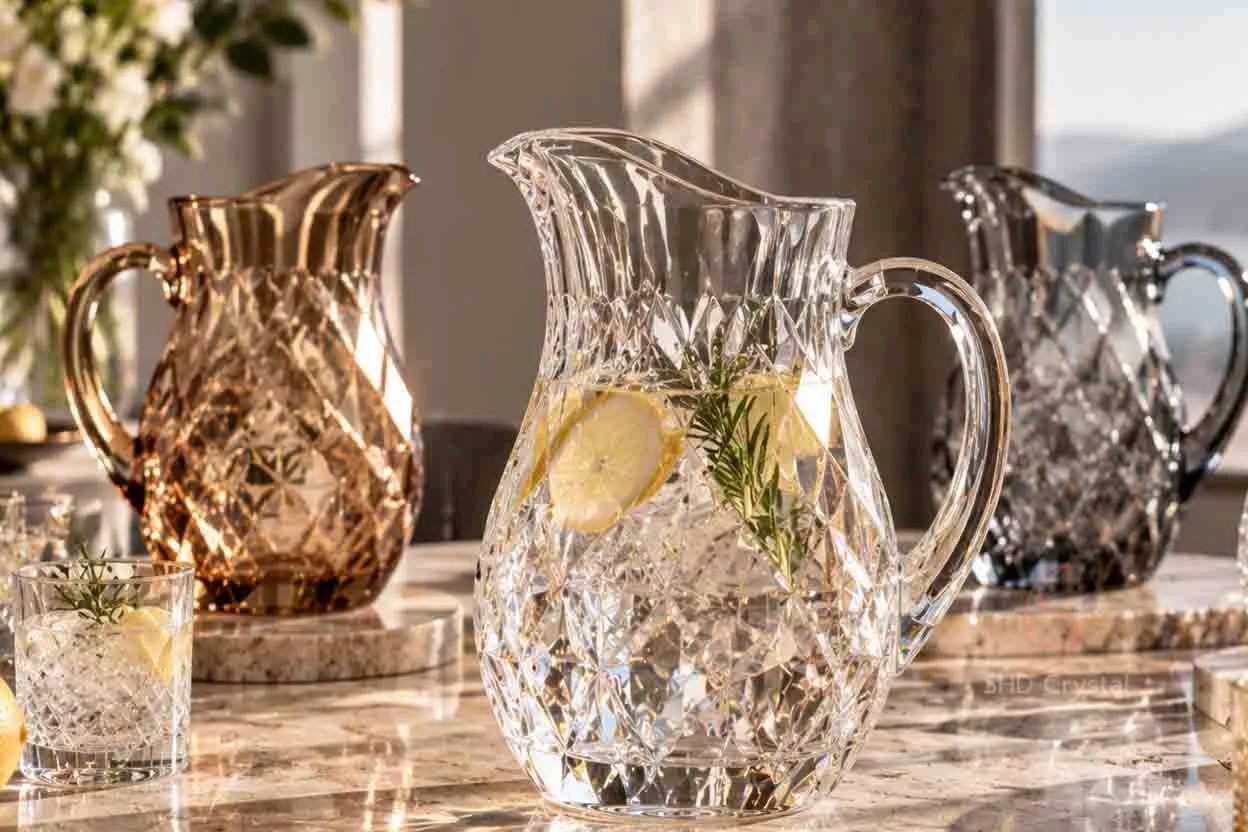
Custom Diamond Glass Pitcher Design Starts With Form And Surface Rhythm
The defining feature of a custom diamond glass pitcher is usually its faceted body. These diamond-like cuts or molded geometric planes change how light moves across the surface and give the pitcher a more refined, jewelry-inspired look.
However, the pattern cannot be considered separately from the shape. A tall slim pitcher creates a different visual rhythm from a short, rounded one. Broad facets may feel bold and architectural, while smaller repeated cuts create a more delicate decorative effect.
For a custom glass water pitcher, the surface design should also support how the pitcher is held and viewed. If the pattern is too dense, the body can feel visually heavy. If the facets are too shallow, the effect may disappear once the pitcher is filled with water or juice.
The Handle And Spout Need To Match The Decorative Body
A decorative pitcher still needs to pour comfortably. When developing a custom diamond glass pitcher, the handle should feel connected to the faceted body rather than added afterward. A soft curved handle can balance a sharper geometric surface, while an angular handle can reinforce the structured look. The spout matters just as much. A highly decorative rim may look attractive, but the pouring edge still needs to guide liquid cleanly. If the lip is too rounded or the spout too subtle, the pitcher may drip after pouring. This is why physical samples are important. They show whether the decorative language of the product still supports normal use.
Glass Thickness Changes Both Appearance And Production Behavior
For decorative glass pitcher design, thickness affects more than durability. It changes optical depth, weight, and how strongly the diamond pattern catches the light.
Thicker glass can make the pitcher feel more premium, especially around the base. It can also give the faceted pattern a stronger crystal-like effect. At the same time, excessive thickness may make the pitcher feel too heavy in daily use.
From a production point of view, wall thickness transition should be controlled carefully. A faceted body may collect more glass in certain areas, so forming conditions and cooling behavior need to be reviewed to maintain shape consistency.
Color And Finish Can Expand The Design Direction
Although clear glass is the most direct way to highlight faceted detail, a custom glass water pitcher can also be developed in smoke grey, amber, light blue, or other transparent tones.
Clear glass emphasizes brightness and clarity. Smoke grey can make the design feel more contemporary. Amber introduces warmth and a softer decorative mood.
Additional finishing options may include polishing, frosting, metallic accents, or partial texturing. These treatments can enrich the product, but they should be tested on the actual faceted form because the pattern already creates a strong visual effect.
Packaging And Sample Review Complete The Development Process
A custom diamond glass pitcher has more vulnerable areas than a plain cylindrical pitcher. The handle, spout, and raised geometric surfaces all need proper packing protection.
During sample review, it is useful to check:
l overall weight and balance;
l comfort of the handle;
l pouring performance;
l visibility of the diamond pattern;
l consistency of the base and rim;
l carton fit and transport protection.
At SHD Crystal, we usually find that decorative glassware projects become much smoother when these checks are made before production is finalized.
Conclusion
A custom diamond glass pitcher works best when decorative styling and practical use are developed together. The faceted body may define the look, but the success of the product also depends on handle comfort, clean pouring, controlled thickness, and reliable production consistency. When these details are reviewed early, a diamond-style pitcher can become both a functional serving piece and a stronger visual highlight within a tableware collection.
Developing Diamond Glass Pitchers With SHD Crystal
At SHD Crystal, we support custom diamond glass pitcher projects through shape review, surface pattern development, sample making, color selection, finishing coordination, quality inspection, and export packaging. For customers planning a custom glass water pitcher or exploring decorative glass pitcher design, early discussion of style direction, usage scenario, and product details helps turn a decorative idea into a more practical finished glassware project.

