


A custom glass jar supplier plays an important role in turning packaging concepts into stable, repeatable production. In real OEM projects, a jar is not defined only by its appearance. It also needs to work with closures, printing systems, coating processes, filling requirements, packing methods, and transport conditions.
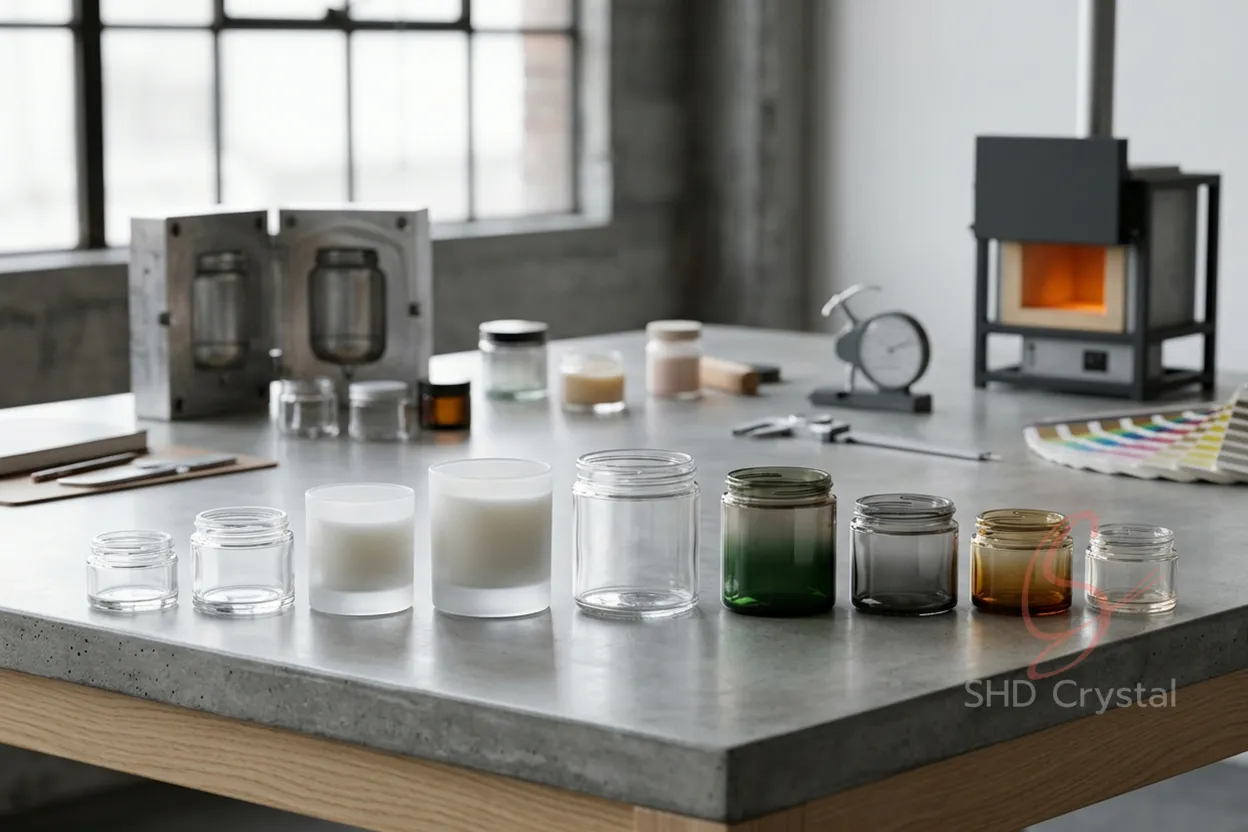
Custom Glass Jar Supplier for Packaging Development
A custom glass jar supplier plays an important role in turning packaging concepts into stable, repeatable production. In real OEM projects, a jar is not defined only by its appearance. It also needs to work with closures, printing systems, coating processes, filling requirements, packing methods, and transport conditions.
For each customized jars project, structure and finishing should be developed together rather than treated as separate steps. Body shape, shoulder transition, neck finish, decoration area, and wall thickness can all affect whether the final jar remains consistent from sampling to production.
Custom Glass Jar Supplier Reviews Structure Before Finishing
Surface decoration performs best when the underlying glass geometry is stable. Cylindrical areas are usually easier for screen printing, labeling, or coating, while strongly curved shoulders and uneven wall transitions can affect alignment and visual consistency. Embossed details may enhance branding, but they can also interrupt coating flow or create uneven frosting results.
In practical production, a glass packaging supplier should evaluate whether the jar body provides usable zones for decoration before tooling is finalized. If the geometry changes too much between samples and mass production, even a well-designed artwork or coating plan may lose accuracy.
This is why a custom glass jar supplier should review structure before decoration begins. Finishing quality often depends on decisions made much earlier in mold development.
Real Project Experience: When Design Meets Production Reality
In an actual customized jars project, issues often appear after sampling rather than during the first design review. A cosmetic jar may look acceptable as a clear glass sample, but once frosting is applied, a printed logo may appear slightly misaligned because of surface curvature. A candle jar may require adjustment after testing because the original neck tolerance creates inconsistent lid tightness during assembly.
It is also common for coating or frosting effects to vary across different body curves. A smooth cylindrical section may show even coverage, while a sharper shoulder can create visible thickness differences within the same batch. These adjustments are not necessarily design failures. They are normal results of testing decoration under real production conditions.
This is where experienced custom glass jar supplier support becomes valuable. Early review can help identify risks before full-scale production begins.
Neck and Closure Fit Affect Function More Than Appearance
The neck area is one of the most sensitive parts of a glass jar. It directly affects lid compatibility, sealing performance, and assembly efficiency. Even small dimensional deviations can lead to loose closures, uneven torque, or inconsistent sealing results.
For a customized jars project, neck finish control is often more important than decorative details. A visually attractive jar is not useful if it cannot reliably match its closure system during production.
A capable glass packaging supplier should therefore check closure requirements early, including opening diameter, sealing surface, thread or lid fit, and assembly performance. These details help reduce problems during sampling, filling, and repeated orders.
Finishing Must Match the Intended Use Environment
Different finishing processes behave differently depending on surface geometry and handling conditions. Frosting creates a matte texture but depends on surface uniformity. Color coating requires stable application conditions and careful protection during packing. Screen printing depends heavily on consistent positioning and smooth printable zones.
A custom glass jar supplier should not treat decoration as a final cosmetic step. Finishing should be validated together with structure because decoration often makes small inconsistencies more visible than they were on clear glass samples.
For example, a brand may approve the jar shape first, then test coating, printing, cap matching, and packaging together before confirming the production standard. This process helps connect visual design with practical manufacturing requirements.
Batch Consistency Defines Commercial Success
For commercial production, consistency is often more important than one perfect sample. When jars are displayed together, packed in the same shipment, or used in repeated orders, small variations in height, neck finish, wall thickness, or surface treatment become easier to notice.
A reliable custom glass jar supplier therefore focuses on mold control, forming stability, annealing consistency, finishing standards, and inspection planning. These factors help keep the project stable from the first approved sample to later production batches. For brands, this means quality control should not only check the finished appearance. It should also define which dimensions, decoration details, closure areas, and packing requirements are most important for the final application.
Conclusion
Successful custom glass jar development depends on how well structure, closure fit, and finishing are integrated into one production system. Geometry defines what decoration is possible, while finishing reveals whether the structure is stable enough for mass production. When both sides are aligned, a customized jars project can move more smoothly from sampling to consistent commercial supply.
How SHD Crystal Supports Custom Glass Jar Projects
SHD Crystal works as a custom glass jar supplier supporting packaging development from early concept review to export delivery. Project support may include structure and mold evaluation, sampling coordination, surface finishing development, closure fit review, production scheduling, quality inspection, and export packaging.
As a glass packaging supplier, SHD Crystal helps brands connect design expectations with real production requirements. By combining design review with manufacturing experience, SHD Crystal helps reduce risk between sample approval and mass production, making each custom glass packaging project more predictable and scalable.

