


For many products, the glass container is part of the packaging itself. It holds, protects, presents, and helps preserve liquids or solid products throughout filling, storage, transport, and everyday use. This is why custom glass packaging involves more than creating an attractive bottle or jar shape. The container structure, opening, closure interface, glass distribution, decoration, and intended product all need to work together.
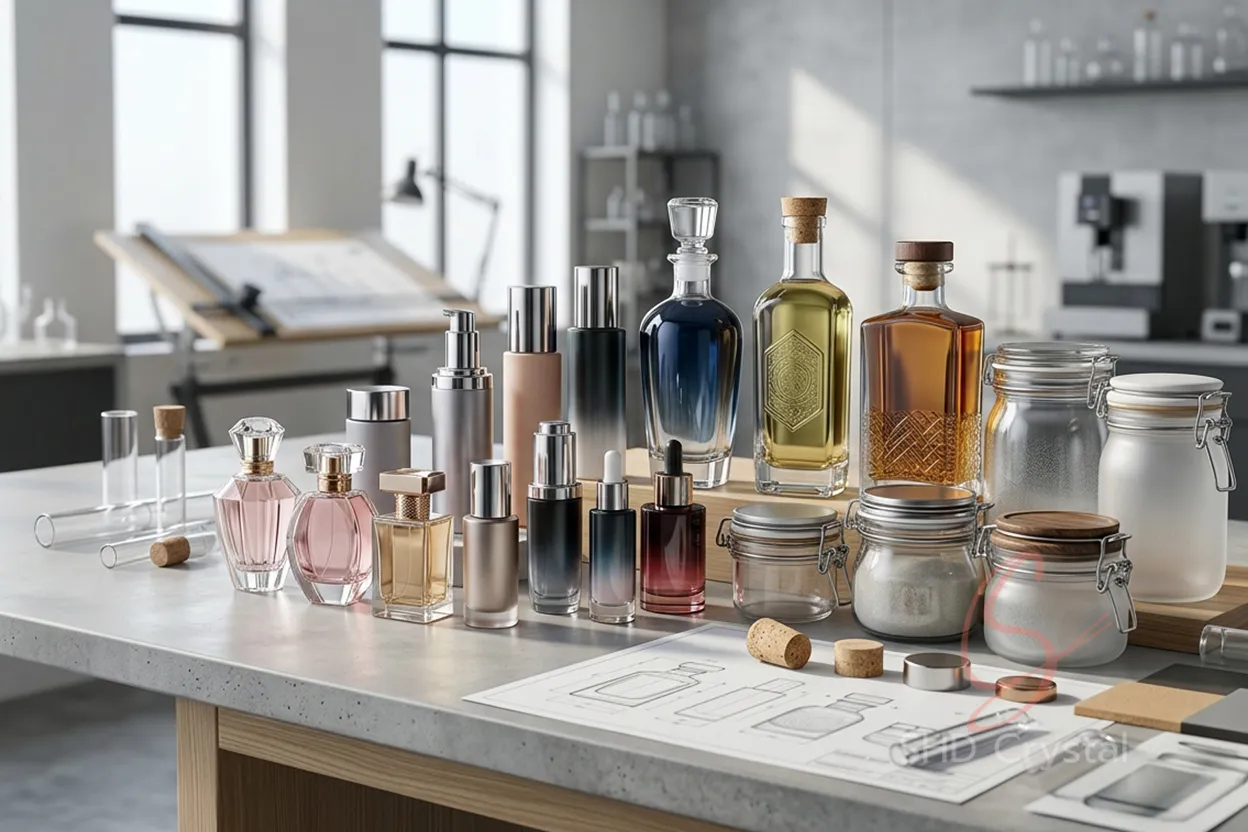
Custom Glass Packaging for Brand Development Projects
For many products, the glass container is part of the packaging itself. It holds, protects, presents, and helps preserve liquids or solid products throughout filling, storage, transport, and everyday use. This is why custom glass packaging involves more than creating an attractive bottle or jar shape. The container structure, opening, closure interface, glass distribution, decoration, and intended product all need to work together.
For fragrance, cosmetics, beverages, specialty foods, and other product categories, brands often use custom glass bottles or jars when standard containers cannot fully support their positioning or functional requirements. Successful development therefore depends on turning a visual concept into a glass container that can be manufactured consistently and used reliably.
Custom Glass Packaging Requires Balance Between Design Ideas and Manufacturing Reality
A distinctive container may begin with a sketch, rendering, or reference sample, but the design still needs to match glass-forming conditions and mold requirements.
Bottle shoulders, body transitions, base structure, neck geometry, wall distribution, and decorative areas can all influence production stability. A shape that appears elegant in a design file may require small adjustments if certain curves, thickness changes, or structural details are difficult to reproduce consistently. This is where glass packaging design needs to connect creative intent with manufacturing feasibility. The goal is not to simplify every design into a standard bottle, but to identify which details can be preserved and which may need refinement before tooling and sampling move forward.
Custom Glass Bottles Need Structure and Product Use to Work Together
The glass container should be developed around what it will actually hold. For liquid products, bottle capacity, neck finish, closure fit, pouring or dispensing requirements, and filling conditions may affect the final specification. Fragrance bottles may require close coordination between the glass neck and pump components, while beverage bottles may place more emphasis on closure compatibility, filling efficiency, and bottle stability.
For creams, powders, or other products stored in glass jars, opening diameter and closure structure can become more important than bottle-style pouring performance.
This is why custom glass bottles and jars should not be evaluated only as decorative objects. Their dimensions and structural details need to support the actual product, filling process, closure, and intended use.
Project Experience Often Refines the Original Design
In practical custom glass packaging projects, the first physical sample often reveals details that are difficult to judge from a rendering. A shoulder transition may need to be softened to improve forming consistency. A decorative area may need to move away from a strongly curved surface. A bottle neck may require dimensional coordination with a pump, cap, or stopper. In some cases, the filled container may also feel heavier or less balanced than expected. These changes do not necessarily alter the original design direction. Instead, they help convert the concept into a container that is more practical for repeat production.
Reviewing the physical sample together with its intended closure and product application is therefore an important part of glass packaging design.
Glass Forming and Mold Structure Influence the Final Container
Different container shapes create different forming requirements. Mold structure, glass distribution, temperature control, dimensional consistency, and annealing all influence how successfully a bottle or jar can be reproduced. Areas such as the neck, shoulder, base, and transitions between thick and thin sections often deserve particular attention because they affect both appearance and functional consistency.
During custom glass packaging development, these manufacturing factors should be reviewed early rather than after the final appearance has already been approved. This is especially important when the container includes unusual geometry, a heavy base, embossing, narrow shoulders, or other features that may affect forming behavior.
Surface Finishing Should Support the Glass Container Design
Decoration can strengthen brand identity, but it should work with the shape and surface of the glass container. Frosting, coating, printing, decals, polishing, and other finishes may appear differently depending on glass transparency, wall thickness, curvature, and surface area. A graphic placed across a strongly curved section, for example, may be more difficult to reproduce consistently than one positioned on a stable body area.
For custom glass bottles, finishing should therefore be reviewed on actual samples whenever possible. Effective glass packaging design considers decoration as part of the container itself rather than as an isolated visual layer added after production.
Closure Compatibility Is Part of Glass Packaging Development
A glass container and its closure form one functional packaging system. Depending on the application, the closure may be a screw cap, stopper, pump, dropper, lid, or another fitted component. The glass neck or opening needs to match that component consistently so the finished package can function as intended.
Small dimensional differences can affect fitting, sealing, dispensing, or opening performance. For this reason, closure compatibility should be reviewed during sampling instead of being considered only after the glass container has been finalized. For brands developing custom glass bottles, coordinating the container and closure early can reduce avoidable adjustments later in the project.
Production Consistency Matters for Long-Term Brand Programs
An approved sample establishes the target, but repeat production must maintain that target over time. Glass color, dimensions, wall distribution, neck geometry, base stability, decoration position, and surface quality may all influence how consistent the finished packaging appears across different batches. For long-term product collections, documented specifications and approved samples help manufacturers and brands compare later production against the original standard.
Stable production is therefore an important part of custom glass packaging, especially when several products within the same brand line need to maintain a coordinated appearance.
Conclusion
Custom glass packaging allows brands to develop glass containers that do more than hold a product. The container can support protection, dispensing, sealing, visual identity, and long-term product positioning when its structure and manufacturing requirements are considered together.
For custom glass bottles and jars, the strongest results usually come from combining product requirements, closure compatibility, physical sampling, manufacturing control, and glass packaging design before repeat production begins.
Developing Custom Glass Packaging With SHD Crystal
SHD Crystal supports custom glass packaging projects for brands developing glass bottles, jars, and other glass containers for liquid or solid products. Services can include design review, mold development, sampling, closure coordination, surface finishing, inspection, and production management.
For projects involving custom glass bottles, early cooperation on glass packaging design can help refine container structure, opening details, decoration, and manufacturing requirements while preserving the intended brand identity.

