


Different cocktail glasses shape how a drink looks, feels, and performs during service. For bars, hotels, restaurants, event suppliers, and beverage brands, glass selection is not only a matter of appearance. It also affects aroma release, ice retention, serving volume, hand feel, durability, storage efficiency, and the overall drinking experience.
How Different Cocktail Glasses Support Drink Presentation
A complete barware program usually includes several shapes because no single glass can serve every drink well. The basic cocktail glassware types should match the drink structure, service environment, and brand style. A short drink served without ice needs a different silhouette from a tall mixed drink with soda, citrus, and garnish. A spirit-forward drink may require a glass that feels solid and premium, while a colorful tropical drink may need height, capacity, and visual drama.
For SHD Crystal, this is where glassware development becomes more practical than decorative. In real projects, buyers often bring a reference photo or a general style direction, but the final design still needs to consider mold feasibility, rim comfort, wall thickness, base weight, packaging safety, and repeated commercial use.
Key Cocktail Glassware Types Used in Bar Programs
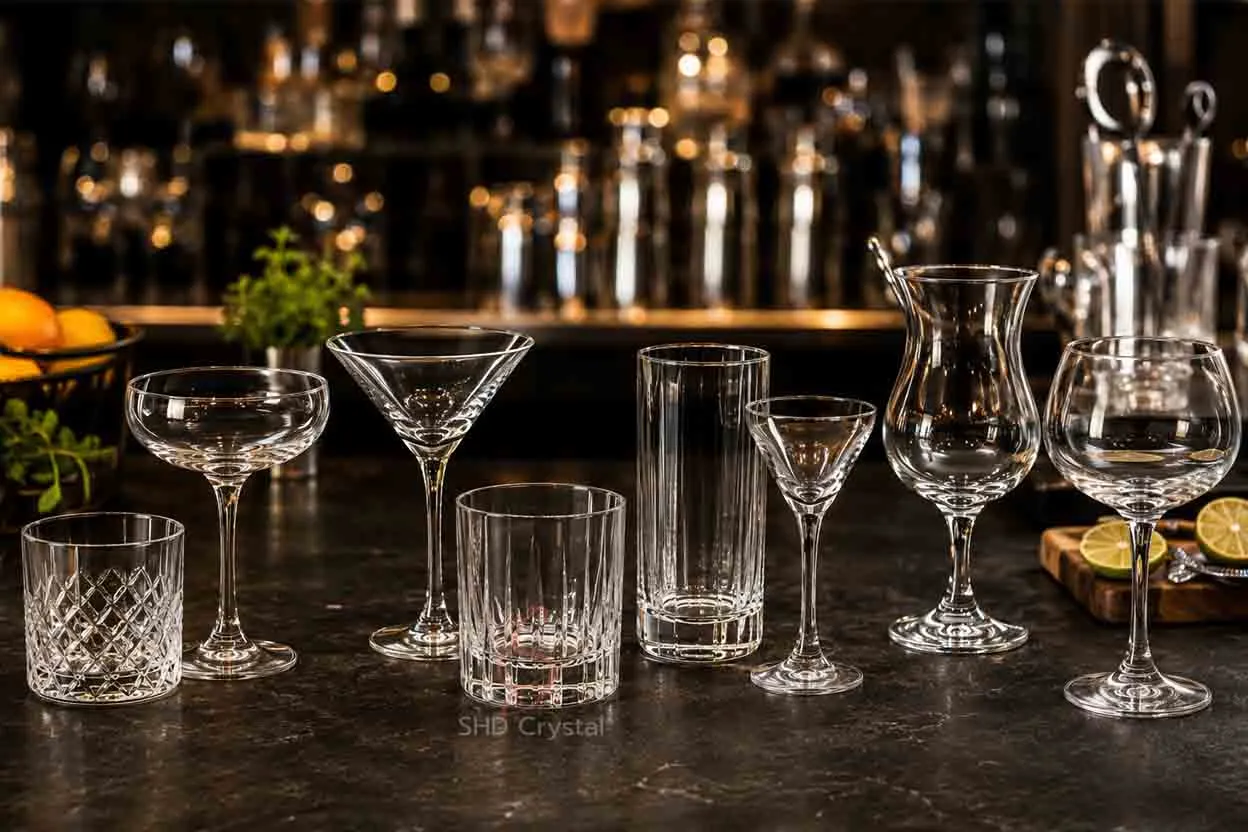
Martini glasses are one of the most recognizable options. Their wide V-shaped bowl highlights clarity and garnish presentation, making them suitable for martinis and other straight-up cocktails. However, the shape can be less stable if the base is too light, so stem proportion and balance should be reviewed carefully during customization.
Coupe glasses are widely used for champagne-style cocktails, sours, daiquiris, and elegant short drinks. Their rounded bowl gives a softer vintage feeling compared with martini glasses. For hospitality or wedding programs, coupes are often chosen when the buyer wants a refined but approachable look.
Rocks glasses, also called old fashioned glasses, are designed for drinks served over ice. They are common for whiskey cocktails, negronis, old fashioneds, and short mixed drinks. The base thickness is especially important because it influences both perceived quality and durability.
Highball and Collins glasses are used for tall drinks with ice, soda, juice, or layered color. Among different cocktail glasses, these taller formats are practical for mojitos, gin and tonics, spritzes, and long mixed drinks. Straight-sided designs are easier to stack and pack, while slightly curved bodies may create a more distinctive table presentation.
Nick and Nora glasses are smaller stemmed glasses often used for classic cocktails. They create a refined serving experience without the exaggerated width of a martini glass. For brands that want a more boutique visual identity, this shape can help create a memorable barware collection.
Hurricane glasses and specialty stemmed glasses are useful when the drink itself is meant to feel festive or theatrical. They work well for tropical cocktails, themed bars, resort service, and promotional beverage launches. In custom projects, these shapes need careful capacity control because dramatic curves may make the actual usable volume different from what the buyer expects.
Matching Glass Shape With Drink Function
Good glass selection begins with the drink menu. A glass for carbonated drinks should leave enough headspace and room for ice. A glass for aromatic cocktails should not be too narrow at the opening. A glass for stirred drinks should feel steady and substantial on the table. When different cocktail glasses are chosen only by appearance, problems may appear later during service.
For example, a buyer may select a beautiful coupe for a signature cocktail, but if the rim is too wide and the drink is served in a crowded event setting, spillage risk increases. A tall glass may look impressive in photography, but if the base is too narrow, it may not feel stable enough for busy bar service. For custom bar glassware projects, these small details strongly affect both user experience and long-term product suitability.
Project Experience: From Style Reference to Practical Glassware
In one recent barware development project, the buyer wanted a unified cocktail collection for a hospitality-style launch. The initial idea focused mainly on visual consistency: one elegant design language across short glasses, tall glasses, and stemmed glasses. During development, SHD Crystal reviewed the reference shapes and found that the tall glass needed a more stable base, while the stemmed glass required a slight adjustment to rim thickness for better drinking comfort.
The project also required packaging evaluation because the buyer planned to ship the collection in mixed sets. This meant the design could not be judged only by appearance. Each piece needed to pass basic handling, inner-box arrangement, and protective packaging review before moving toward production. This kind of project experience helps reduce the gap between a beautiful concept and a glass that can actually perform in commercial use.
Why Custom Development Matters for Barware Brands
For custom bar glassware projects, design flexibility is valuable, but controlled development is even more important. Buyers may request specific capacity, logo application, colored glass effects, heavier bases, textured patterns, or a coordinated series for multiple drink categories. Each request can affect mold design, forming stability, annealing control, inspection requirements, and packaging structure.
In custom bar glassware development, the goal is not simply to make a glass look different. The goal is to make the glass suitable for real service conditions. A hotel bar may care more about durability and consistent replenishment. A beverage brand may focus on recognizable shape and gift-box presentation. An event supplier may need balanced cost, attractive appearance, and safe transport.
This is why custom bar glassware should be reviewed as a full project instead of a single product photo. Shape, capacity, thickness, decoration, quantity, production schedule, and packing method all need to support the same final use.
FAQ
What glass shapes should a barware collection include?
A practical collection usually includes rocks glasses, highball or Collins glasses, coupe glasses, martini glasses, and one or two specialty shapes. Understanding cocktail glassware types helps buyers build a balanced collection instead of choosing random designs that do not work together.
Can one cocktail glass be used for many drinks?
Yes, some glasses can be used flexibly, especially rocks glasses and highball glasses. However, a more complete program usually performs better because different drinks need different capacity, ice space, rim shape, and visual presentation.
What should buyers confirm before starting a custom glassware project?
Buyers should confirm drink type, target capacity, visual style, decoration method, packaging needs, and service environment. For custom bar glassware, these details help the manufacturer evaluate whether the design is practical for production and long-term use.
Conclusion
Different cocktail glasses help brands create a more complete and professional beverage experience. The best selection is not based only on shape names, but on how each glass supports the drink, the service environment, and the brand's visual identity. With proper development support, cocktail glassware can become both functional tableware and a recognizable part of a bar, hotel, event, or beverage program.
For brands planning different cocktail glasses for custom barware collections, SHD Crystal can support design discussion, sample development, production coordination, inspection, and packaging preparation for practical commercial projects.

