


Empty olive oil bottles are more than simple containers. In food packaging projects, they influence how olive oil is poured, protected, displayed, and shipped. For gourmet food brands, private-label programs, hospitality suppliers, and specialty retailers, the right bottle should support both product function and shelf presentation.
Empty Olive Oil Bottles for Food Packaging Projects
Empty olive oil bottles are more than simple containers. In food packaging projects, they influence how olive oil is poured, protected, displayed, and shipped. For gourmet food brands, private-label programs, hospitality suppliers, and specialty retailers, the right bottle should support both product function and shelf presentation.
When developing custom olive oil bottles, buyers should not focus on appearance alone. Capacity, neck finish, closure fit, glass color, label area, and transport protection all affect whether the final package works smoothly in real commercial use.
Empty Olive Oil Bottles Should Be Evaluated Around Pouring and Closure Design
The most practical starting point is how the bottle will actually be used. Olive oil is not packaged like water. It needs controlled pouring, clean resealing, and a bottle shape that feels stable in the hand.
A tall, elegant bottle may create a premium look, but if the neck finish does not match the cap or pourer, the user experience can quickly become inconvenient. Dripping around the mouth, poor sealing, or difficult filling can all reduce packaging performance.
This is why empty olive oil bottles should be reviewed together with closure style from the beginning. Screw caps, pourers, tamper-evident solutions, and decorative closures each place different demands on the bottle neck and shoulder design. For custom olive oil bottles, a good design balances visual identity with practical pouring behavior.
Glass Color Influences Both Protection and Market Position
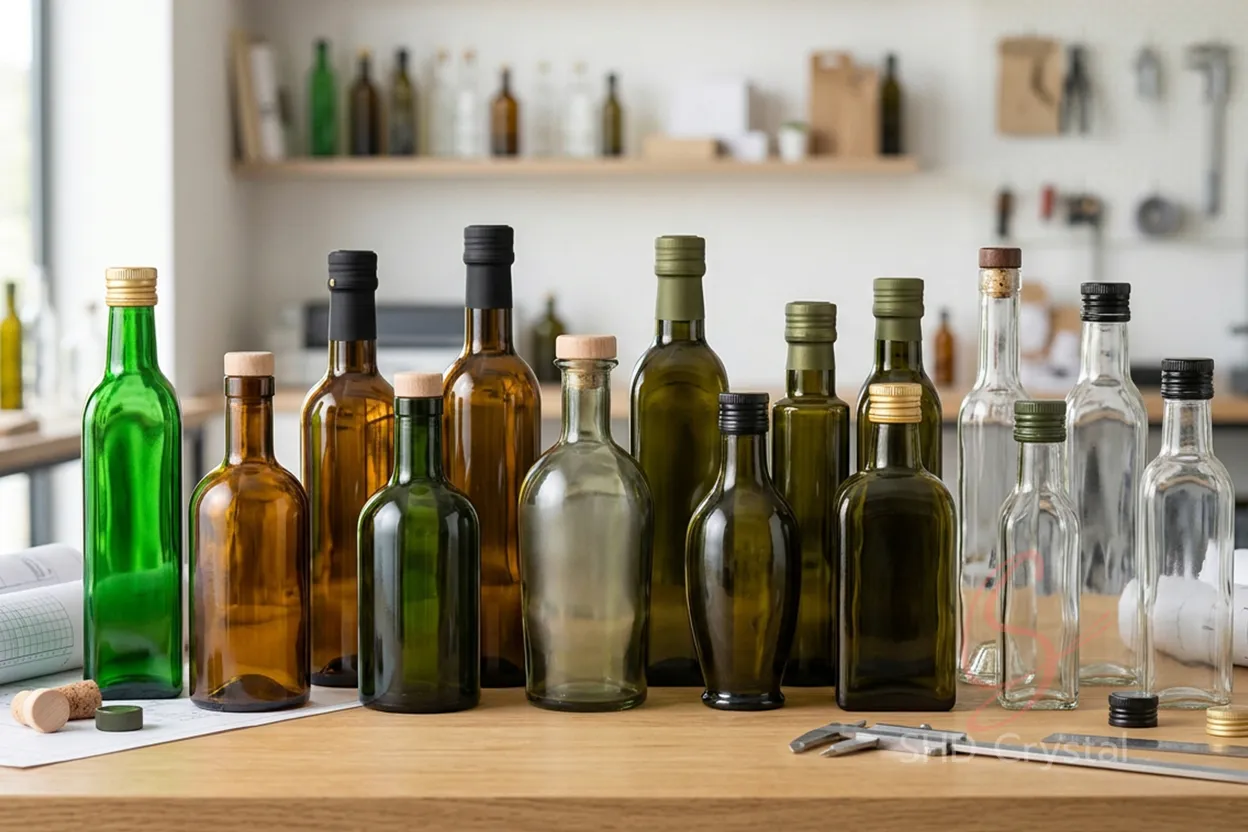
Color is one of the most visible parts of glass oil bottle packaging. Dark green and amber bottles are widely used because they create a classic olive oil presentation and help reduce light exposure. Clear glass, by contrast, can highlight the natural color of the oil and create a cleaner retail look.
The right direction depends on the product and target market. A traditional gourmet line may benefit from dark green glass, while a premium gift concept may prefer a more design-led bottle with refined finishing and a clean label area.
For custom olive oil bottles, color should be reviewed with the full packaging concept rather than selected in isolation.
Bottle Structure Affects Filling, Handling, and Transport
A bottle may look balanced in a drawing but behave differently in production. Shoulder shape, base weight, and wall thickness distribution all influence stability and manufacturing consistency.
For empty olive oil bottles, these details matter because they affect filling efficiency, cap fitting, and shipping performance. During production, mold tolerance, forming temperature, and annealing control help determine whether the bottle remains dimensionally stable across a full order. This is especially important in glass oil bottle packaging, where neck accuracy and breakage resistance are closely linked to the final usability of the product.
Sampling Helps Reduce Packaging Risk
Sample review is where many useful adjustments happen. A brand may begin with a preferred bottle shape, then discover that the label panel is too narrow, the cap fit needs improvement, or the bottle is heavier than expected for export shipping.
In one typical food project, matching bottles for olive oil and vinegar may look coordinated visually, but the first sample round often reveals practical questions around pour control, closure height, carton spacing, or pallet efficiency.
For custom olive oil bottles, early sampling helps connect design ideas with real packaging conditions before large production begins.
Conclusion
Empty olive oil bottles should be developed as functional packaging, not just attractive glassware. Pouring behavior, closure compatibility, color direction, bottle structure, and shipment protection all influence whether the package performs well in retail, hospitality, and specialty food channels.
When these details are reviewed early, custom olive oil bottles can become a more reliable form of glass oil bottle packaging for long-term product programs.
Developing Olive Oil Bottle Projects With SHD Crystal
SHD Crystal supports projects involving empty olive oil bottles, custom olive oil bottles, and glass oil bottle packaging through design discussion, sample development, closure matching, mold coordination, surface finishing, quality inspection, and export packaging preparation. For gourmet food, olive oil, vinegar, sauce, and gift-packaging lines, early communication can help create a bottle solution that works in both presentation and daily use.

