


An engraved glass commemorative plate is designed to preserve a message rather than serve food. Its value comes from the combination of the glass form and the information placed on its surface—such as a name, anniversary date, company milestone, event title, dedication, emblem, or symbolic pattern. These pieces can be developed for corporate recognition, anniversaries, partnership milestones, retirement gifts, institutional events, award programs, and other occasions where the object is intended to be displayed and kept.
For SHD Crystal, a custom engraved glass plate is therefore treated differently from ordinary tableware. Diameter, thickness, edge treatment, display angle, engraving area, surface clarity, and decorative technique all need to support the commemorative purpose of the finished piece.
Engraved Glass Commemorative Plate Design Starts With the Message Area
The first consideration is not dining function. It is how the plate will present the inscription. A wide central area gives more room for names, dates, logos, commemorative wording, or graphic elements. A heavily patterned center may look attractive by itself but can compete with engraving, while a cleaner surface allows the inscription to remain the visual focus. For an engraved glass commemorative plate, the relationship between blank space and decoration is therefore important.
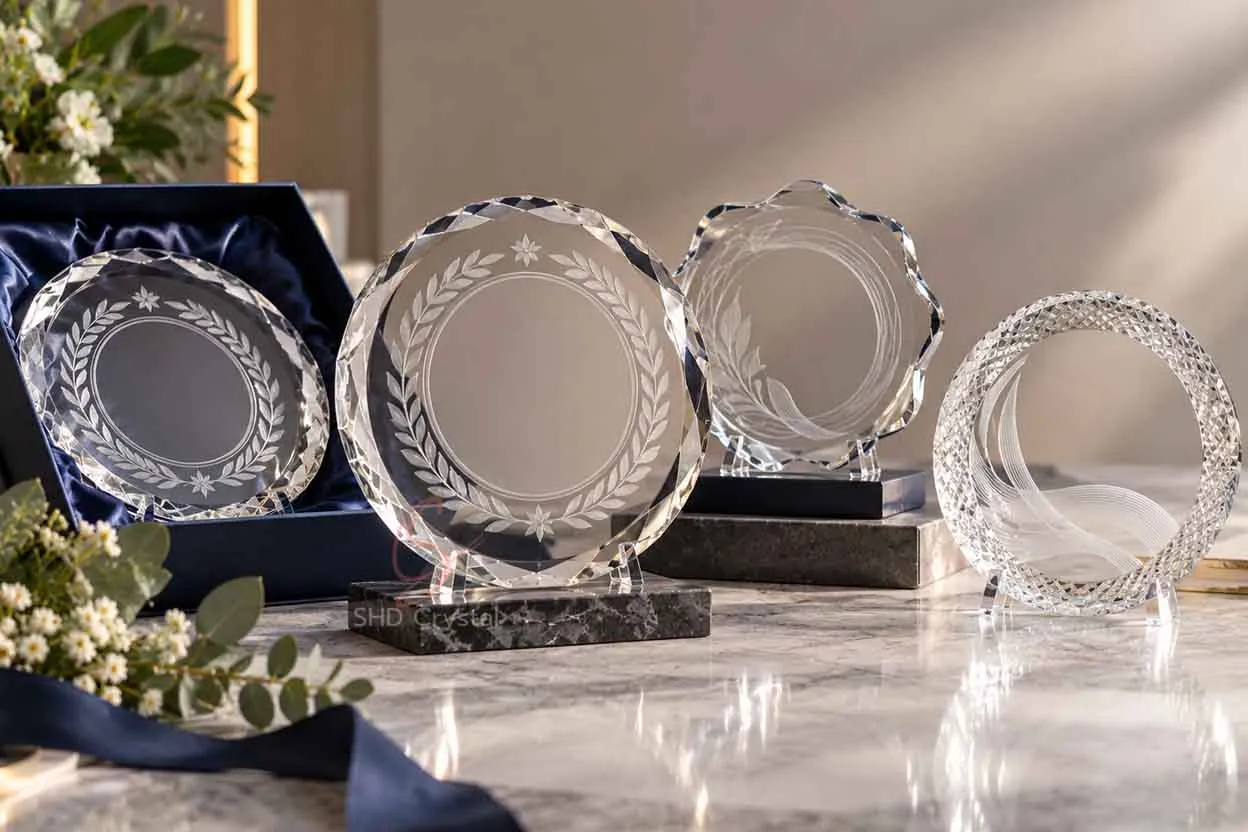
Some projects use a simple transparent center with a decorative rim. Others place engraving in the center and use cutting, frosting, color, or molded texture around the outer section. The goal is to make the message feel integrated into the object rather than added as an afterthought.
Different Occasions Need Different Visual Languages
A commemorative glass plate can appear in very different settings. For a corporate anniversary, the design may use clean geometry, restrained engraving, and a formal presentation stand. A retirement or recognition project may place greater emphasis on the recipient’s name, service period, or dedication. For partnership milestones or business events, a custom engraved glass plate may combine an emblem, date, and short inscription with polished edges or subtle decorative cutting.
More ceremonial projects can use deeper engraving, frosted contrast, faceted borders, or colored details to create a stronger sense of occasion. The same basic glass form can therefore move between formal, ceremonial, modern, or decorative styles depending on how the surface is developed.
Plate Shape Changes the Way the Piece Is Displayed
Round plates remain the most familiar format, but commemorative designs do not have to follow traditional tableware proportions.
A slightly thicker body can give the piece more visual weight. Wide polished rims create stronger reflections, while scalloped, faceted, or geometric edges can make the plate feel more like an award object. Some engraved glass commemorative plate projects may also use shallow sculptural forms rather than completely flat profiles. Because the piece is intended for display rather than dining, the design can prioritize visibility from the front, stability on a stand, and the way light moves through the engraving.
Engraving Should Match the Glass Surface
Engraving is one of the most important customization methods, but the result depends on the glass itself. A smooth transparent surface allows engraved details to stand out through contrast and reflected light. Frosted areas can make selected sections appear softer, while polished sections retain greater transparency. For a custom engraved glass plate, engraving depth, line density, placement, and available surface area should be reviewed before production.
If too much information is compressed into a small section, the plate may feel crowded. If engraving runs too close to a decorative rim, the visual hierarchy can also become unclear. This is why artwork and physical proportions should be considered together.
Decoration Can Extend Beyond the Inscription
The inscription does not need to carry the entire design. A commemorative glass plate can also incorporate edge cutting, polishing, frosting, molded patterns, color accents, or other decorative treatments. These elements can frame the central message without competing with it.
For example, a corporate milestone plate may use a simple engraved center with a faceted border, while a ceremonial gift may combine deeper decorative cutting with a more prominent inscription area.
At SHD Crystal, we prefer to determine which feature should attract attention first—the wording, the glass shape, or the decorative border—and then develop the remaining elements around that priority.
Presentation Is Part of the Final Product
Because these plates are intended to be kept and displayed, presentation matters. The plate may be paired with a stand, fitted insert, presentation box, or other protective structure depending on its diameter, weight, edge design, and intended use.
For an engraved glass commemorative plate, packaging should protect both the glass body and the engraved surface during transport while also supporting the ceremonial nature of the product when it is presented. This becomes especially important for corporate programs or event projects where multiple identical pieces need to arrive with consistent appearance.
Conclusion
An engraved glass commemorative plate is not ordinary glass tableware. It is a display object created to preserve a specific name, date, achievement, relationship, or event. By coordinating plate shape, engraving area, edge treatment, decorative finish, and presentation method, a custom engraved glass plate can be developed for very different recognition and commemorative scenarios while retaining a clear visual identity.
Developing Custom Commemorative Glass Plates With SHD Crystal
SHD Crystal supports engraved glass commemorative plate projects for corporate anniversaries, awards, retirement recognition, partnership milestones, events, and other commemorative programs.
Development can include plate shape and dimension review, engraving layout, polishing, frosting, cutting, decorative finishing, sample confirmation, inspection, and presentation packaging. For customers developing a custom engraved glass plate or coordinated commemorative glass plate series, the inscription content, display method, glass form, and decorative direction can all be adjusted around the intended occasion.

