


For beauty packaging, appearance is often the first thing a customer notices, but long-term product performance depends on much more than looks alone. In practical development, frosted glass dropper bottles are valued not only for their matte and refined appearance, but also for how well they work with the formula, the dropper system, and the brand's overall product identity.
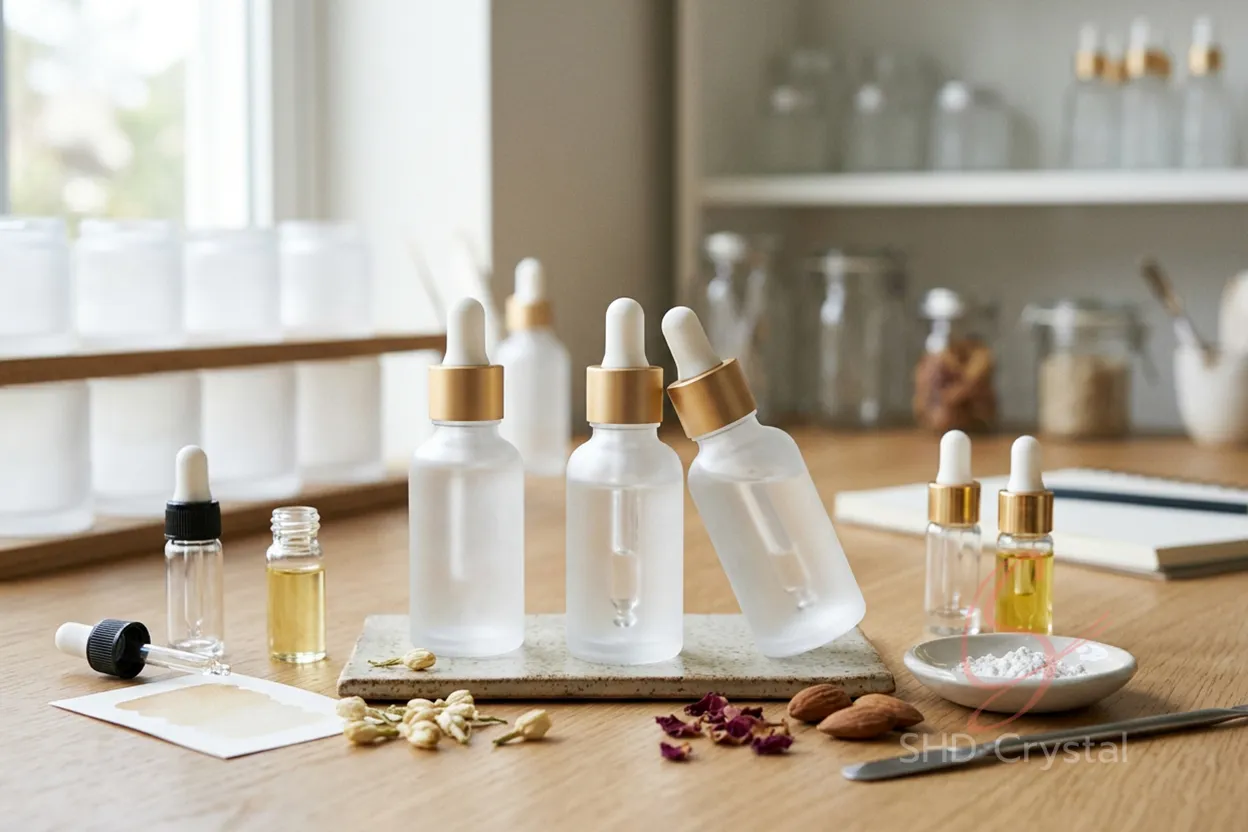
Frosted Glass Dropper Bottles for Premium Beauty Packaging
For beauty packaging, appearance is often the first thing a customer notices, but long-term product performance depends on much more than looks alone. In practical development, frosted glass dropper bottles are valued not only for their matte and refined appearance, but also for how well they work with the formula, the dropper system, and the brand's overall product identity.
For skincare, serum, facial oil, and wellness lines, packaging should connect visual presentation with reliable function. A well-developed cosmetic dropper bottle packaging project needs to consider bottle structure, frosting consistency, dropper compatibility, filling requirements, and repeat production stability from the beginning.
Frosted Glass Dropper Bottles Need Coordinated Structure and Surface Planning
A frosted bottle may look simple, but the final effect depends on several connected details. The bottle body, shoulder shape, neck finish, wall thickness, and dropper assembly all influence how the finished package performs in real use.
One common mistake is focusing only on the frosted effect while overlooking the base glass structure. In reality, frosting should be evaluated together with the bottle shape and the intended use. If the bottle geometry is inconsistent, the matte effect may appear uneven. If the neck finish is not well controlled, the dropper may not fit correctly even when the bottle itself looks attractive.
For frosted glass dropper bottles, sample evaluation is especially important because the product needs to be reviewed both as a visual object and as a functional dispensing package.
Frosting Changes More Than the Look of the Bottle
Frosted surfaces are popular because they create a softer, more premium feel than plain clear glass. They can also reduce glare, give the bottle a more tactile character, and help differentiate a product line on the shelf.
At the same time, frosting is not only a visual choice. Different surface treatments can create different levels of matte texture, softness, and transparency. This is why a serum bottle packaging project should confirm the actual frosting effect on physical samples instead of judging it only from reference images or digital mockups.
For brands with multiple SKUs, consistency also matters. A stable frosting process helps keep frosted glass dropper bottles visually aligned across repeated orders and across different bottle sizes within the same collection.
Dropper Compatibility Is Just as Important as the Bottle
In beauty and skincare packaging, the dropper is part of the user experience. Pipette length, bulb material, closure fit, and dispensing behavior all affect how the product feels in daily use.
A bottle may have an elegant frosted finish, but if the dropper system is poorly matched, the project will still fail in practical terms. For cosmetic dropper bottle packaging, the neck finish and dropper assembly should be reviewed together so that sealing, dispensing, and visual balance remain consistent.
This is particularly important for serum bottle packaging, where controlled dosage and smooth product pickup are often part of the product promise. A premium bottle should not only look refined on the shelf, but also perform smoothly in the customer's hand.
OEM Development Should Connect Design With Production Reality
Most custom projects begin with a concept, but the best packaging results come from turning that concept into something practical for sampling and mass production. Brands may want a specific glass color, a soft frosted finish, printed decoration, or a coordinated dropper cap, but each of these choices adds production variables.
At SHD Crystal, we usually see that frosted glass dropper bottles work best when structure, frosting, and dropper matching are developed together rather than separately. During sampling, adjustments may be needed to improve label area, refine the frosting result, or confirm the final closure fit before moving into larger production. That is also why cosmetic dropper bottle packaging should be treated as a system instead of a single bottle purchase. The bottle, surface finish, and dispensing parts need to work together from the start.
Consistency Matters for Repeat Orders
For beauty brands, repeatability is often just as important as the first sample. The same bottle may need to appear across different batches, sales seasons, or matching product lines.
In serum bottle packaging, small variations in frosting, print position, bottle color, or dropper finish can become more noticeable when products are displayed together. Clear quality control and sample confirmation help reduce these risks and make future replenishment easier.
Reliable frosted glass dropper bottles should therefore be evaluated not only by their appearance, but also by their ability to remain consistent across sampling, production, and delivery.
Conclusion
Frosted glass dropper bottles combine surface aesthetics, functional dispensing, and production control in one packaging format. For beauty brands, the most successful projects are those that review frosting, structure, and dropper compatibility together instead of treating them as separate decisions. Whether the goal is premium cosmetic dropper bottle packaging or more refined serum bottle packaging, early coordination helps reduce development risk and supports more consistent final results.
Developing Frosted Glass Dropper Bottle Projects With SHD Crystal
SHD Crystal supports beauty and wellness brands with frosted glass dropper bottles development, from sample review and surface finishing to dropper matching and production coordination. For brands building cosmetic dropper bottle packaging or serum bottle packaging programs, sharing target capacity, preferred finish, decoration method, and dropper requirements early can help create a clearer and more practical OEM development path.

