


When a drink brand starts planning new packaging, the bottle is often judged first by shape and shelf appearance. In real projects, however, packaging success depends on much more than visual style. For juice, water, syrups, craft drinks, and specialty beverages, glass beverage bottles need to match the product, the filling method, the closure system, and the realities of repeated production.
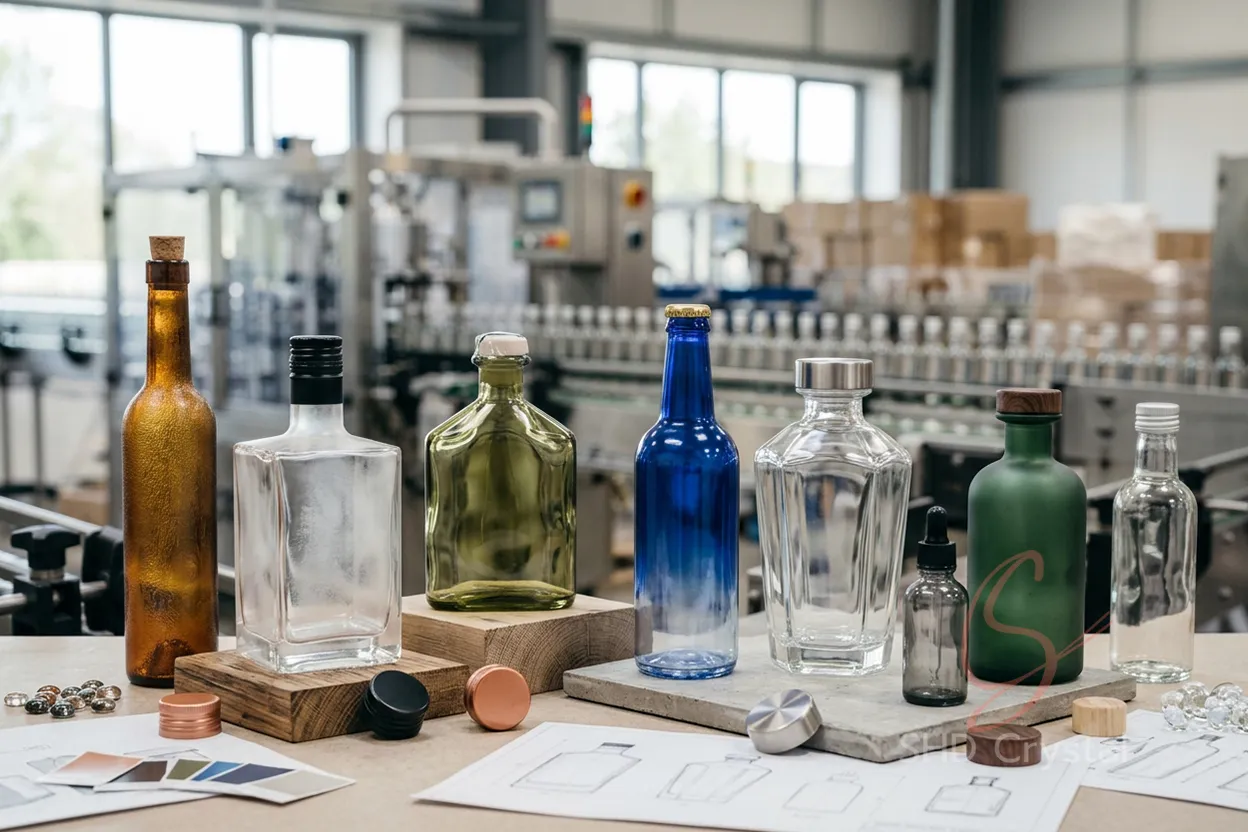
Glass Beverage Bottles for Custom Drink Packaging
When a drink brand starts planning new packaging, the bottle is often judged first by shape and shelf appearance. In real projects, however, packaging success depends on much more than visual style. For juice, water, syrups, craft drinks, and specialty beverages, glass beverage bottles need to match the product, the filling method, the closure system, and the realities of repeated production.
That is why packaging development should begin with actual use rather than appearance alone. Many brands choose custom beverage glass bottles because standard options cannot fully express the intended product identity, but a successful bottle must still remain practical for filling, capping, handling, packing, and long-term supply.
Glass Beverage Bottles Should Be Planned Around the Product Application
Different beverage categories create different packaging priorities. A juice bottle may need a clean transparent body that shows product color clearly. A syrup or concentrate bottle may need a more controlled pouring experience. A premium beverage line may prefer a stronger hand feel, while a high-volume retail project may place more emphasis on packing efficiency and repeatable production.
This is where glass beverage bottles become more than simple containers. Capacity, neck finish, shoulder shape, bottle weight, and closure type all influence how well the package performs in real use. A design that looks attractive in a reference image may still create problems if it does not work well on the filling line or if it becomes difficult to protect during transport.
For beverage bottle OEM development, practical planning early in the project helps reduce later adjustments. It is usually better to define the product type, target fill volume, closure system, decoration direction, and shipment requirements before the bottle shape is finalized.
Bottle Structure Affects Both Appearance and Production
A bottle may appear simple, but small structural details can strongly influence production results. The relationship between the base, body, shoulder, and neck affects how glass moves during forming. If the shoulder transition is too abrupt or the wall thickness distribution is not balanced, stability and appearance may both be affected.
For custom beverage glass bottles, this matters because brands often want packaging that feels distinctive while still remaining suitable for production. A heavier bottle may create a more premium impression, but it can also increase shipping cost and packing weight. A lighter structure may improve logistics, but it still needs enough strength for filling, handling, and delivery.
In actual beverage bottle OEM development, these decisions are usually refined through sampling. A team may begin with a reference concept, then adjust the body proportion, neck finish, label area, or base structure after physical review. This stage is valuable because it helps connect creative ideas with production reality.
Closure Matching Should Not Be Left Until the End
A common mistake in beverage packaging is approving the bottle first and checking the cap later. In reality, the neck finish and closure should be reviewed as one connected system.
For glass beverage bottles, closure compatibility affects sealing reliability, filling efficiency, transport safety, and user experience. A water bottle, syrup bottle, or specialty drink container may each require different closure behavior depending on the product and sales channel.
This is especially important in beverage bottle OEM development, where custom dimensions or decorative choices can influence how the closure fits. Even when the bottle body looks correct, small differences in neck dimensions can cause problems with capping or sealing if they are not reviewed early.
Production Control Determines Batch Consistency
The value of a bottle design is not proven by one good sample alone. It is proven by whether the same result can be repeated in production.
During manufacturing, factors such as mold tolerance, forming temperature, wall thickness transition, and annealing behavior all influence final quality. These details affect bottle strength, dimensional stability, and appearance across repeated batches.
For custom beverage glass bottles, consistency becomes even more important when brands plan multiple SKUs or long-term repeat orders. Printed decoration, frosted effects, colored glass, and embossed details may all require closer control to keep the finished bottle aligned with the approved sample.
This is one reason several production samples should always be reviewed together. A single bottle can look correct on its own, but grouped samples reveal much more about repeatability.
Export Packaging Completes the Packaging System
A well-made bottle still needs proper protection after production. For international shipments, glass bottles may be affected by impact, carton pressure, movement, and pallet load during transport.
For glass beverage bottles, export packaging should be planned together with bottle dimensions rather than treated as an afterthought. Carton strength, dividers, pallet arrangement, and bottle orientation all influence whether the final shipment arrives safely. This is also part of beverage bottle OEM development. A bottle that is difficult to pack efficiently or protect consistently may create avoidable cost and breakage risk, even if the bottle itself looks excellent.
Conclusion
Glass beverage bottles work best when product use, structure, closure compatibility, production control, and export packaging are considered together. The most successful projects are not built around bottle appearance alone, but around how the bottle will be filled, sealed, handled, packed, and repeated over time.
For brands developing custom beverage glass bottles, a structured beverage bottle OEM development process can help transform an initial design idea into a practical and reliable packaging solution.
Developing Beverage Bottle Projects With SHD Crystal
SHD Crystal supports beverage packaging projects through design discussion, sample development, surface finishing coordination, quality inspection, production planning, and export packaging review. For brands working on glass beverage bottles, sharing the beverage type, target capacity, closure style, decoration requirements, and shipment expectations early helps create a more stable development path.
In practice, the best results usually come from early coordination. When product requirements and production realities are reviewed together from the beginning, custom beverage glass bottles become easier to optimize for both market presentation and long-term supply.

