


Brands developing customized packaging need more than a factory that can reproduce a bottle shape. The design must also work with forming conditions, closures, decoration, filling requirements, transport, and repeat production. This is why experienced glass bottle manufacturing companies are often involved before mass production begins, helping turn an initial packaging concept into a specification that can be manufactured consistently.
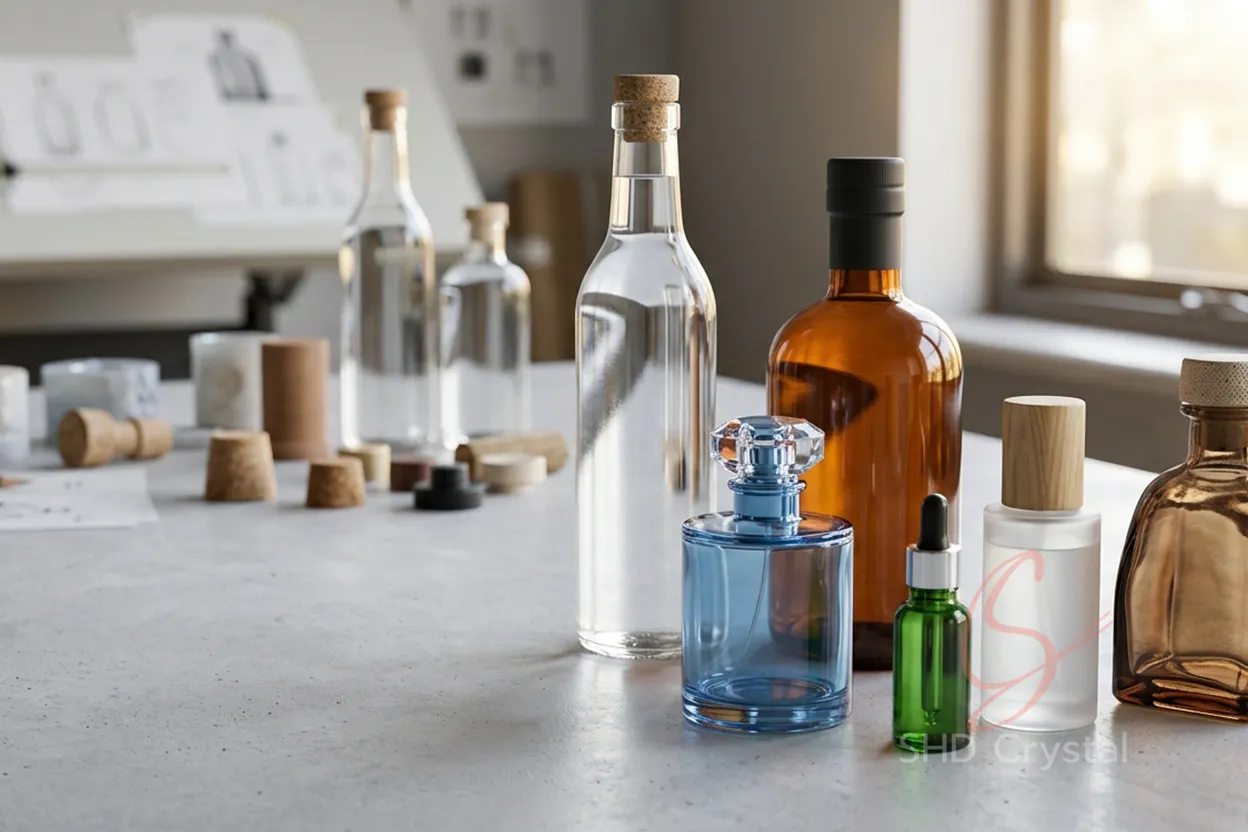
Glass Bottle Manufacturing Companies for OEM Projects
Brands developing customized packaging need more than a factory that can reproduce a bottle shape. The design must also work with forming conditions, closures, decoration, filling requirements, transport, and repeat production. This is why experienced glass bottle manufacturing companies are often involved before mass production begins, helping turn an initial packaging concept into a specification that can be manufactured consistently.
For beverage, beauty, fragrance, and lifestyle projects, early technical review can reduce unnecessary changes after molds and samples have already been produced.
Glass Bottle Manufacturing Companies Need Strong Development Capabilities Beyond Production
A bottle that looks attractive in a rendering does not automatically translate into stable production. Shoulder transitions, neck dimensions, base structure, wall distribution, and decorative areas all need to work with the intended manufacturing process.
During development, manufacturers may review whether the bottle shape can form consistently, whether the base provides sufficient stability, and whether the neck finish matches the intended closure. Label and decoration areas should also be considered before tooling because curved surfaces, embossing, or sharp transitions can affect printing and finishing results.
These details are especially important in custom glass bottle manufacturing, where a distinctive design may require several rounds of technical adjustment before the appearance and production requirements are balanced.
Sampling Connects Design With Manufacturing Reality
Physical samples provide information that drawings cannot fully show. Bottle weight, hand feel, glass distribution, closure fit, surface reflections, and decorative effects are easier to evaluate once the actual container is available.
For example, a bottle may appear well proportioned in a 3D drawing but show a heavier-than-expected base after sampling. A shoulder curve may also need adjustment to improve forming consistency or provide a better transition for decoration.
In practical projects, these small revisions are often easier to solve during sampling than after mass production begins. For glass bottle OEM services, sample approval should therefore include both visual review and functional checks rather than focusing only on the outside shape.
Neck Finish, Closures, and Filling Requirements Should Be Reviewed Together
Bottle development does not stop at the glass body. The neck finish needs to coordinate with caps, pumps, stoppers, or other closure systems according to the intended product.
A small dimensional difference around the neck can affect closure fitting and sealing consistency. Filling conditions may also influence bottle specifications, particularly when a project has specific product temperatures, handling methods, or production-line requirements.
A manufacturer supporting custom glass bottle manufacturing should therefore confirm critical dimensions and closure requirements before larger production runs. Reviewing the bottle and its accessories as one packaging system helps reduce compatibility issues later.
Surface Finishing Needs Production Coordination
Frosting, coating, printing, decal decoration, and other finishing methods can significantly change the appearance of a glass bottle. However, the result depends on the bottle surface, geometry, color, and decoration area.
A design positioned too close to a curved shoulder or structural transition may become difficult to reproduce consistently. Color and coating effects should also be reviewed on physical samples because transparency and glass thickness can influence the final appearance.
Reliable glass bottle OEM services should include coordination between bottle production and finishing rather than treating decoration as an unrelated final step.
Production Consistency Matters Beyond the First Sample
An approved sample establishes the target, but commercial projects also require consistency across repeated production.
Forming temperature, mold condition, glass distribution, dimensional control, and annealing all influence the finished bottle. Inspection should focus on functional areas such as the neck, base, and critical dimensions while also monitoring visible surface quality and decoration.
For brands planning long-term product lines, documented specifications and approved samples can help maintain consistency between production batches. This is one of the important differences between simply purchasing a bottle and developing a repeatable packaging program.
Export Packaging Is Part of the Production Plan
Finished bottles still need to arrive in usable condition. Carton structure, internal separation, bottle spacing, surface protection, and pallet arrangement should reflect the bottle's shape and decoration.
Custom bottles with coatings, printing, unusual profiles, or heavier bases may require different protection from standard containers. Packaging evaluation should therefore be included in the overall manufacturing plan instead of being considered only before shipment.
Conclusion
Choosing between glass bottle manufacturing companies involves more than comparing production capacity or bottle appearance. Successful packaging development depends on technical review, sampling, closure coordination, finishing control, manufacturing consistency, and transport preparation.
For brands using custom glass bottle manufacturing, involving the manufacturer early can help identify practical adjustments before they become expensive production problems.
Developing Custom Glass Packaging With SHD Crystal
For brands evaluating glass bottle manufacturing companies for new packaging projects, SHD Crystal supports design review, mold development, sampling, closure coordination, surface finishing, inspection, and export preparation. Through custom glass bottle manufacturing and glass bottle OEM services, packaging concepts can be refined into practical specifications for repeatable commercial production.

