


A glass bottle with cap solution helps brands develop packaging systems where the container and closure work together from the beginning. For beverage, fragrance, home care, and specialty packaging projects, a successful package depends on more than an attractive bottle shape. The connection between glass structure, sealing method, user experience, and production control must also be considered during development.
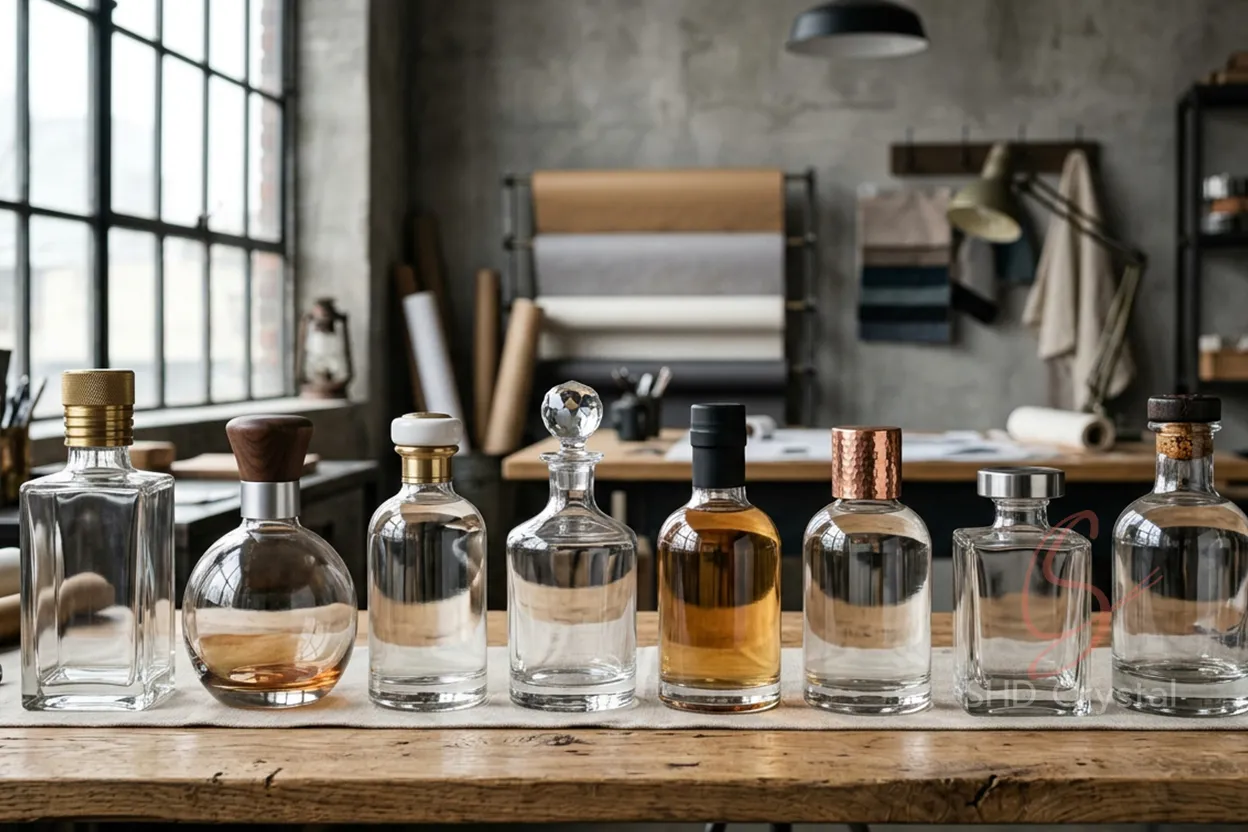
Glass Bottle With Cap Solution for Custom Packaging
A glass bottle with cap solution helps brands develop packaging systems where the container and closure work together from the beginning. For beverage, fragrance, home care, and specialty packaging projects, a successful package depends on more than an attractive bottle shape. The connection between glass structure, sealing method, user experience, and production control must also be considered during development.
Many packaging issues happen because the bottle and cap are designed separately. A professional supplier evaluates the complete system, including bottle dimensions, neck finish, closure compatibility, filling requirements, and production conditions. This approach helps brands create packaging that performs consistently while maintaining the intended appearance.
Glass Bottle With Cap Solution Supports Complete Packaging Engineering
A complete packaging project requires coordination between design ideas and manufacturing reality. A glass bottle with cap solution provides a more integrated approach by treating the bottle body and closure as one functional unit.
Different products require different closure structures. Screw caps are often selected for secure sealing and convenient opening. Metal lids may provide a distinctive appearance for certain packaging styles. Plastic caps can offer flexibility in color, structure, and cost control. Dispensing caps are suitable when controlled product release is important, while inner stoppers may be considered for fragrance or specialty applications.
One common mistake is choosing the bottle design first and adding the cap later. This can create problems with neck dimensions, sealing performance, assembly efficiency, or later filling line use. Early evaluation of the closure system helps reduce redesign costs and avoids unnecessary adjustments during production.
Manufacturing Factors Behind Bottle and Closure Compatibility
The relationship between the bottle and closure depends on precise manufacturing control. Bottle capacity, wall thickness transition, mold tolerance, neck finish, and forming stability can all influence final performance.
The bottle neck area requires particular attention because even small dimensional differences can affect how the cap fits. Poor closure matching may lead to loose caps, uneven tightening, leakage risk, or inconsistent assembly. During production, cooling conditions and annealing behavior also need to be controlled to reduce internal stress and support stable dimensions.
For custom glass packaging projects, these details directly affect product reliability. A bottle may look correct as a sample, but if the neck finish or sealing surface is not stable enough, the final packaging system may still create problems during filling, transport, or customer use.
Closure Design Should Match the Product Application
Closure design is not only a visual decision. It affects usability, product protection, brand presentation, and production efficiency. A beverage bottle may need strong sealing reliability and transportation stability, while a fragrance bottle may require a more refined closure structure and controlled dispensing experience.
A home care product may focus on convenient opening and secure storage. A specialty packaging project may need a more decorative cap that still fits the bottle correctly during repeated assembly. These different requirements should be discussed before sampling so the bottle and cap can be developed as one system.
A reliable supplier should help buyers evaluate closure materials, cap structure, sealing method, neck compatibility, and decoration requirements based on real project needs rather than appearance alone.
Custom Glass Packaging Requires Early Technical Review
Custom glass packaging often includes additional requirements such as coloring, frosting, printing, coating, embossing, or special cap matching. These finishing methods can enhance brand identity, but they also need to be considered alongside production limitations.
For example, surface treatment should not interfere with closure assembly or sealing areas. Printing and coating should avoid high-contact zones if they may be affected during capping, packing, or transport. Decorative caps should also be reviewed together with the bottle shape so the final package feels visually balanced and functions correctly.
This is why a glass bottle with cap solution should be reviewed before mold development, decoration approval, and mass production. Early technical discussion helps connect design intent with practical packaging performance.
Practical Considerations for Custom Packaging Buyers
When developing new packaging, buyers should define key requirements before sampling. Product type, filling process, bottle capacity, closure preference, decoration method, usage environment, and expected order quantity can all influence the final solution.
Clear communication between designers, engineers, and manufacturers helps identify possible challenges before tooling begins. It also helps buyers decide which features are essential and which areas can be adjusted for manufacturability.
A strong closure design improves usability, protects the product, and supports consistent production. When closure fit, sealing reliability, surface finishing, and packing protection are reviewed together, the packaging project becomes easier to control from sample development to final delivery.
Conclusion
A glass bottle with cap solution gives brands a more structured approach to packaging development by connecting bottle design, closure selection, and manufacturing control. Considering technical details early helps reduce production risks and creates packaging systems that are practical for long-term use.
Developing Customized Packaging With Manufacturing Support
SHD Crystal supports custom glass packaging projects through design communication, sampling, bottle and cap matching, surface processing, production coordination, and quality inspection. For brands developing a new glass bottle with cap solution, early discussion of product application, closure requirements, decoration goals, and export packaging can help create a more reliable path from concept to final delivery.

