


A glass decanter distributor connects product supply with ongoing market demand. Retail channels, hospitality suppliers, gifting companies, and regional importers often need different combinations of styles, capacities, packaging formats, and replenishment schedules. For commercial glass decanters, the challenge is not simply finding attractive designs. A successful distribution program depends on whether products can maintain consistent quality, manageable inventory, and reliable supply over time.
Glass Decanter Distributor Planning Starts With the Right Product Range
A strong product assortment does not always mean offering the largest number of designs. Too many unrelated shapes can increase inventory complexity, packaging requirements, and purchasing difficulty.
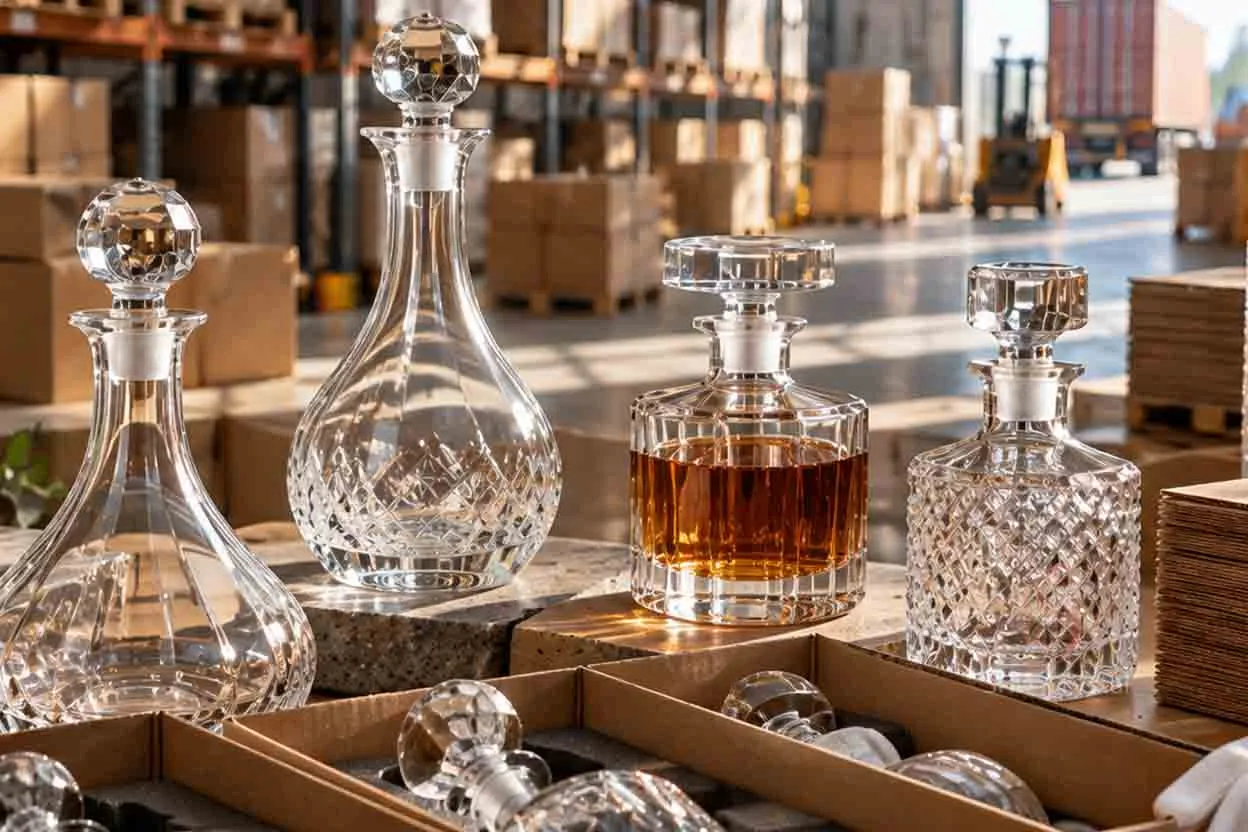
A glass decanter distributor often benefits from building a coordinated product range. Related designs may share similar carton sizes, stopper structures, finishing methods, or production references, making storage and replenishment easier to manage. This does not mean every product needs to look identical. Different cutting patterns, surface treatments, colors, and proportions can still create variety while maintaining a more organized supply structure.
Product Selection Should Follow Market Applications
Different sales channels have different expectations. A premium gifting channel may prefer heavy crystal-style bodies, complex cutting, and distinctive stoppers. Hospitality suppliers may focus more on durability, replacement availability, and practical packaging. Retail distributors may need products with broader customer appeal and easier inventory turnover.
For custom glass decanters, understanding the final application helps determine which features are worth developing and which may create unnecessary complexity. The most suitable product range is usually the one that matches actual market demand rather than simply containing the most designs.
Batch Consistency Affects Distributor Confidence
For distributors, product quality is judged not only by the first shipment but also by future replenishment.
When new inventory arrives months later, differences in glass tone, stopper fit, cutting depth, or surface finishing can become noticeable, especially when products are displayed together. For commercial glass decanters, production factors such as forming temperature, mold condition, annealing behavior, and finishing control influence batch consistency. Maintaining approved references and clear quality standards helps reduce unexpected differences between shipments.
A reliable supply program depends on repeatability.
Packaging Must Support Multiple Handling Stages
Glass products often pass through several steps before reaching the final customer. Factory packing, warehouse storage, regional distribution, and retail handling all create additional pressure on the packaging system.
For a glass decanter distributor, protective cartons, internal dividers, stopper protection, and pallet arrangement should be considered part of the product program.
Heavy bases, decorative stoppers, and sharp geometric designs may require different protection methods compared with simpler bottle shapes. Packaging should therefore be reviewed according to the actual distribution route.
Inventory Planning Should Consider Replenishment Cycles
Demand for glass decanters may change according to seasonal gifting, hospitality projects, promotions, and regional market conditions. A distributor does not always need every design available at all times. Instead, maintaining reliable supply of proven products often creates better inventory efficiency.
For commercial glass decanters, retained production specifications, approved samples, and consistent finishing standards allow future orders to move more smoothly without restarting the entire product evaluation process.
Distribution Programs Need Clear Quality Expectations
A successful distribution relationship depends on clear communication between product suppliers and channel partners.
Before larger orders, distributors should confirm important factors such as:
-acceptable glass color variation;
-stopper fitting standards;
-decorative finishing expectations;
-packaging requirements;
-replacement and replenishment plans.
For custom glass decanters, these details help prevent differences between the original product concept and later commercial shipments.
Conclusion
A glass decanter distributor creates long-term value by managing product range, quality consistency, packaging efficiency, and replenishment planning together. The strongest distribution program is not necessarily built around the largest assortment, but around products that can maintain stable supply and consistent market presentation.
Supporting Commercial Decanter Supply Programs With SHD Crystal
SHD Crystal supports glass decanter distributor projects through product development coordination, sample evaluation, finishing control, quality inspection, packaging planning, and repeat production management.
For partners sourcing commercial glass decanters and custom glass decanters, establishing clear product standards early helps maintain consistency across different markets, sales channels, and future replenishment cycles.

