


In hospitality settings, a decanter is not judged only by how it looks on a bar or dining table. It also has to work through repeated pouring, cleaning, storage, and replenishment. For restaurants, hotels, bars, and beverage programs, glass decanters for hospitality need to balance presentation with daily usability. That is why buyers developing custom glass decanters should pay attention not only to silhouette and decoration, but also to capacity, handling balance, stopper fit, storage efficiency, and future replacement planning.
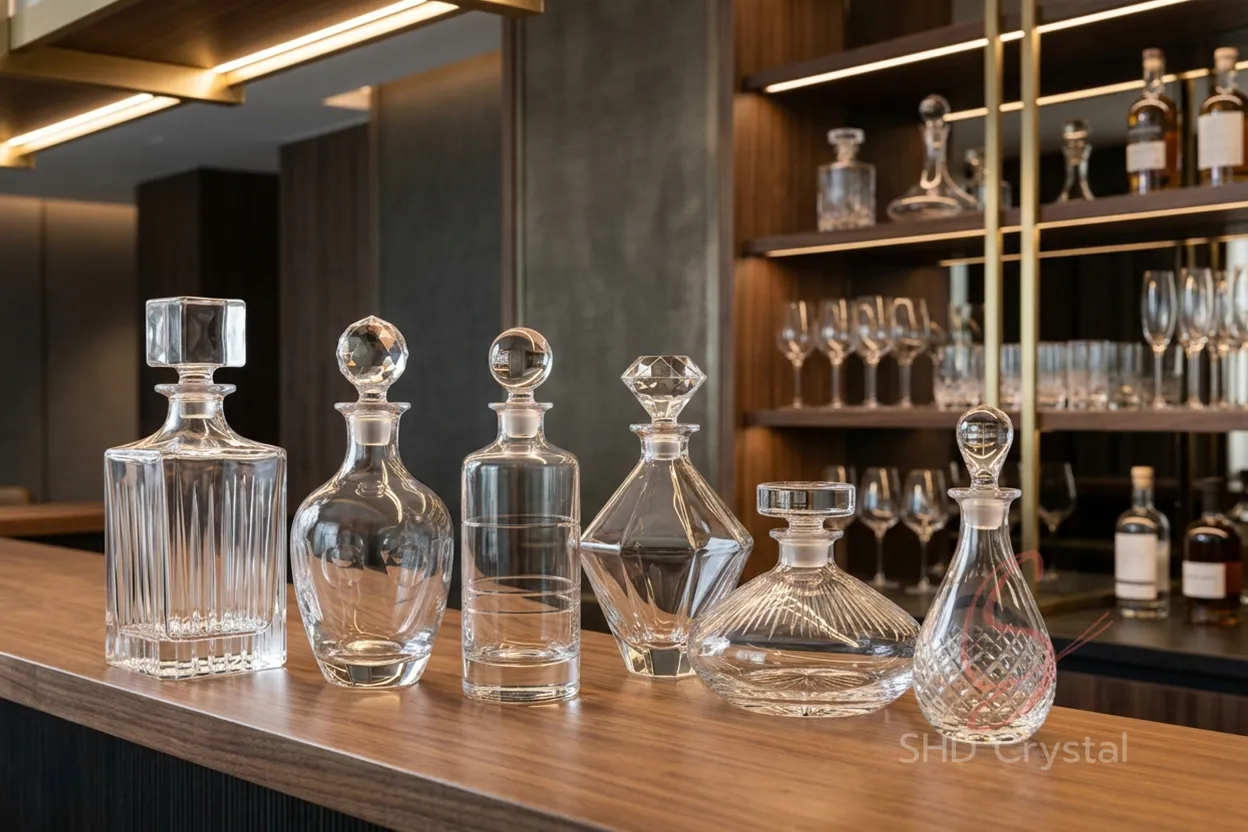
Glass Decanters for Hospitality and Commercial Service Programs
In hospitality settings, a decanter is not judged only by how it looks on a bar or dining table. It also has to work through repeated pouring, cleaning, storage, and replenishment. For restaurants, hotels, bars, and beverage programs, glass decanters for hospitality need to balance presentation with daily usability. That is why buyers developing custom glass decanters should pay attention not only to silhouette and decoration, but also to capacity, handling balance, stopper fit, storage efficiency, and future replacement planning.
Glass Decanters for Hospitality Must Reflect Real Service Conditions
A dramatic decanter can look impressive in a showroom but become inconvenient during real service. Very broad bases can occupy valuable shelf space. Oversized stoppers may be less practical when staff need to work quickly. Deep decorative cutting can also create extra cleaning considerations.
For this reason, commercial glass decanters should be reviewed in the environment where they will actually be used. A busy bar program may prioritize easy pouring and efficient storage, while a hotel gifting or VIP service project may place more value on presentation and customization. The right design depends on the intended setting, not on appearance alone.
Capacity and Balance Affect Everyday Handling
Nominal capacity does not tell the whole story. The relationship between body width, neck position, glass weight, and liquid volume affects how a filled decanter feels in the hand.
For custom glass decanters, a heavy base can create a reassuring sense of stability, but excessive weight may make repeated pouring less comfortable. Wall thickness transition also deserves attention because abrupt changes can influence both weight distribution and cooling stress during production.
Well-developed glass decanters for hospitality should therefore balance visual substance with practical handling rather than simply adding more glass for effect.
Stopper Design Creates a Replacement Question
Stoppers are important visual features, but they also introduce a component that can be damaged, chipped, or misplaced during service. This creates a practical sourcing issue that is often overlooked at the sample stage.
Buyers selecting commercial glass decanters should discuss whether replacement stoppers can be reproduced consistently and how stopper-to-neck fit will be controlled. Mold tolerance, grinding, and finishing variation can all influence that relationship. A stopper may look elegant, but if future replacement is difficult, the program becomes less practical over time.
Decoration Should Match the Service Environment
Engraving, cutting, frosting, color details, and other finishes can help distinguish a hospitality collection, yet decoration should always reflect handling and cleaning expectations.
A highly detailed finish may suit a presentation-focused setting better than a high-turnover bar program. For custom glass decanters, simpler details such as restrained geometric cutting or subtle surface treatment may sometimes offer a better balance between appearance and long-term usability.
The goal is not to avoid decoration, but to choose a finish that supports the service cycle instead of complicating it.
Procurement Planning Extends Beyond the First Order
Hospitality programs usually need continuity. If a decanter becomes part of a recurring hotel, restaurant, bar, or gifting collection, buyers may need replenishment or replacements later. For that reason, commercial glass decanters should be evaluated in terms of tooling retention, specification records, batch consistency, and the ability to reproduce key components. These factors reduce the risk that a later order differs noticeably from the original collection. This issue becomes even more important when multiple units appear together in the same service environment, where small differences are easier to notice.
Conclusion
Glass decanters for hospitality work best when design decisions account for pouring, cleaning, storage, replacement, and future replenishment. A successful program connects the visual identity of the vessel with the practical conditions it will face throughout its service life.
For buyers considering custom glass decanters, the most useful approach is to evaluate the product as part of an ongoing service system rather than as a one-time decorative purchase. That is what helps commercial glass decanters remain practical, consistent, and visually appropriate over time.
Developing Decanters Around Commercial Use
For hospitality groups and beverage brands considering custom glass decanters, a well-planned commercial glass decanters program can move from application review to shape development, tooling, finishing, stopper coordination, and repeat production more smoothly. Discussing service style, expected usage frequency, storage conditions, and replacement needs early usually leads to a more workable result for long-term hospitality use.

