


In hospitality settings, dessert plates do much more than hold the final course. They help frame plated pastries, support afternoon tea service, and contribute to the overall dining atmosphere, but they also need to perform through preparation, handling, washing, storage, and repeat use. For restaurants, hotels, bakeries, and event teams, glass dessert plates for catering should therefore be evaluated not only for appearance, but also for stacking behavior, service practicality, and consistency across repeated use.
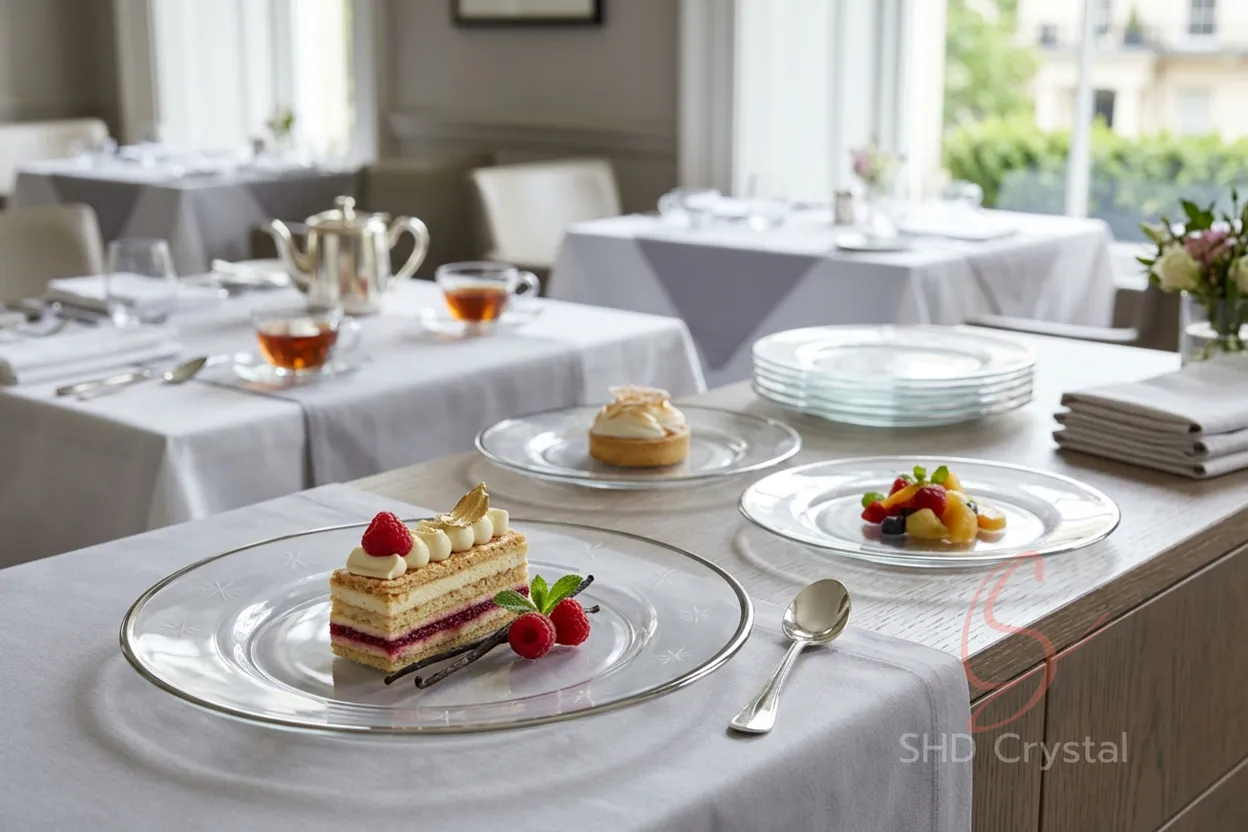
Glass Dessert Plates for Catering | Dessert Serving Plates
In hospitality settings, dessert plates do much more than hold the final course. They help frame plated pastries, support afternoon tea service, and contribute to the overall dining atmosphere, but they also need to perform through preparation, handling, washing, storage, and repeat use. For restaurants, hotels, bakeries, and event teams, glass dessert plates for catering should therefore be evaluated not only for appearance, but also for stacking behavior, service practicality, and consistency across repeated use.
For dessert serving plates, small design changes can have a noticeable effect. Rim width, plate depth, foot-ring shape, surface texture, and overall weight all influence how the plate feels in the hand and how it performs during busy service. In custom glass tableware development, the most useful design is usually the one that balances presentation with daily operational needs.
Glass Dessert Plates for Catering Need to Fit the Service Scenario
Different catering environments use dessert plates in different ways. A fine dining restaurant may want a clean, elegant plate with a controlled presentation area, while a hotel buffet or afternoon tea program may place more value on efficient handling and stable stacking.
Banquet service adds another layer of complexity. In large events, hundreds of plates may be arranged, carried, cleared, washed, and stored in a short period. A decorative shape that looks attractive in a single sample may become less practical if the rim catches against the next plate or if the base does not remain stable when stacked. That is why the intended application should be discussed before dimensions, textures, or decorative finishes are finalized.
Plate Geometry Influences Both Presentation and Handling
Dessert plates are smaller than dinner plates, which means proportion changes are easier to notice. The relationship between rim width, center area, plate depth, and foot-ring diameter affects both visual balance and usability.
For dessert serving plates, a wider rim can create a refined frame around cakes, pastries, or plated desserts, but it also reduces the usable center. A flatter plate may suit petit fours and bakery items, while a slightly deeper form may work better for fruit desserts or plated items with sauces.
In custom glass tableware, these design choices also influence production. Mold tolerance can affect circularity and foot-ring dimensions, while forming and annealing conditions influence how stable the plate remains after cooling.
Sampling Should Include Stacking and Washing Checks
In many projects, the first sample is only the beginning of the real review process. Several glass dessert plates for catering may look correct when placed side by side, yet stacking them can reveal contact points between raised decoration and the underside of the next plate. In other cases, a small adjustment to the foot ring may be needed after a sample shows slight rocking on a flat surface.
Washing and repeated handling also deserve attention. Polished edges, embossed textures, and decorative surfaces may experience friction during loading, unloading, and stacking. If a plate is intended for regular hospitality use, these conditions should be considered during sample evaluation rather than after production has already begun.
This is often the difference between an attractive sample and a more workable catering product.
Surface Design Should Support the Dessert
Glass tableware changes the visual relationship between the food and the table. Clear glass keeps the focus on the dessert itself, while subtle color, texture, or embossed pattern can help support a bakery display, afternoon tea service, or themed event setting.
For custom glass tableware, the finish should ideally be reviewed with actual food presentation when possible. A pattern that looks elegant on its own may feel too dominant when paired with delicate pastry plating. Likewise, a heavily textured surface may reflect light beautifully in one setting but compete with the dessert in another.
The plate should support the food rather than overpower it.
Packaging Still Matters After Delivery
For glass dessert plates for catering, packaging is not only about export shipment. In real hospitality use, plates may continue moving between warehouses, kitchens, service stations, dining areas, and event venues.
That means separators, carton support, and stacking direction can continue to affect the product long after the initial delivery. Suitable protection helps reduce rim contact, surface friction, and unnecessary pressure during transport and storage. For dessert serving plates that will be handled frequently, packaging decisions made during development can remain useful throughout the product's working life.
Conclusion
Glass dessert plates for catering perform best when presentation, stacking, handling, washing, and repeat service are considered together. A successful plate is not simply one that looks elegant on the table. It is one that also remains stable, manageable, and consistent across the everyday routines of hospitality use.
For dessert serving plates and custom glass tableware, the best results usually come from early discussion of service conditions, design priorities, and handling requirements. When those factors are reviewed together, the final product is more likely to work naturally from kitchen preparation to final presentation.
Developing Dessert Tableware Around Real Service Conditions
SHD Crystal supports glass dessert plates for catering projects through design evaluation, mold development, sampling, finishing, inspection, and export packaging. For dessert serving plates and custom glass tableware programs, sharing the intended service environment, dessert style, quantity, and storage requirements early can help shape a more practical and visually suitable tableware solution.

