


In commercial dining programs, a dinner plate is expected to do more than look attractive on the table. It has to move through service, washing, stacking, storage, and repeat use without creating unnecessary problems for the operator. For restaurants, hotels, catering suppliers, distributors, and private-label brands, working with a glass dinner plates manufacturer is therefore not only about appearance, but also about consistency, practicality, and repeatable production.
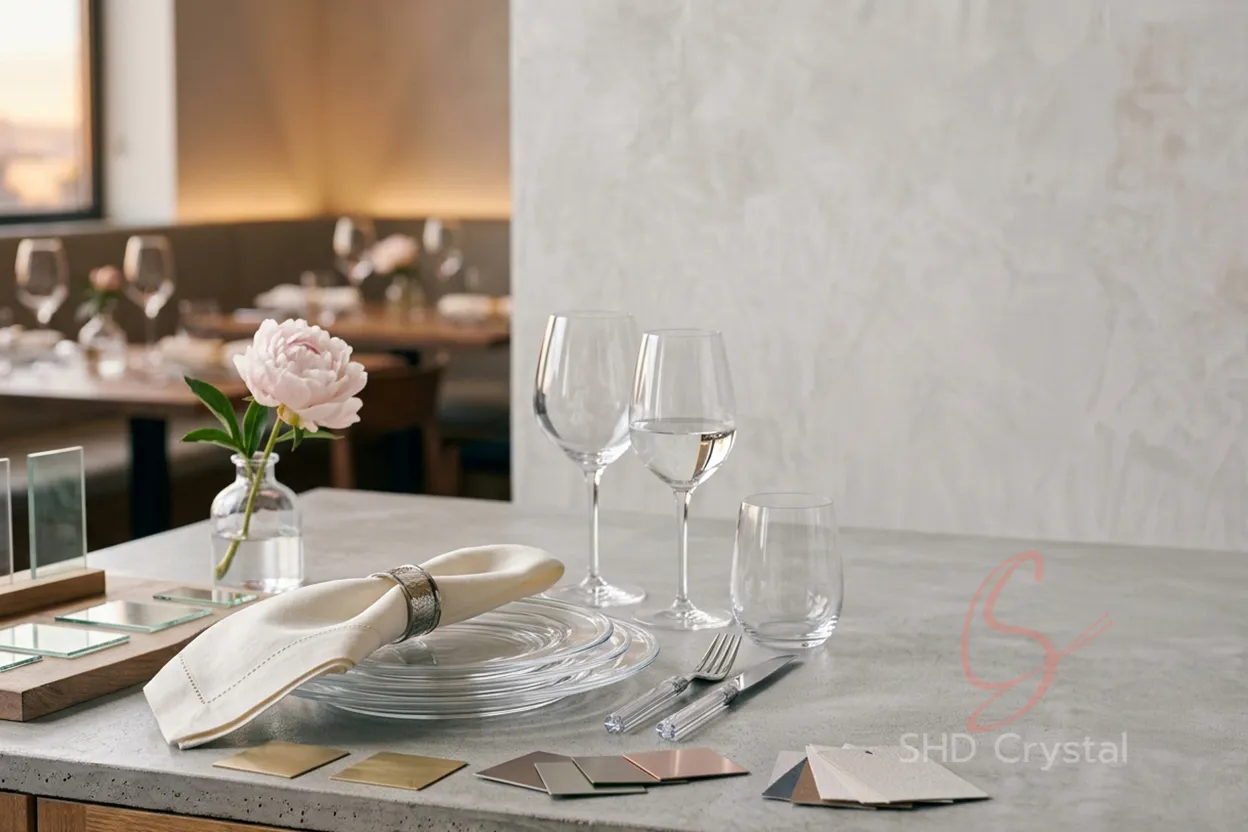
Glass Dinner Plates Manufacturer For Tableware
In commercial dining programs, a dinner plate is expected to do more than look attractive on the table. It has to move through service, washing, stacking, storage, and repeat use without creating unnecessary problems for the operator. For restaurants, hotels, catering suppliers, distributors, and private-label brands, working with a glass dinner plates manufacturer is therefore not only about appearance, but also about consistency, practicality, and repeatable production.
For glass dinner plates, size, rim structure, weight, finish, and overall balance all influence how the product performs in real use. When these details are handled well, the result is not simply a decorative plate, but a more dependable piece of custom glass tableware.
A Glass Dinner Plates Manufacturer Connects Design With Daily Use
Dinner plates are among the most frequently handled products in a tableware collection. Their size, weight, rim structure, and surface finish directly influence how they behave during service.
For glass dinner plates, the balance between elegance and practicality is important. A thinner profile may create a refined visual impression, but commercial dining environments often require stronger edges and better handling stability. A wider rim may improve food presentation, while also affecting stacking efficiency and storage space.
A capable glass dinner plates manufacturer should consider these factors during development rather than focusing only on a visual drawing or reference sample.
Plate Structure Influences Manufacturing Results
A dinner plate may appear simple, but its structure affects how glass moves during forming. The relationship between the center area, rim, and foot structure influences both the visual result and production stability.
During manufacturing, variables such as wall thickness transition, forming temperature, and mold tolerance can all affect the finished product. Uneven glass distribution may change weight balance, while inconsistent cooling may create internal stress.
For commercial orders, these details matter because small differences become much easier to notice when hundreds or thousands of pieces are placed together in the same collection.
Surface Treatment Defines the Product Character
Glass tableware can achieve different visual effects through polishing, frosting, coloring, engraving, decals, metallic decoration, or textured surfaces. Each treatment changes how the plate reacts to light and how it works within a broader table setting.
For custom glass tableware, decoration should always be reviewed on physical samples rather than judged only from digital artwork. Transparent tones may appear deeper or lighter depending on glass thickness, while textured surfaces may reflect differently under restaurant or banquet lighting.
This is especially important for hospitality collections, where multiple pieces need to create a coordinated atmosphere rather than function as isolated items.
Sampling Helps Reduce Production Risks
The first sample is often the point where design ideas become practical product decisions. A restaurant group or distributor may decide to reduce rim thickness after handling the plate, adjust the base structure after stability testing, or change the finish after seeing how the product looks under actual service lighting.
For example, a deep embossed pattern may appear visually strong, but later require adjustment if it affects stacking or makes the plate less practical to use in quantity. Another common refinement is reducing unnecessary weight while still keeping the intended premium impression.
A reliable supplier uses sample-stage feedback to improve production readiness before large-scale manufacturing begins.
Quality Control Extends Beyond Visual Inspection
Appearance is important, but commercial tableware should be evaluated more broadly. Flatness, edge smoothness, weight consistency, surface clarity, and packaging protection all influence whether the product performs well after delivery. For glass dinner plates, it is better to review several samples together rather than relying on one individually perfect piece. Batch consistency is often more important than a single strong sample.
Packaging should also be considered early. Proper separators, carton structure, and internal support help protect rims and surfaces during transportation, especially for export projects.
Conclusion
Choosing a glass dinner plates manufacturer means evaluating how design, forming, finishing, inspection, and packaging work together as one system. The right production partner helps turn a tableware concept into glass dinner plates that perform more consistently in real dining environments.
For custom glass tableware programs, long-term value comes from understanding how each plate will be produced, handled, stacked, and experienced over time, not just how it looks in an initial concept.
Building a Practical Custom Tableware Collection
SHD Crystal supports glass dinner plates manufacturer projects through design evaluation, mold development, sampling, finishing coordination, quality inspection, and export packaging. For brands developing glass dinner plates and broader custom glass tableware collections, discussing usage scenarios, target quantities, decoration requirements, and long-term ordering plans early can create a clearer production path.
A successful dinnerware collection is not created only by choosing a beautiful shape. It comes from building a product that remains practical, consistent, and commercially reliable throughout repeated use and repeat orders.

