


Glass jar China projects become more useful when buyers begin with the final use of the package rather than only its appearance. A candle vessel, food container, cosmetic jar, or decorative packaging jar may look simple on screen, yet each application places different demands on wall structure, opening geometry, surface treatment, closure fit, storage, and transport.
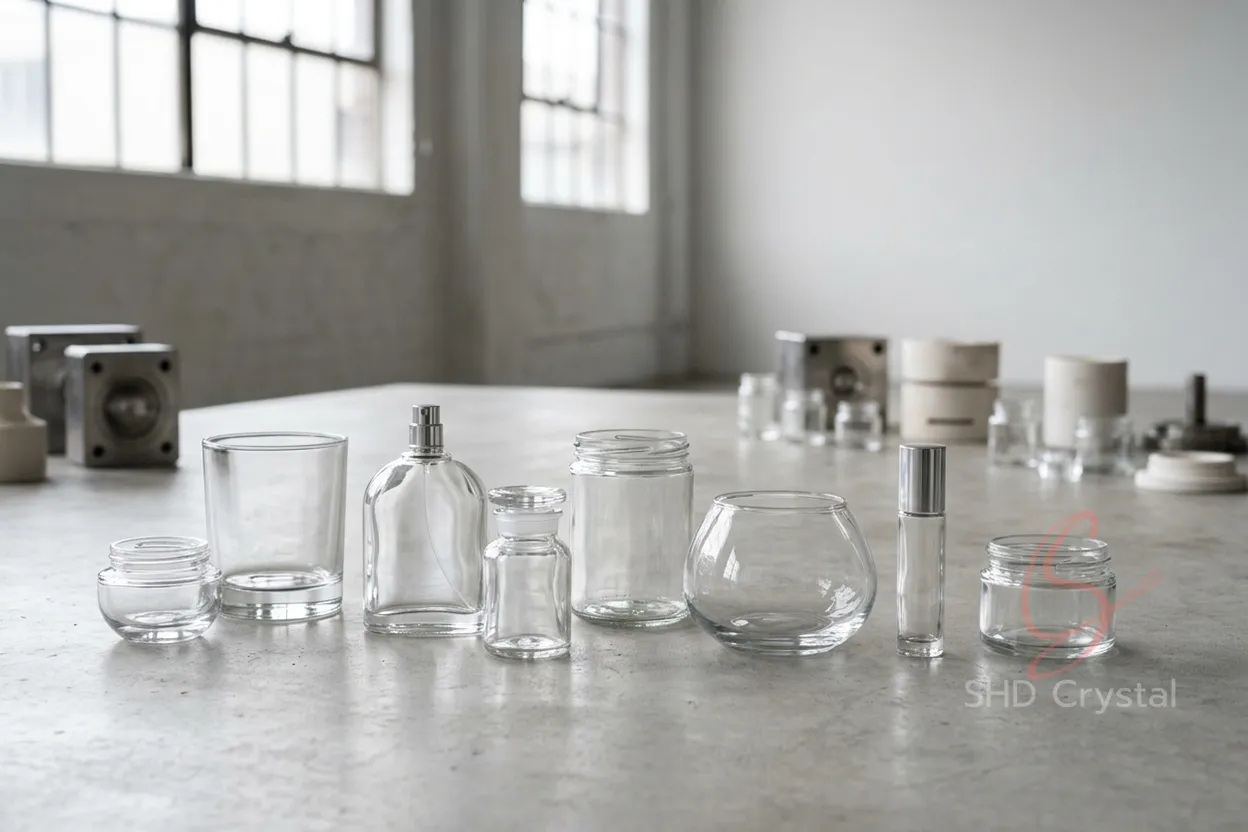
Glass Jar China for Custom Packaging Supply
Glass jar China projects become more useful when buyers begin with the final use of the package rather than only its appearance. A candle vessel, food container, cosmetic jar, or decorative packaging jar may look simple on screen, yet each application places different demands on wall structure, opening geometry, surface treatment, closure fit, storage, and transport.
For custom glass jars, the goal is not only to create an attractive container. The package also needs to support filling, handling, decoration, shipment, display, and repeated production. This is why early discussion with a glass jar manufacturer should connect product use with practical manufacturing decisions.
Glass Jar China Decisions Often Start at the Point of Use
A cosmetic jar, for example, may need strong visual clarity, stable decoration placement, and a consistent neck finish for matching closures. Before tooling begins, a glass jar manufacturer may review mold tolerance, glass distribution, body shape, and the transition between the base and sidewall. Small structural adjustments can improve repeatability without changing the intended design language.
For food packaging, the priorities may shift toward capacity consistency, sealing surfaces, and normal handling strength. In these projects, custom glass jars with highly sculpted shoulders or very heavy bases may create forming challenges if glass distribution is not controlled carefully. This is why a glass jar China project should not be evaluated only by product appearance. The more practical question is whether the design can meet the requirements of its actual application.
Forming Behavior Can Change a Good Drawing
A common mistake is to assume that an attractive drawing will transfer directly into glass without adjustment. Molten glass moves according to temperature, mold geometry, timing, and gravity. Deep embossing, abrupt thickness changes, narrow transitions, or heavy bases can influence how material flows during forming.
This is where forming control and annealing behavior become important. If cooling is not managed properly, internal stress may remain even when the jar looks acceptable from the outside. For a glass jar manufacturer, production stability depends on balancing shape, glass weight, mold design, and cooling conditions rather than maximizing any single feature.
For buyers, this means design review should happen before the project moves too far into tooling. A small adjustment at the drawing stage may be easier than a mold correction after sampling.
Decoration Must Follow the Surface, Not Fight It
Finishing adds another layer of practical decisions. Frosting can soften reflections. Color coating can create a stronger brand mood. Screen printing or decals can add brand details, but the printable area should suit the jar's curvature, mold seams, and contact points.
For example, a large graphic placed across a pronounced shoulder may be more difficult to align than the same graphic on a stable cylindrical panel. Buyers developing custom glass jars should therefore consider decoration zones during the design stage instead of treating decoration as a separate step after sampling.
In a glass jar China sourcing project, the best decoration result usually comes from matching the finish with the actual glass body. The surface, shape, and decoration method should work together.
Logistics Can Reveal Hidden Design Tradeoffs
A jar also has to travel. Excessive weight can increase carton load, while unusual projections may require more protective spacing. Very thick bases can communicate solidity, but they also influence material use, forming balance, and packed weight.
These tradeoffs are easier to manage when packaging, palletization, and expected shipment conditions are reviewed alongside the jar itself. The best result is not always the heaviest or most complex design. It is the design that survives production and distribution while keeping the intended visual character.
For custom glass jars, export packaging should be considered before mass production begins. Carton structure, dividers, jar-to-jar contact, and internal movement can all affect final delivery quality.
Conclusion
Successful glass jar China development starts with the real environment in which the package will be filled, decorated, shipped, displayed, and used. When forming behavior, annealing, decoration zones, and logistics are considered together, the design becomes easier to reproduce and control across batches.
Turning Application Needs Into a Manufacturable Jar
SHD Crystal supports custom glass jars through concept review, tooling discussion, sampling, finishing coordination, inspection, and repeat production. As an experienced glass jar manufacturer, SHD Crystal helps brands connect application needs with practical manufacturing decisions for each glass jar China project.

