


Glass jar OEM is most effective when packaging design, production limits, and purchasing priorities are considered together from the beginning. Wall profile, neck geometry, base thickness, decoration area, and closure fit can all influence whether a design moves smoothly from drawing to stable production.
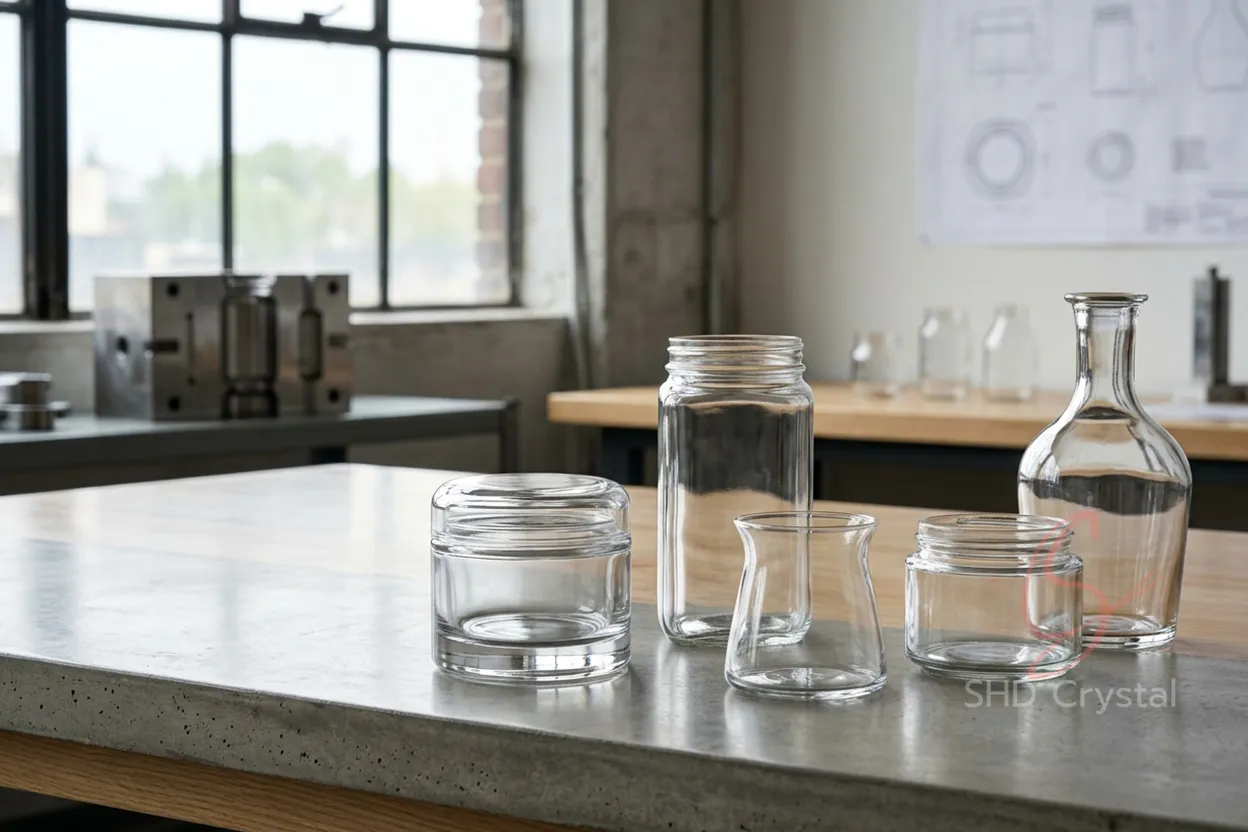
Glass Jar OEM for Custom Packaging Development
Glass jar OEM is most effective when packaging design, production limits, and purchasing priorities are considered together from the beginning. Wall profile, neck geometry, base thickness, decoration area, and closure fit can all influence whether a design moves smoothly from drawing to stable production.
For buyers, the goal is not only to obtain custom glass jars, but to create repeatable packaging that performs consistently across samples, production batches, and future reorders. This is why early technical review matters before mold development, decoration planning, or mass production begins.
Glass Jar OEM Begins With Decisions That Affect Production Stability
Early decisions strongly influence cost, tooling, and quality control. Capacity, dimensions, opening size, target weight, closure type, surface finish, and decoration method should be aligned before mold development. A capable glass packaging manufacturer will also review shoulders, embossing, wall transitions, and base structure because these features can affect how glass distributes during forming.
One common misconception is that a thicker jar is automatically stronger or more premium. In practice, uneven wall thickness can add unnecessary weight, affect hand feel, and make forming more difficult. The better target is controlled glass distribution supported by stable forming conditions and suitable annealing behavior.
This is one reason glass jar OEM projects benefit from engineering review before aesthetic details are finalized. A jar should not only look attractive as a sample. It should also be practical to reproduce, decorate, inspect, pack, and supply again.
Tooling Choices Should Match the Commercial Goal
A project should distinguish between visual prototypes and production tooling. Prototype samples can confirm proportions, capacity, closure relationships, and general appearance, while production molds must account for mold tolerance and batch consistency.
Buyers comparing custom glass jars should therefore ask not only whether a shape can be made, but whether it can be reproduced reliably at the required commercial scale. The answer may involve adjusting a shoulder radius, base structure, embossing depth, neck finish, or label area.
These changes are not simply technical compromises. They can improve closure fitting, decoration alignment, forming stability, and later inspection efficiency. In glass jar OEM, manufacturability is part of design quality.
Decoration Adds Its Own Production Variables
Coating, frosting, screen printing, decals, and spraying should be selected according to both appearance and use environment. Decoration also introduces alignment, adhesion, curing, and handling considerations. A glass packaging manufacturer should evaluate whether the decorated area crosses strong curves, mold seams, high-contact surfaces, or areas with noticeable thickness changes.
For example, a cosmetic jar with a large logo may need a stable printable zone, while a candle or home fragrance vessel may require more attention to surface uniformity, base stability, and coating protection. Different custom glass jars can share similar forms, but their finishing priorities may be different.
This is why decoration should be treated as part of the production plan, not as a final visual add-on after the glass body is already fixed.
Buyers Should Evaluate More Than Unit Price
Price matters, but tooling ownership, sampling, quality criteria, inspection standards, and change control also affect project risk. A lower quotation may become less attractive if critical specifications remain unclear or revisions happen only after mold completion.
A practical purchasing approach is to define non-negotiable requirements first. These may include capacity, closure fit, decoration position, surface finish, packaging method, or repeated order consistency. Other features can then be separated as adjustable details for manufacturability.
This gives the supplier room to recommend feasible changes without weakening the commercial concept. It also helps both sides avoid unnecessary disputes during sampling or production.
Conclusion
A successful glass jar OEM project connects design intent with measurable production controls, from mold tolerance and wall distribution to decoration planning, inspection, packaging, and batch consistency. Buyers gain more value by evaluating how a jar will be formed, finished, inspected, packed, and repeated rather than judging only the first attractive sample.
From Concept Review to Scalable Production
SHD Crystal supports glass jar OEM projects from design review and tooling discussion to sampling, finishing coordination, inspection, and repeat production. As an experienced glass packaging manufacturer, SHD Crystal helps brands develop custom glass jars that balance distinctive appearance with practical manufacturing requirements.

