


Glass pitcher manufacturing may sound like a technical subject, but most people judge a pitcher in a simpler way: does it feel good to use every day? A useful pitcher may look effortless on the table, yet its handle, weight, spout, capacity, transparency, and balance all shape the experience of filling a glass of water, serving juice at breakfast, or placing drinks on the table for dinner.
Glass Pitcher Manufacturing Begins With Everyday Handling
Good glass pitcher design often becomes noticeable only after repeated use. A pitcher may look elegant when empty but feel awkward once filled with water. The center of gravity changes, the handle carries more load, and the wrist naturally adjusts while pouring.
For everyday glassware, this matters more than decorative complexity. A comfortable pitcher should feel predictable when lifted, tilted, poured, and placed back on the table.
The Handle Changes How Heavy the Pitcher Feels
Capacity alone does not determine whether a pitcher feels heavy. Handle position, opening size, curvature, and distance from the body all affect grip and comfort. A narrow handle may create a delicate silhouette but leave limited space for the hand. A larger handle can feel easier to hold, although it also changes the overall proportions of the pitcher.
In glass pitcher design, the connection between handle and body also deserves attention. Wall thickness transition around this area affects both appearance and structural balance, especially when the pitcher is intended for repeated daily handling.
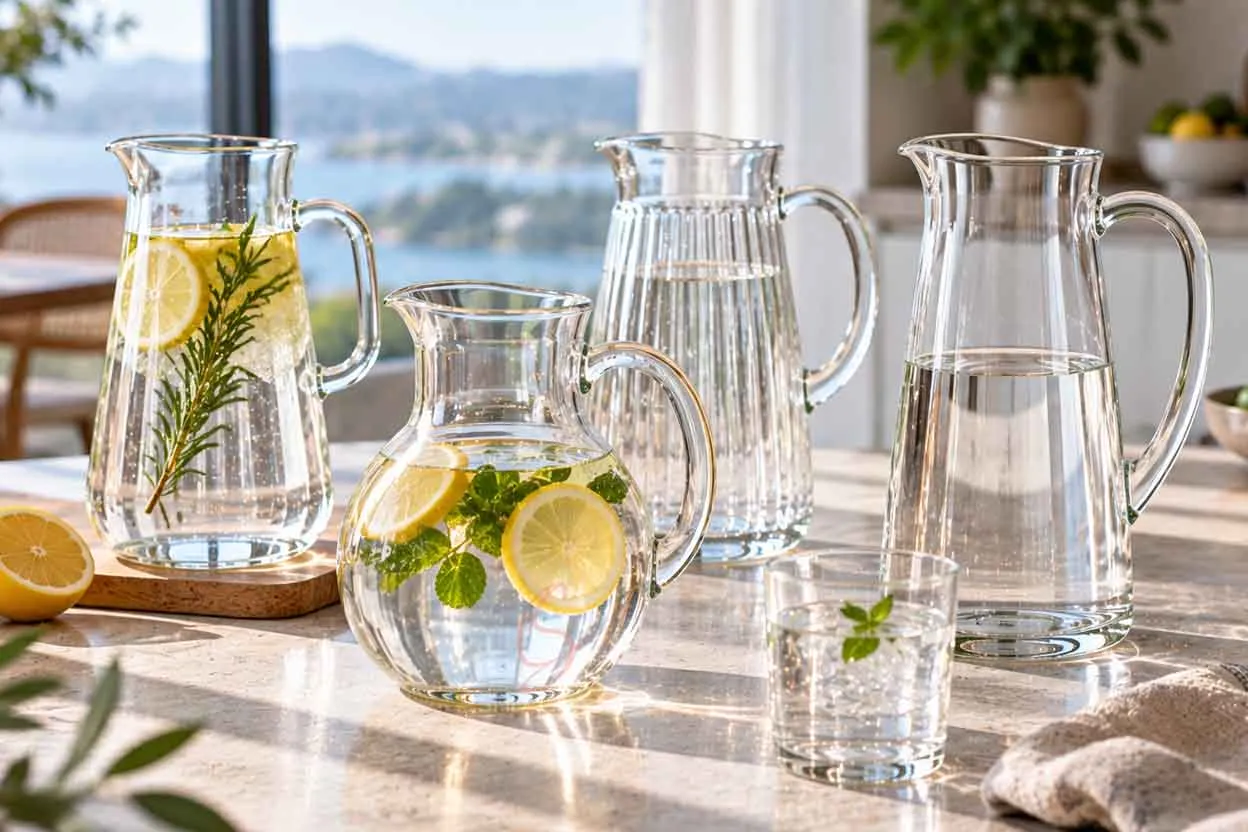
A Good Spout Makes Pouring Feel Natural
The spout is one of the smallest details, but it strongly influences use. A broad lip can create a generous flow, while a more defined spout offers greater direction when pouring into smaller glasses.
The shape should also match the pitcher's intended capacity. A large family-size pitcher behaves differently from a compact carafe used for breakfast or bedside water.
For everyday glassware, controlled pouring often feels more valuable than a dramatic silhouette. Even a beautiful pitcher becomes frustrating quickly if the liquid does not leave the rim cleanly.
Weight Should Feel Balanced Rather Than Simply Substantial
Thick glass can create a reassuring sense of quality, but more weight is not always more comfortable. Once the pitcher is filled, extra material in the base, rim, or handle becomes much more noticeable.
Glass pitcher manufacturing therefore involves finding a practical balance between visual substance and comfortable handling. The base needs enough stability for the table, while the upper body should not make the vessel unnecessarily tiring to lift. This balance is especially important for pitchers that are used several times throughout the day.
Transparency Changes the Way Drinks Look
Clear glass gives a pitcher a light, familiar character. Water, citrus slices, iced tea, fruit, or colored drinks all become part of the visual effect.
Texture changes that experience. Vertical ribs can stretch reflections, hammered surfaces break light into smaller highlights, and lightly tinted glass adds color even when the pitcher contains plain water.
These choices allow glass pitcher design to move easily from minimal breakfast tables to more decorative dinner settings without changing its basic function.
Daily Use Also Means Cleaning and Storage
A pitcher has to work after the meal too. Neck width affects cleaning access, overall height influences cabinet storage, and deep textures can make the exterior more visually complex.
A common design mistake is considering the pitcher only when it is sitting beautifully on a styled table. Everyday glassware also needs to move comfortably between the refrigerator, sink, shelf, and dining table.
During sampling, several small adjustments may be more useful than one dramatic redesign: opening the handle slightly, refining the rim, reducing unnecessary weight, or changing the body proportion to make storage easier.
Conclusion
Glass pitcher manufacturing is ultimately connected to a series of ordinary moments: filling, carrying, pouring, cleaning, and putting the pitcher away. A successful design feels simple because its proportions, weight, grip, transparency, and pouring behavior have already been considered carefully.
Shaping a Pitcher Around Everyday Use
SHD Crystal supports glass pitcher manufacturing projects through shape development, size adjustment, color and texture sampling, mold development, finishing, inspection, and packaging. When a project begins with how the pitcher should feel in daily use, details such as handle proportion, capacity, transparency, surface pattern, and rim design can be refined around the intended glass pitcher design instead of being added afterward.

