


A glass plate factory should not be judged only by whether it can reproduce a drawing. For tableware brands, hospitality suppliers, importers, wholesalers, and OEM project teams, the real question is whether a supplier can turn a design into repeatable production without losing the details that matter in use, presentation, packing, and reorders.
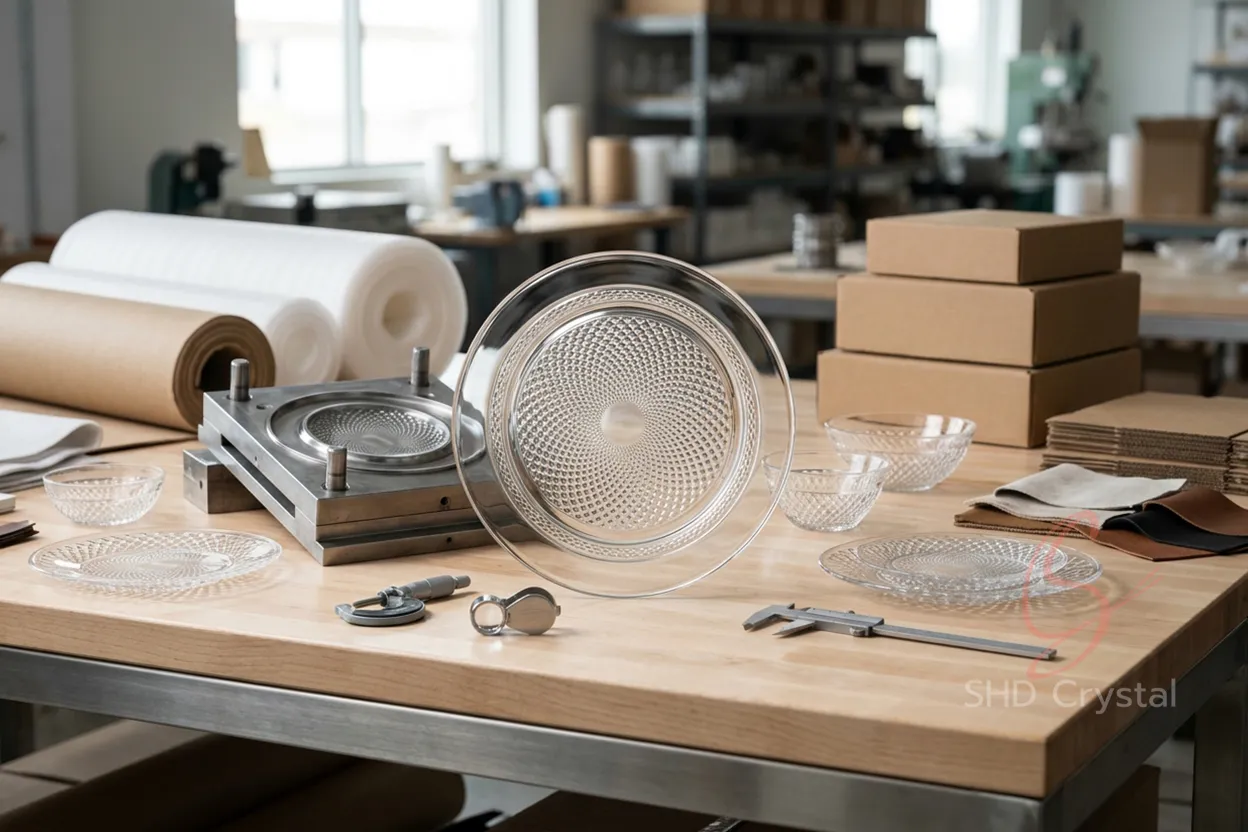
Glass Plate Factory for OEM Tableware Projects
A glass plate factory should not be judged only by whether it can reproduce a drawing. For tableware brands, hospitality suppliers, importers, wholesalers, and OEM project teams, the real question is whether a supplier can turn a design into repeatable production without losing the details that matter in use, presentation, packing, and reorders.
A Glass Plate Factory Should Be Judged Beyond Price
A quotation may look competitive, but price alone says little about production control. Before tooling begins, a capable supplier should review the plate diameter, rim profile, foot structure, target weight, decorative depth, and intended finish. These details influence mold design, forming behavior, and the amount of manual adjustment required later.
This is especially important for custom glass plates with embossed patterns, decorative textures, or unusual silhouettes. A design that looks balanced on screen may become too heavy at the rim, too shallow at the center, or more difficult to release from the mold in actual production. Early manufacturability review helps reduce unnecessary mold corrections and improves development efficiency.
Sampling Reveals More Than a Drawing
Sampling is often the stage where an OEM glass tableware project becomes practical. A plate may look correct visually in the drawing, but the first sample can show that the rim feels too thick. In the next round, that area may be reduced slightly, followed by another check to confirm whether the foot still sits flat after cooling.
Color may also require adjustment because the actual glass thickness can make a transparent tone appear deeper than expected. Packaging can change as well. If raised decoration touches the next plate when stacked, the separator design or packing direction may need to be revised before mass production. These are normal development decisions. They show why a glass plate factory should be evaluated by how it responds to sample feedback, not only by how quickly it produces the first prototype.
Production Control Is Visible in Small Details
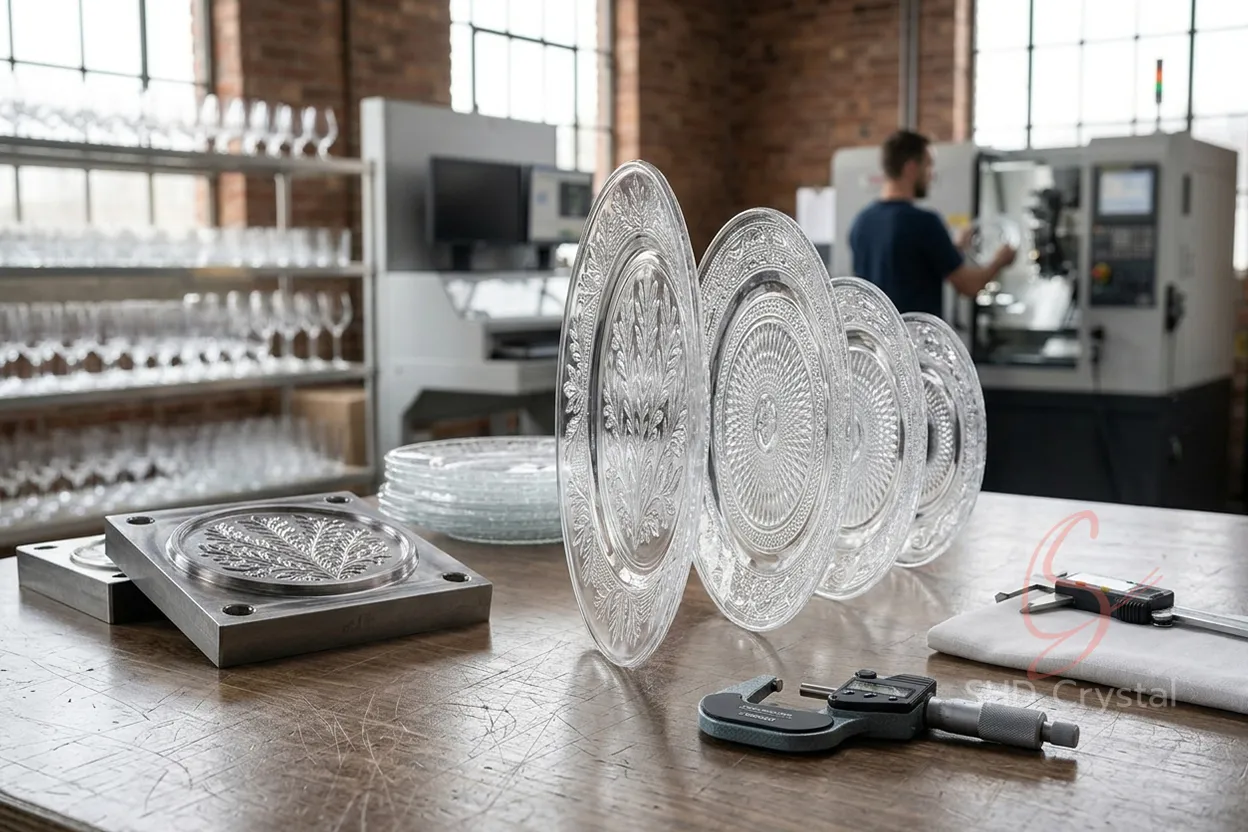
For custom glass plates, consistency is often more valuable than one unusually perfect sample. Several pieces should be compared for rim shape, foot stability, pattern definition, surface finish, and overall weight.
Real production variables also matter. Mold tolerance can affect dimensions, annealing behavior can influence stability after forming, and polishing pressure can change the feel of a finished rim. When decoration is added, manual finishing variation and batch consistency also become part of the quality discussion. A supplier does not need to eliminate every small variation. It should be able to define which variations are acceptable for the intended tableware program and communicate those standards clearly.
Finishing and Packaging Belong in the Same Decision
An OEM glass tableware project may include grinding, polishing, fire finishing, decals, metallic decoration, color coating, or other secondary processes. Each finish interacts differently with the plate surface and decorative pattern, so these processes should be reviewed as part of the product development stage rather than treated as separate additions later.
Packaging deserves the same level of attention. Dinner plates and serving plates have exposed rims and broad contact areas, so separators, carton strength, stacking method, and internal movement all affect export performance. A glass plate factory that considers packaging only after production may leave fewer options for correction.
Conclusion
Choosing a glass plate factory is ultimately a decision about control, communication, and repeatability. The strongest supplier is not simply the one that can produce custom glass plates once, but the one that can manage design changes, production variables, finishing, and packing with a clear path toward stable commercial orders.
Building a More Reliable OEM Tableware Program
For an upcoming project, SHD Crystal can review drawings, reference samples, finishes, target quantities, and packaging requirements before production planning begins. This approach helps customers move from an early design concept toward a more workable OEM glass tableware specification while keeping visual intent and manufacturing reality aligned.

