


In a wedding reception, tableware is part of the overall atmosphere, but it also has to work through setup, service, storage, and transport. For wedding planners, event rental companies, hospitality suppliers, banquet venues, and venue sourcing teams, glass plates for wedding events need more than a polished visual effect. They should stack safely, remain consistent across large event orders, arrive well protected, and support the service flow of a real reception.
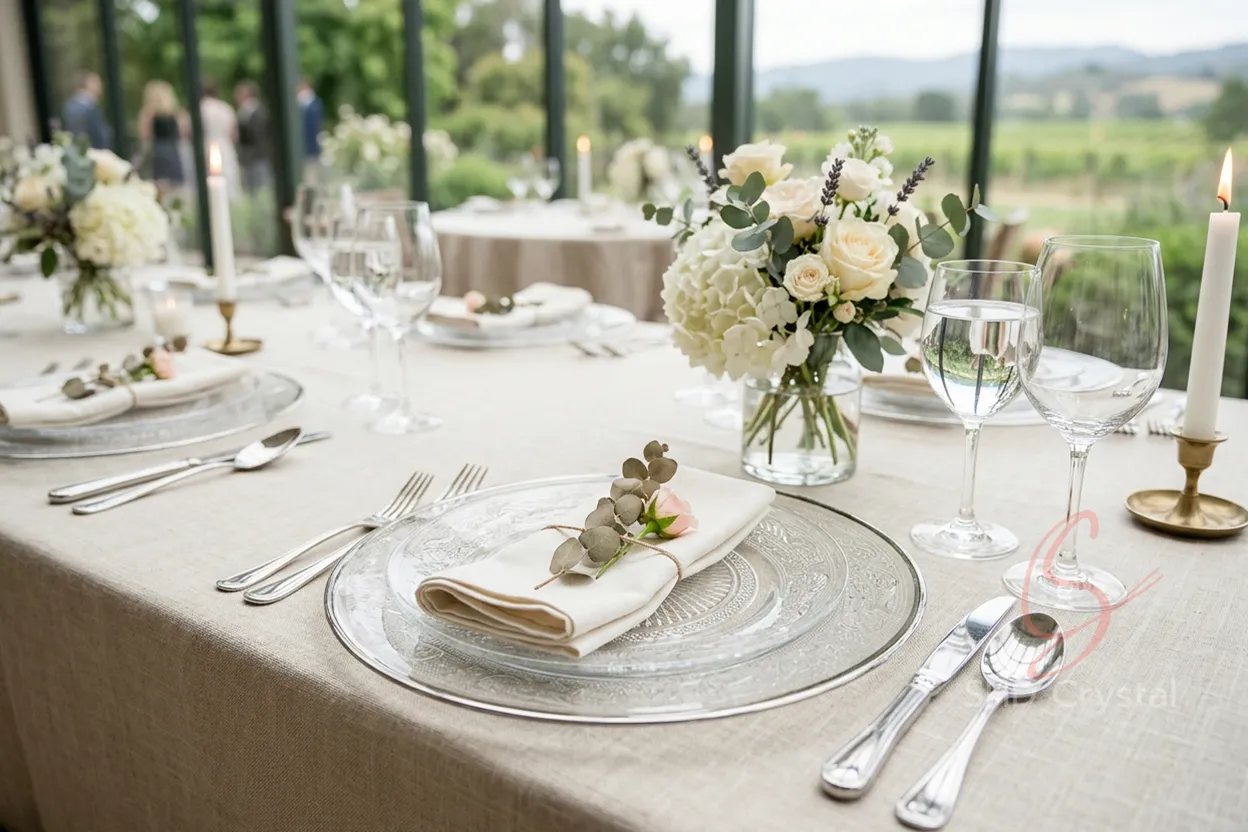
Glass Plates for Wedding Events | Wedding Glass Plates
In a wedding reception, tableware is part of the overall atmosphere, but it also has to work through setup, service, storage, and transport. For wedding planners, event rental companies, hospitality suppliers, banquet venues, and venue sourcing teams, glass plates for wedding events need more than a polished visual effect. They should stack safely, remain consistent across large event orders, arrive well protected, and support the service flow of a real reception.
For wedding glass plates, the table effect is only one part of the project. Weight, rim shape, base stability, decorative finish, packaging method, and handling efficiency can all affect whether the plates perform well during setup, service, storage, and transport.
Glass Plates for Wedding Events Must Work Beyond the Photo
A wedding table is a coordinated setting rather than a single product display. Linens, flowers, lighting, charger layers, and glassware all change how glass plates for wedding events look in use. Clear glass can keep a dense table arrangement light and elegant, while colored or textured surfaces can reinforce a specific wedding theme.
The practical side matters as much as the visual effect. Deep embossing may create attractive reflections, but it can also introduce contact points during stacking. Wide decorative rims can frame the table beautifully, yet they may add weight for banquet staff. Design choices should therefore be evaluated against both styling requirements and real event operations.
Several Samples Show What a Large Event Order Will Really Look Like
A single approved piece cannot show batch consistency. Before confirming a commercial event order, several samples should be placed together under lighting similar to the expected venue environment.
Transparent color, hand-applied decoration, and metallic effects may show small differences from piece to piece. Manual finishing variation can influence edge appearance, while mold tolerance can affect pattern definition around the rim. These are normal manufacturing variables, but their acceptable range should be discussed before production.
For glass dinner plates, the foot ring and base also deserve attention. Minor rocking on one sample becomes much more noticeable. when hundreds of place settings are prepared for a wedding receptionReviewing several pieces together gives event sourcing teams a more realistic understanding of repeatability.
Weight and Structure Affect Banquet Handling
Plate weight is often treated as a quality signal, but heavier is not automatically better. Staff may carry stacks repeatedly during a wedding or banquet, so weight, rim profile, grip, and stacking behavior should be considered together.
Wall thickness transition is another practical factor. Material needs to move smoothly between the center, rim, and decorative areas during forming. A balanced structure can support the intended visual character without adding unnecessary weight or making the plates difficult to handle.
For wedding glass plates used in hotel banquets, event rentals, or large reception programs, practical handling should be reviewed early. A plate that looks impressive on a styled table should also remain manageable during preparation and service.
Packaging Follows the Wedding Supply Chain
Event tableware may pass from factory packing to export freight, warehouse storage, local transport, and venue setup before it reaches the table. Each movement creates opportunities for rim contact, scratching, or pressure between stacked pieces. This is especially relevant for wedding glass plates with raised patterns, colored surfaces, or decorative finishes. Separators, stacking direction, carton support, and internal movement should be evaluated with actual samples rather than added as an afterthought.
Wedding and banquet projects also require practical coordination beyond table styling. Plates may need to be unpacked quickly, arranged in large quantities, moved between preparation areas, and stored again after delivery. Packaging should therefore be easy to open, organize, protect, and repack when needed.
Customization Needs Clear Priorities
Color, edge treatments, embossed motifs, and decorative finishes can make glass dinner plates distinctive, but not every feature needs the same tolerance. Some details define the collection, while others can remain flexible enough for production control.
A useful development brief separates the visual elements that must remain unchanged from the areas that can be adjusted for manufacturability. This gives the manufacturer room to control forming temperature, annealing behavior, polishing pressure, and finishing variation while keeping the overall table concept intact.
For glass plates for wedding events, this balance is important. The final product should support the design theme, but it should also remain realistic for repeated production, inspection, packing, and event use.
Conclusion
Glass plates for wedding events work best when visual styling and event operations are considered together. Consistent appearance matters, but so do manageable weight, stable bases, safe stacking, realistic manufacturing tolerances, and packaging that can survive the journey to the reception table.
For wedding glass plates and glass dinner plates used in banquet settings, the most successful projects are planned around both presentation and practical service requirements.
Planning a More Practical Wedding Tableware Program
For wedding event or banquet tableware projects, SHD Crystal can support sample evaluation, custom mold development, finishing, inspection, and export packaging. Sharing the intended table setting, service conditions, target quantity, and decoration requirements early can help shape a more workable commercial tableware program.

