


Glass products often need more than careful manufacturing to arrive safely in the hands of customers. For crystal glassware, decorative vases, tableware, and other customized pieces, glass product packaging solutions play an important role in protecting fragile items during storage, transportation, and international delivery. Good packaging design helps reduce damage risk while also supporting product presentation and customer satisfaction.
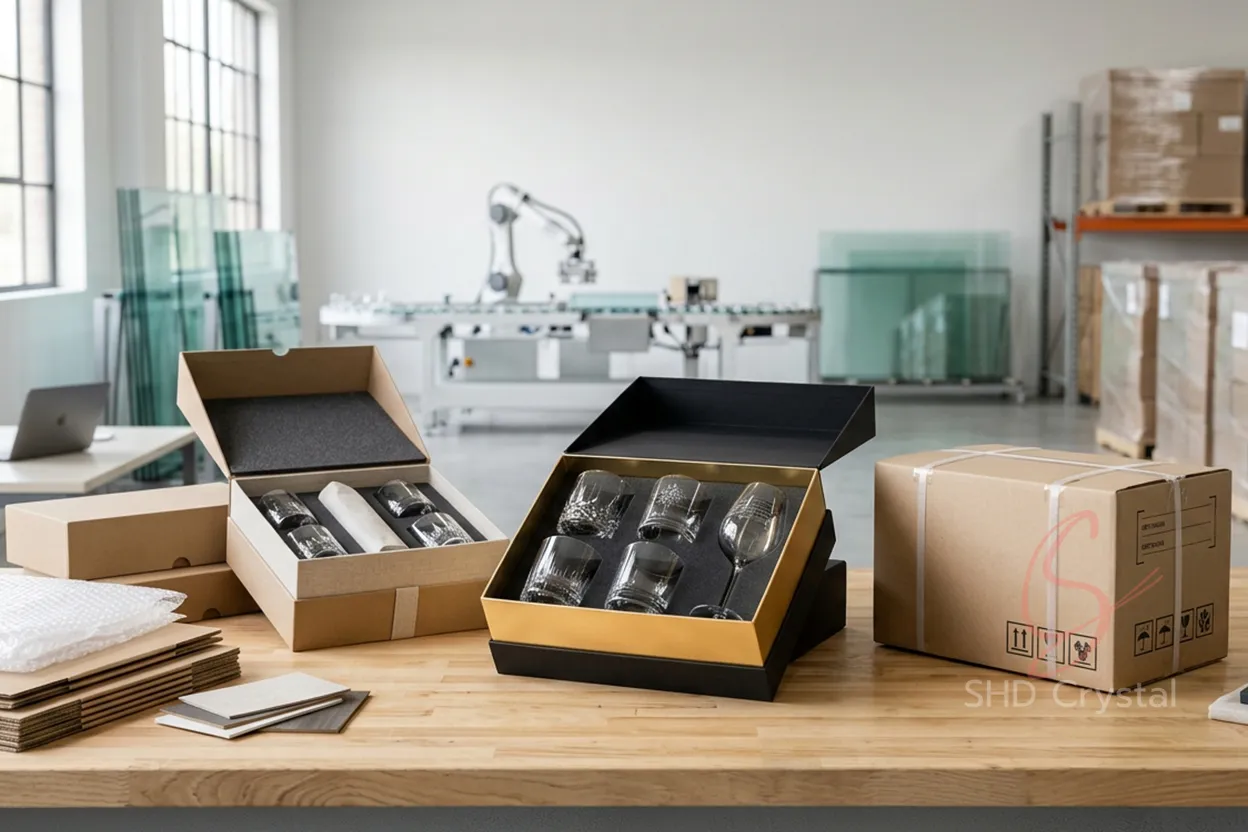
Glass Product Packaging Solutions for Safe Delivery
Glass products often need more than careful manufacturing to arrive safely in the hands of customers. For crystal glassware, decorative vases, tableware, and other customized pieces, glass product packaging solutions play an important role in protecting fragile items during storage, transportation, and international delivery. Good packaging design helps reduce damage risk while also supporting product presentation and customer satisfaction.
Many B2B buyers focus mainly on product design, glass clarity, surface finishing, or craftsmanship, but packaging development should not be treated as a final step. A beautiful glass item can still face delivery risks if the packaging structure does not match its shape, weight distribution, edge design, or surface treatment requirements.
Glass Product Packaging Solutions Require Product-Specific Protection Strategies
Unlike standard packaging, glass protection requires careful consideration of product structure and handling conditions. Different glass products have different weak points, which means packaging cannot always follow one universal solution.
A thin-stem wine glass may need protection around both the bowl and stem area, while a large decorative vase may require stronger support around the base and body. Products with hand-applied finishes, polished edges, coatings, or delicate surface treatments may also need additional protection against scratches and direct contact.
Professional packaging planning usually considers internal support structure, cushioning materials, carton strength, product positioning, and movement control. The goal is not simply to add more protective material, but to create a balanced system that reduces impact, pressure, and friction during transportation.
In reality, packaging should be considered during the product development stage because product dimensions, weight, and finishing methods can directly influence the final packaging design.
Developing Custom Glass Packaging for Different Product Requirements
Custom glass packaging allows brands to create protection solutions based on specific product characteristics. Instead of relying only on standard cartons or inserts, customized structures can be developed according to the actual shape, fragile points, and delivery risks of each item.
During export projects, glassware export packaging becomes especially important because products may experience longer transportation distances, multiple handling processes, warehouse movement, and different storage conditions before reaching the final customer.
For example, SHD Crystal works with customers to coordinate packaging requirements for customized glass products. A project may involve reviewing product dimensions, confirming inner protection methods, testing packaging samples, and adjusting details before shipment. This process helps connect the product structure with real delivery conditions.
Packaging design also needs to consider production consistency. When products are manufactured in batches, packaging dimensions should remain stable to improve packing efficiency, reduce unnecessary adjustments, and support smoother shipment preparation.
Project Experience in Glassware Export Packaging
In practical export projects, packaging adjustments often happen after the first packing sample is reviewed. A vase may require stronger base support than expected, while a stemmed glass may need more separation around the bowl and stem to reduce movement during transport. For glassware export packaging, reviewing the actual product shape, weight distribution, and fragile points before shipment helps improve packing efficiency and reduce delivery risk. This is why custom glass packaging should be tested as part of the project rather than treated as a final add-on after production.
These adjustments do not mean the original product design is unsuitable. They show that fragile glass products need packaging structures that match real handling, stacking, and transportation conditions.
Combining Manufacturing Experience With Packaging Coordination
Glass product packaging solutions are closely connected with manufacturing knowledge. A supplier that understands glass production can usually provide more practical packaging suggestions because product structure affects protection requirements.
Manufacturing factors such as wall thickness variation, product weight distribution, polished edges, surface finishing, and fragile connection points can influence packaging decisions. Handmade glass items may require different protection methods compared with mechanically formed products because their shapes and structural details may vary more from piece to piece.
Export preparation is another important consideration. Glassware export packaging should support safe loading, efficient warehouse handling, and reliable delivery to different markets. Carton structure, inner dividers, cushioning materials, and stacking methods should be reviewed together instead of being selected separately.
SHD Crystal supports customers by coordinating product development, packaging discussions, quality inspection, and shipment preparation. This integrated approach helps reduce communication gaps between manufacturing and packaging stages.
Choosing the Right Packaging Approach for Glass Products
When selecting packaging solutions, buyers should consider product value, transportation conditions, destination market requirements, and customer expectations. A decorative glass product for retail display may need both protection and presentation quality, while a large tableware order may focus more on safe stacking, carton strength, and packing efficiency.
High-end glass products often require more than basic protection. Packaging should preserve product condition while also supporting the brand experience when customers receive the final item.
Working with an experienced glass manufacturer helps brands evaluate packaging requirements earlier and avoid common transportation issues. The most reliable approach is to review product design, packaging structure, inspection standards, and export requirements as one connected project.
Conclusion
Effective glass product packaging solutions are an essential part of delivering fragile glass products successfully. By combining product knowledge, packaging planning, and manufacturing coordination, businesses can reduce risks and improve the overall delivery experience.
For customized glassware, packaging should protect the product without ignoring presentation, handling efficiency, or export conditions.
Building Reliable Glass Product Delivery Solutions
Brands developing customized glass collections can work with SHD Crystal for product evaluation, custom glass packaging coordination, glassware export packaging preparation, and production support. A structured approach from design review to final shipment helps create safer and more reliable glass product delivery solutions.

