


Glass pump bottle manufacturer selection should begin with the complete dispensing system, not the bottle appearance alone. For skincare, lotion, liquid soap, body care, and other personal care products, the glass body must work accurately with the neck finish, pump, collar, dip tube, formula, and filling process. This is why custom glass pump bottles require both glass manufacturing control and component compatibility testing before mass production.
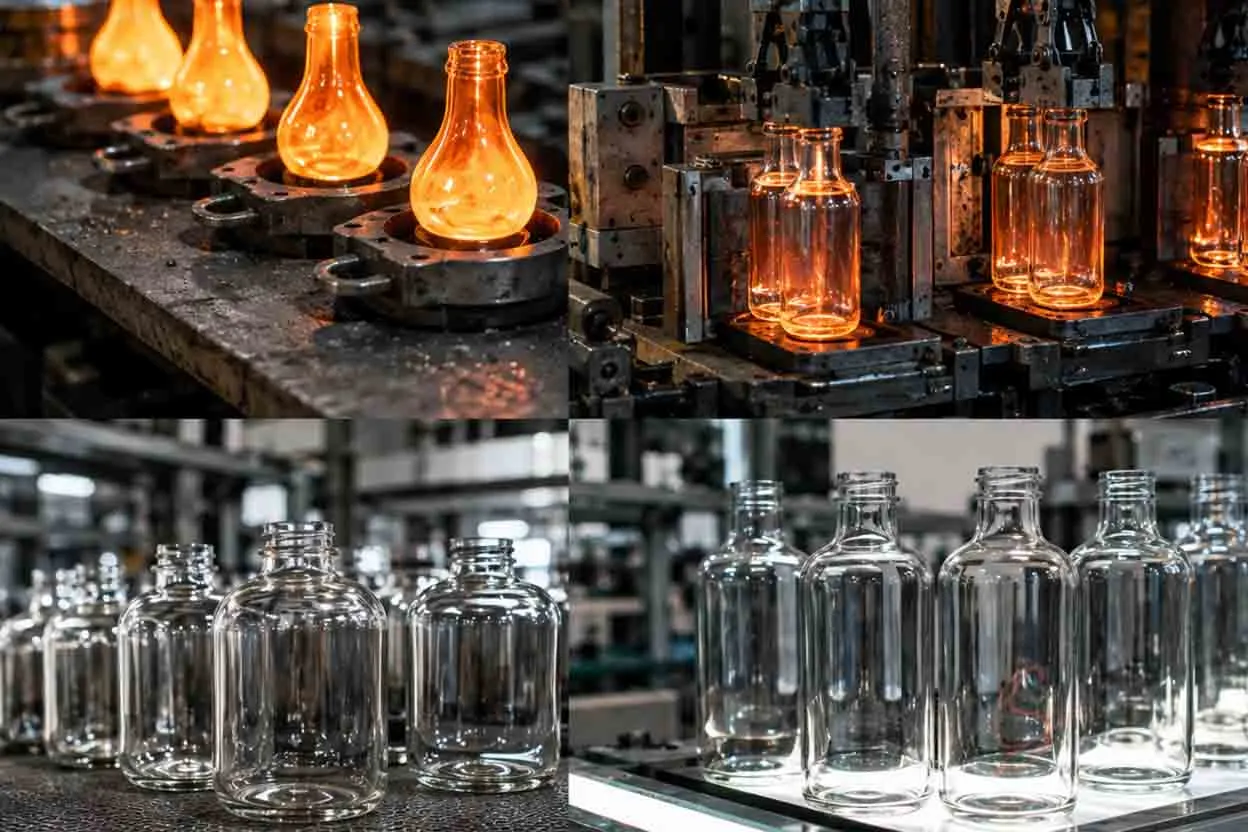
Glass Pump Bottle Manufacturer for Cosmetic Packaging
glass pump bottle manufacturer selection should begin with the complete dispensing system, not the bottle appearance alone. For skincare, lotion, liquid soap, body care, and other personal care products, the glass body must work accurately with the neck finish, pump, collar, dip tube, formula, and filling process. This is why custom glass pump bottles require both glass manufacturing control and component compatibility testing before mass production.
How a Glass Pump Bottle Manufacturer Connects Glass Forming With Pump Performance
Bottle development usually begins with capacity, body diameter, shoulder profile, base thickness, and neck specification. Straight-sided bottles provide practical decoration areas, while rounded shoulders or heavier bases can create stronger visual identity.
The neck finish is one of the most important structural areas. Small dimensional differences can affect pump installation, collar alignment, sealing, and dispensing stability. Mold tolerance and forming consistency therefore matter even when the bottle looks visually acceptable.
A capable glass pump bottle manufacturer should treat the bottle neck and pump system as connected components rather than separate purchasing items.
Pump Selection Depends on Formula Behavior
Different formulas place different demands on the dispensing system. Lightweight liquids, lotions, cleansing products, and higher-viscosity formulations may require different pump mechanisms and output rates. Dip tube length must also match the internal bottle height.
For cosmetic pump bottle packaging, functional testing should use the actual formula or a technically representative substitute whenever possible. A pump that works smoothly with water may behave differently with a thicker skincare formulation.
One common mistake is approving the bottle and pump separately. Custom glass pump bottles should be tested as assembled packaging, including pump recovery, dispensing consistency, leakage resistance, component fit, and remaining product accessibility.
Glass Forming Creates the Dimensional Foundation
During production, forming temperature, glass distribution, mold condition, and cooling behavior influence the final bottle structure. Uneven wall thickness transition can affect both appearance and durability, particularly when a design combines a heavy base with thinner sidewalls.
Annealing is another important control stage. Proper cooling helps reduce internal stress after forming and supports more stable production results.
For custom glass pump bottles, repeatability matters because neck dimensions, body geometry, and bottom flatness all influence downstream assembly. Batch consistency becomes especially important when the same pump, collar, decoration, and carton system must fit multiple production runs.
Decoration Should Follow Structural Approval
Frosting, spraying, screen printing, coating, and other finishing methods can significantly change the bottle appearance, but decoration should normally be confirmed after the bottle structure is stable. In cosmetic pump bottle packaging, coated surfaces must remain clear of critical fitting areas where decoration could interfere with pump assembly. Buyers should also consider scratch resistance, filling-line handling, carton contact, and repeated consumer use.
The bottle may look premium in a sample room. It still has to survive production.
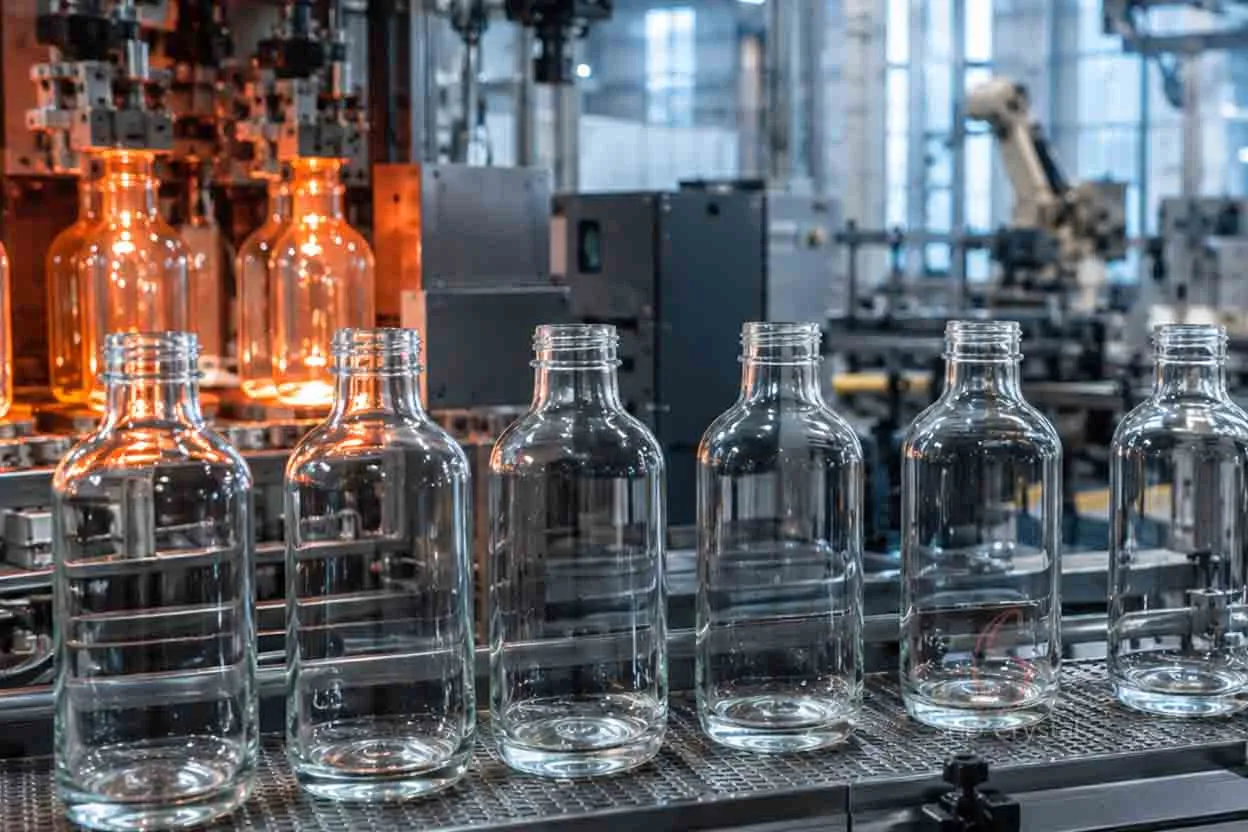
Buyers Should Evaluate the Complete OEM System
When comparing suppliers, brands should review more than bottle price. Tooling, neck accuracy, pump compatibility, decoration capability, inspection standards, packing, and production repeatability should be evaluated together.
Cosmetic pump bottle packaging becomes more reliable when the supplier understands the product application instead of simply supplying an empty glass container. Capacity, formula type, pump output, decoration, filling method, and target market all influence the final packaging direction.
Conclusion
A glass pump bottle manufacturer creates better results when glass forming, neck tolerance, pump selection, formula behavior, decoration, and inspection are coordinated from the beginning. This system-based approach helps reduce compatibility problems and supports more stable repeat production.
OEM Glass Pump Bottle Production With SHD Crystal
As a China-based glass pump bottle manufacturer, SHD Crystal supports custom glass pump bottles from design review and mold development through automated glass forming, annealing, decoration, inspection, component matching, and export packing. Automated production helps improve dimensional consistency and batch repeatability, while project-specific pump evaluation supports more dependable cosmetic pump bottle packaging for skincare and personal care brands developing long-term OEM programs.

