

glass vessel manufacturing begins before a finished bottle has any recognizable shape. From SHD Crystal's production perspective, the critical work starts with molten glass temperature, gob weight, mold condition, and machine timing. These variables determine whether bottles and jars can maintain stable dimensions, balanced walls, accurate neck finishes, and consistent surface quality once production moves beyond the first samples.
How Glass Vessel Manufacturing Moves From Molten Glass to Stable Containers
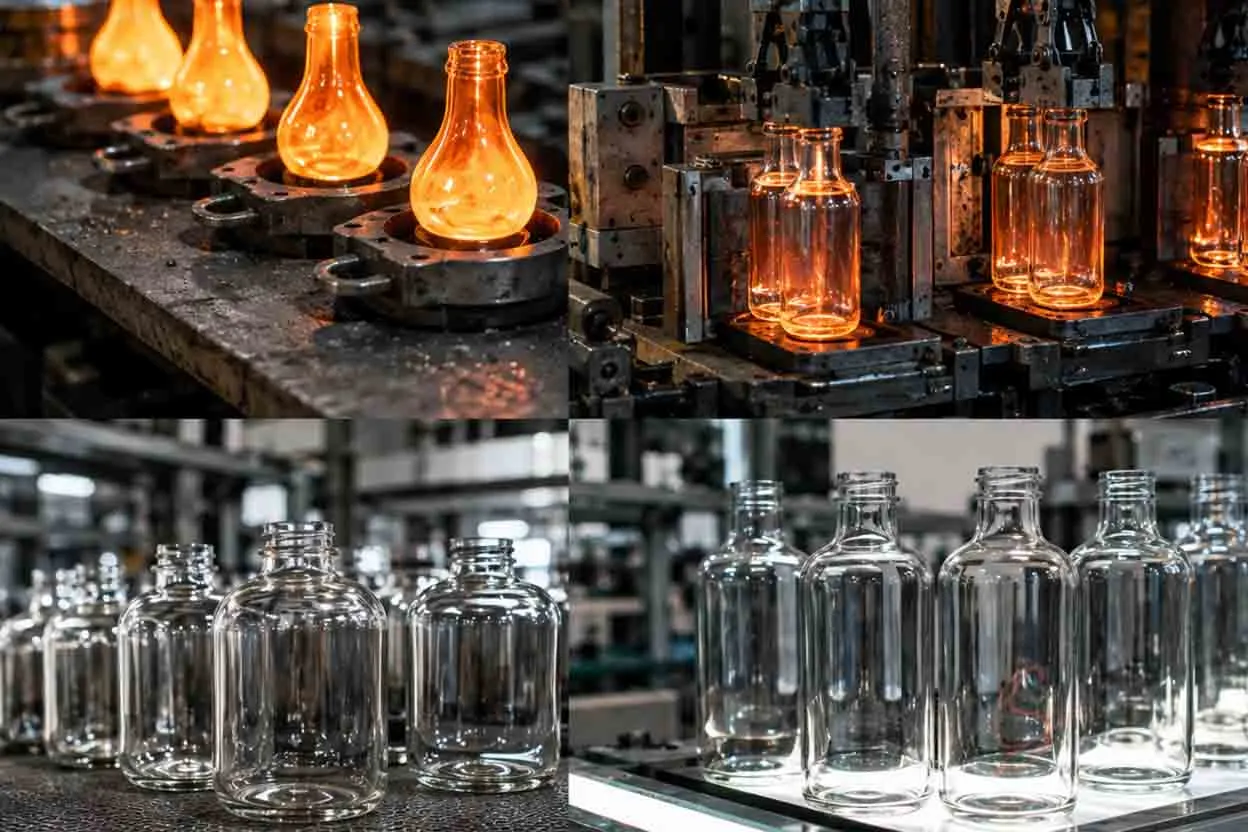
The process starts by cutting molten glass into measured gobs and delivering them into forming equipment. The selected bottles forming method then shapes each gob inside dedicated molds. Depending on vessel geometry and machine configuration, forming may use pressing, blowing, or a combined sequence to create the internal cavity and final exterior profile.
Consistency at this stage matters. A change in gob weight can shift glass from one part of the vessel to another. Forming temperature also affects how easily material reaches shoulders, corners, bases, and narrow neck areas.
The Mold Defines Shape, but Glass Distribution Defines Stability
In glass vessel manufacturing, reproducing the mold outline is only part of the job. Glass must also be distributed appropriately through the structure.
A heavy base may improve stability and hand feel, but a sudden wall thickness transition can make cooling more difficult. Flat panels create useful decoration areas yet reveal distortion more clearly. Mold tolerance influences body symmetry, while neck dimensions directly affect closure compatibility.
For this reason, the bottles forming method should be reviewed together with capacity, shoulder geometry, base proportion, and intended closure. At SHD Crystal, production evaluation focuses on whether these features can remain repeatable throughout a production run rather than whether one attractive sample can be produced.
Annealing Continues the Manufacturing Process
Freshly formed vessels remain hot and cannot simply be left to cool rapidly. Different sections often contain different amounts of glass, so uncontrolled cooling can leave internal stress within the product.
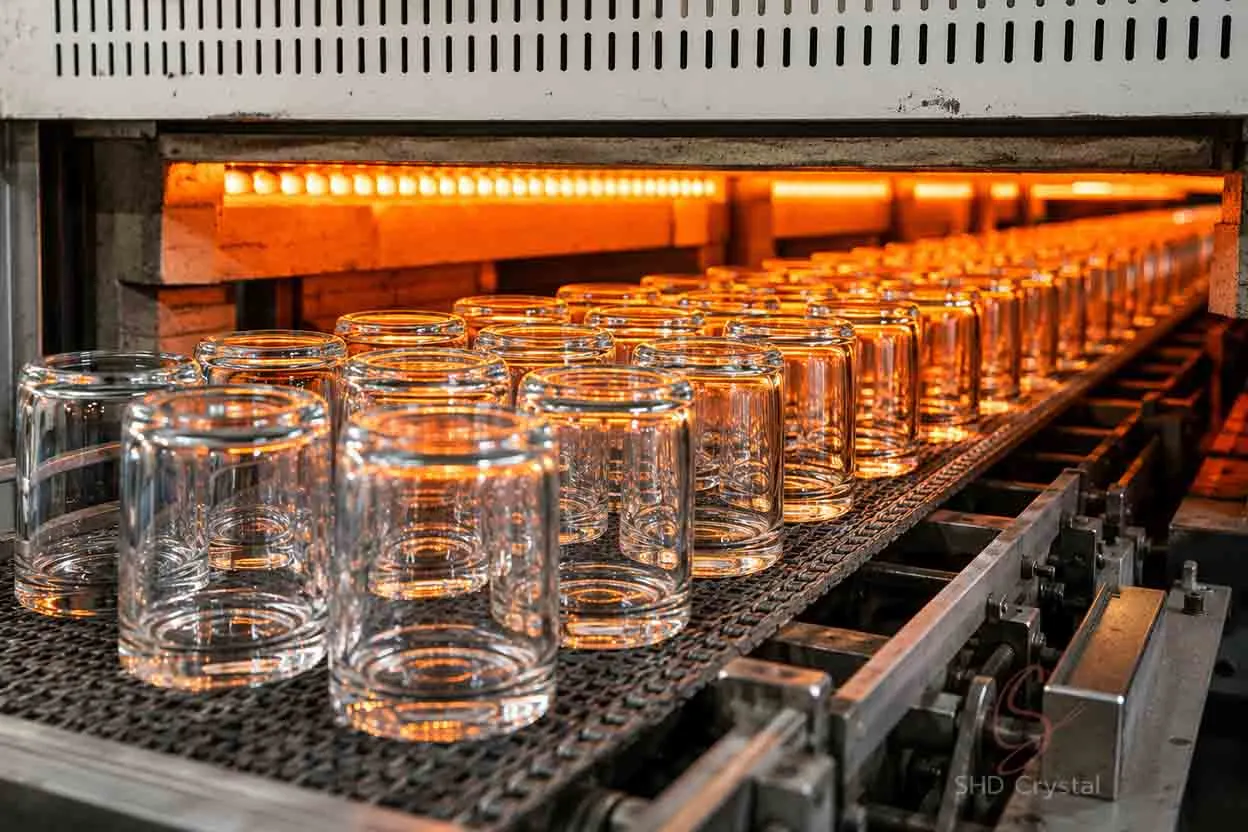
An automated annealing line moves newly formed containers through controlled temperature zones. Conveyor speed, thermal profile, wall distribution, and product mass all influence annealing behavior. Heavy-base jars or geometric containers may require particular attention because their sections do not cool at identical rates.
The automated annealing line therefore does more than cool bottles. It connects hot-end forming with stable downstream inspection by giving each production batch a repeatable thermal cycle.

Cold-End Inspection Provides Process Feedback
Once annealing is complete, inspection shifts toward neck accuracy, body height, bottom flatness, wall appearance, and visible surface defects.
One manufacturing misconception is that final inspection can compensate for unstable forming. It cannot. Sorting can remove unacceptable pieces, but recurring distortion or dimensional variation usually needs to be corrected earlier.
Effective glass vessel manufacturing uses inspection findings as feedback for forming conditions, mold status, and annealing settings. Decoration and packing can then proceed after the underlying bottle structure is confirmed.
FAQs About Glass Vessel Manufacturing
Q1: What Bottles Forming Method Is Commonly Used for Hollow Glass Containers?
A1: The bottles forming method depends on vessel shape, neck design, and production equipment. Commercial bottles and jars are generally produced from measured molten glass gobs using pressing, blowing, or combined forming sequences inside dedicated molds. The process must control both exterior geometry and internal glass distribution.
Q2: Why Is an Automated Annealing Line Necessary After Forming?
A2: An automated annealing line allows hot containers to pass through controlled temperature zones instead of cooling too quickly. This helps reduce internal stress caused by differences in glass thickness and mass distribution, particularly in heavy-base or complex-shaped containers.
Q3: Which Variables Most Affect Production Consistency?
A3: Gob weight, forming temperature, machine timing, mold condition, wall thickness transition, annealing profile, and dimensional inspection all affect consistency. In glass vessel manufacturing, these factors are connected, so instability at the hot end can later appear as neck variation, distorted panels, uneven bases, or inconsistent surface quality.
Conclusion
glass vessel manufacturing is a connected thermal and mechanical process rather than a single molding operation. Stable containers depend on controlled glass delivery, suitable forming conditions, balanced material distribution, annealing, and inspection working together throughout production.
Automated Glass Vessel Production With SHD Crystal
As a OEM glass manufacturer, SHD Crystal supports glass vessel manufacturing through mold development, automated forming, automated annealing line operation, cold-end inspection, surface finishing, and export packing. Matching the bottles forming method with vessel geometry, closure requirements, decoration, and production volume helps move custom glass container concepts toward more repeatable manufacturing.

