


In tableware and drinkware design, small details often decide whether a product looks ordinary or refined. A gold-rimmed glass adds a delicate decorative line to the mouth, edge, or upper body of the vessel, creating a more premium impression for hotels, restaurants, wedding events, gift sets, and branded glassware collections.
How Gold-Rimmed Glass Adds Premium Visual Detail
A gold-rimmed glass is usually designed with a metallic decorative effect applied around the rim or selected edge area. This detail can make clear glassware feel more ceremonial without changing the whole structure of the vessel. For goblets, tumblers, coupe glasses, dessert cups, and decorative bowls, the gold line creates contrast against transparent glass and helps the piece stand out on the table.
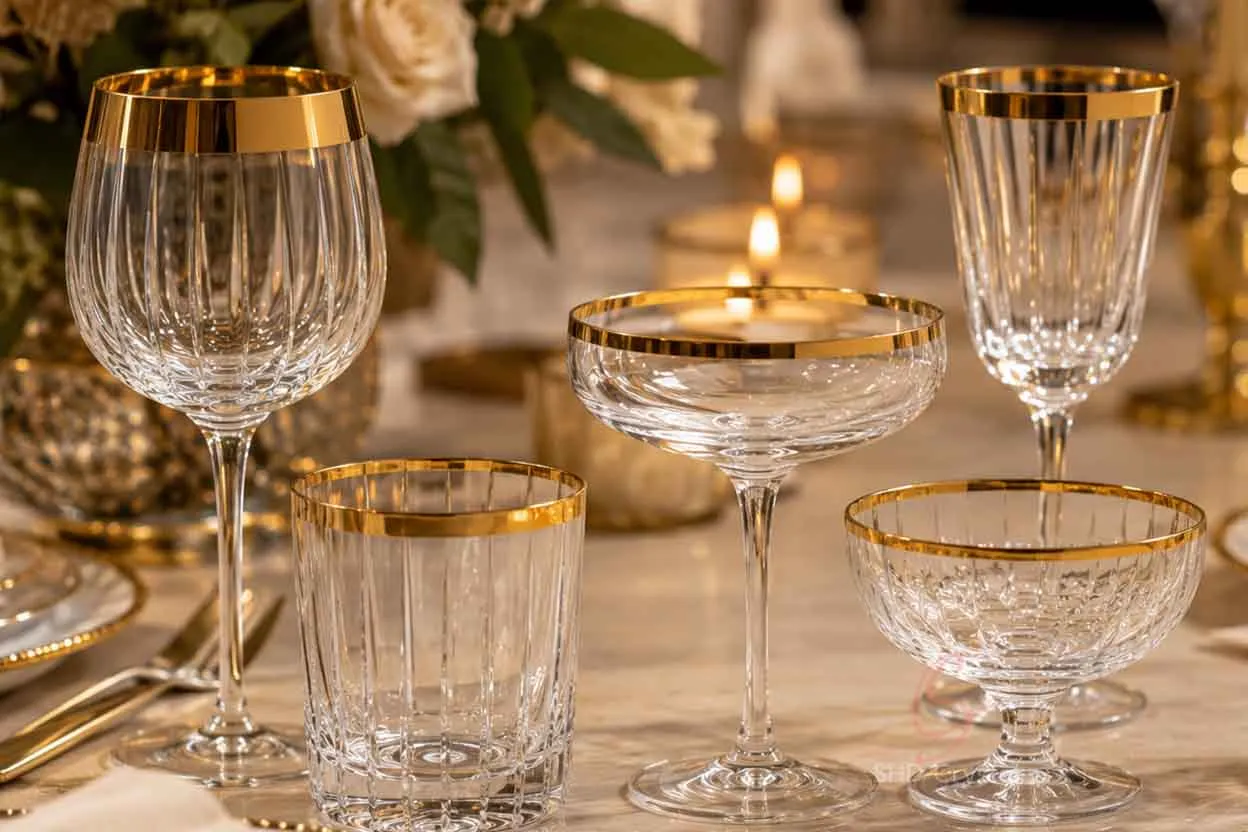
The effect can be subtle or bold depending on the design direction. A thin gold-painted finish gives a clean and elegant look, while a wider band may feel more luxurious and decorative. For hospitality projects, this detail can help match banquet tables, luxury dining rooms, festive settings, or seasonal tableware collections.
Gold-Painted Finish and Production Control
A gold-painted finish should be reviewed as both a visual detail and a production process. The line needs to be even, clean, and well positioned around the rim. If the band is too thick, it may look heavy. If it is too thin or uneven, the product may lose its premium feeling.
For modern glassware production, the supplier should check adhesion, drying or curing condition, edge smoothness, and batch consistency. This is especially important for items used in commercial table settings, where the same glass may be viewed repeatedly under strong lighting.
Buyers should also confirm the intended use. Some decorative finishes are more suitable for display, gifting, or event use, while others may require stricter review for repeated handling and cleaning. A beautiful gold-rimmed glass still needs to be practical for its final service environment.
Combining Gold Rim With Glass Textured Design
Gold decoration often works better when it is combined with the right body texture. A clear smooth glass creates a minimal luxury feeling, while a glass textured design can add more depth, reflection, and hand feel. Embossed patterns, vertical ribs, hammered textures, faceted bodies, and relief details can all change how the gold rim appears under light.

For example, a ribbed goblet with a gold rim may look vintage and romantic. A faceted tumbler with gold decoration may feel more modern and premium. A pressed glass dessert cup with a glass textured design may work well for wedding tables, hotel buffets, and retail gift sets.
However, decoration should not become too crowded. If the texture is already strong, the gold-painted finish should usually stay clean and controlled. If the glass body is simple, the gold rim can become the main visual highlight.
Project Review Notes for Custom Orders
In custom glassware projects, buyers often send reference images showing gold rims, textured surfaces, or luxury table settings. During review, SHD Crystal usually checks whether the design can be repeated clearly in production. The team needs to evaluate glass shape, rim position, texture depth, decoration width, sample effect, and packaging protection together.
For one common project direction, a buyer may want a coordinated set including goblets, tumblers, dessert cups, and serving bowls. In this case, the gold decoration should follow the same visual language across different shapes. The glass textured design may vary by product type, but the overall collection should still look consistent.
Packaging also matters. Gold-rimmed items need protection from friction during transport. Inner trays, dividers, wrapping methods, and carton structure should be reviewed before shipment, especially when the product is prepared for retail or event supply.
FAQ
Q1-Is a gold-rimmed glass suitable for daily use?
It depends on the decoration method and project requirements. Some gold-rimmed designs are suitable for regular hospitality use, while others are better for events, gifting, or decorative table settings. Sample testing and cleaning guidance should be confirmed before production.
Q2-What is the difference between a gold-painted finish and ordinary printing?
A gold-painted finish is usually applied as a decorative metallic edge or band, often around the rim or selected surface area. Ordinary printing may cover logos or patterns on the glass body. The gold finish is more focused on luxury edge detail and table presentation.
Q3-Can glass textured design be combined with gold rim decoration?
Yes. A glass textured design can make the gold rim look more dimensional by adding reflection, depth, and surface detail. The key is balance: strong textures usually need a cleaner gold line, while simple glass shapes can support a more visible gold edge.
Conclusion
A gold-rimmed glass can bring elegance, contrast, and a stronger premium feeling to custom tableware projects. Its success depends on more than the gold line itself. The glass shape, gold-painted finish, glass textured design, production consistency, and packaging protection all need to work together.
SHD Crystal Development Capability for Gold-Finished Glassware
SHD Crystal supports the development of decorative glass products for tableware, drinkware, giftware, hotel supplies, event collections, and branded glassware projects. For products such as goblets, tumblers, coupe glasses, dessert cups, serving bowls, charger plates, and decorative vessels, the team can review glass shape, mold feasibility, surface texture, rim detail, decoration placement, and packaging requirements before production.
For gold-finished tableware and cup products, SHD Crystal can support different project directions, including gold rim decoration, gold-painted finish details, textured glass bodies, embossed patterns, colored glass effects, logo decoration, and coordinated tableware sets. The service scope can cover design discussion, sample development, decoration review, batch production coordination, quality inspection, and protective packaging preparation.
This makes SHD Crystal suitable for brands developing a gold-rimmed glass collection, hospitality glassware, wedding tableware, retail gift sets, or custom glass textured design products that need both visual appeal and practical production control.

