


A laser-engraved cup base requires a different processing approach from decoration applied to thin glass walls. The bottom of a drinking glass is usually thicker, flatter, and optically denser, creating a useful area for monograms, geometric motifs, decorative marks, or private-label patterns. That extra glass mass also changes how the material responds during processing. Good results depend on matching the engraving technique with the glass structure, base thickness, desired depth, and expected production consistency.
How a Laser-Engraved Cup Base Responds to Different Processing Methods
A laser-engraved cup base is typically created through controlled surface interaction that produces a frosted or matte mark on the glass. Unlike mechanical engraving, laser processing does not rely on a cutting tool physically tracing every line. This makes it useful when a project requires repeated placement, consistent graphics, and relatively fine decorative detail across multiple pieces.
However, not every glass composition responds identically. Base thickness, residual stress, glass formulation, and surface condition can all influence the final appearance. For this reason, production trials are important before a design is approved for larger quantities.
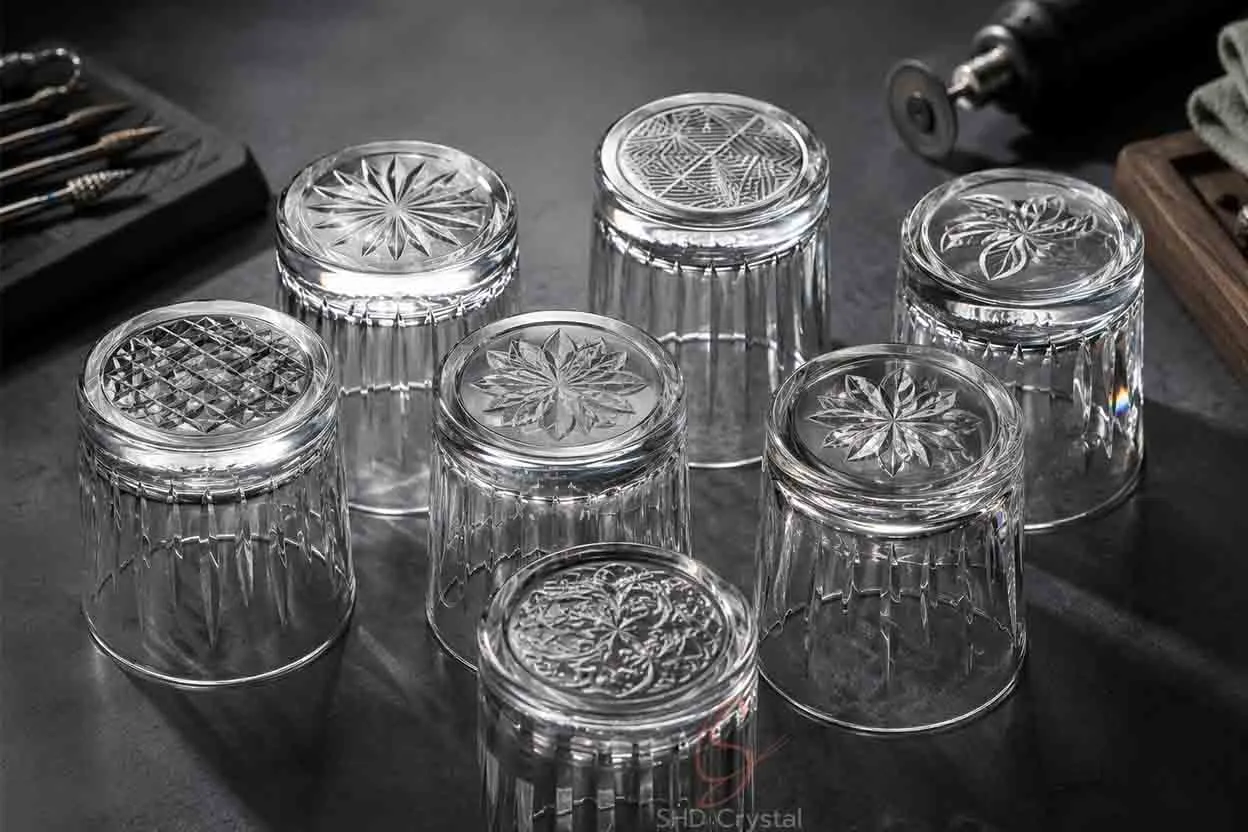
Laser Processing Favors Repeatable Surface Decoration
For engraving on thick cup base designs, the main objective is usually to create a controlled decorative mark without compromising the surrounding glass surface. The required processing parameters should therefore be established through factory testing rather than copied from another product.
A shallow frosted pattern may be suitable for logos or geometric designs, while more visually pronounced decoration may require additional process development. The manufacturer should also consider fixture stability and engraving position because even a small shift becomes noticeable when the design is centered on the bottom of the cup.
The main advantage of a laser-engraved cup base is repeatability. Once the glass type, fixture, and processing route are validated, the same motif can be reproduced more consistently across a production batch.
Mechanical Engraving Creates More Tactile Detail
Mechanical engraving produces a different visual and tactile result. Instead of creating a mainly frosted surface, the process removes a controlled amount of glass and can create visible grooves, curves, textured lines, or deeper decorative areas.
This method can be useful for engraving on thick cup base projects where the customer wants the decoration to remain physically noticeable when touched. The final result depends heavily on glass thickness, engraving depth, tool control, and finishing quality.
This is also where hand-engraved glass develops its distinctive character. Small variations in line depth, direction, and texture can remain visible, creating a more artisanal appearance. That can suit limited-edition collections, decorative giftware, or premium tableware where manual craftsmanship is intentionally part of the product story.
For larger production runs, however, buyers should define an acceptable range of variation because hand-finished details will not reproduce with the same uniformity as automated decoration.
Surface Etching Creates a Softer Effect
Surface etching provides another decorative route. Rather than cutting deeply into the glass, the process creates a matte or frosted appearance on selected areas of the surface. This approach can work well for simple patterns, understated branding, or decorative contrasts on a thick cup bottom. The result is visually different from both laser decoration and hand-engraved glass because the surface usually remains flatter and less tactile.
Material compatibility and process control still need to be confirmed before production. Different glass formulations and surface treatments may respond differently, so sample evaluation remains important.
The Desired Visual Result Should Decide the Method
The three approaches should not be treated as interchangeable. A laser-engraved cup base is generally suitable for clean, repeatable graphics and controlled frosted effects. Mechanical engraving is more appropriate when deeper physical texture is required. Hand-engraved glass offers a more individual decorative character when controlled variation is acceptable.
For engraving on thick cup base projects, buyers should also review base thickness, flatness, internal stress, engraving depth, pattern scale, and packing protection before mass production. A design that looks successful on one sample still needs to be evaluated for repeatability across multiple pieces.
Conclusion
A laser-engraved cup base works best when decoration is selected according to the structure of the glass and the intended visual effect. Laser processing supports repeatable surface graphics, mechanical engraving adds tactile depth, and hand-engraved glass provides more individual craftsmanship. The most suitable technique depends on whether the project prioritizes consistency, texture, decorative character, or production scale.
Developing Cup Base Engraving With SHD Crystal
SHD Crystal supports laser-engraved cup base projects through glassware selection, base-structure review, engraving trials, sample evaluation, surface finishing, and production inspection. For engraving on thick cup base designs, early process testing helps determine the most suitable route for depth, clarity, repeatability, and decorative character before the glassware enters repeat production.

