


The market value of crystal glass has always benefited from one very convenient talent: crystal knows how to look expensive. Put an ordinary drink in a deeply faceted tumbler and suddenly it seems to deserve better lighting. Yet buyers do not pay more for sparkle alone. Weight, clarity, cutting quality, finishing, product story, and the setting in which the glass is used all contribute to why certain crystal pieces hold stronger commercial appeal.
Why the Market Value of Crystal Glass Changes From Product to Product
Not every crystal object belongs in the same price category. A simple drinking glass may compete mainly through shape and finish, while a hand-cut decanter can depend heavily on craftsmanship. Decorative bowls, stemware, gift sets, and limited collections all create value in different ways. This is why crystal glassware demand cannot be explained by material composition alone. The product still has to look convincing.
Weight Can Feel Surprisingly Persuasive
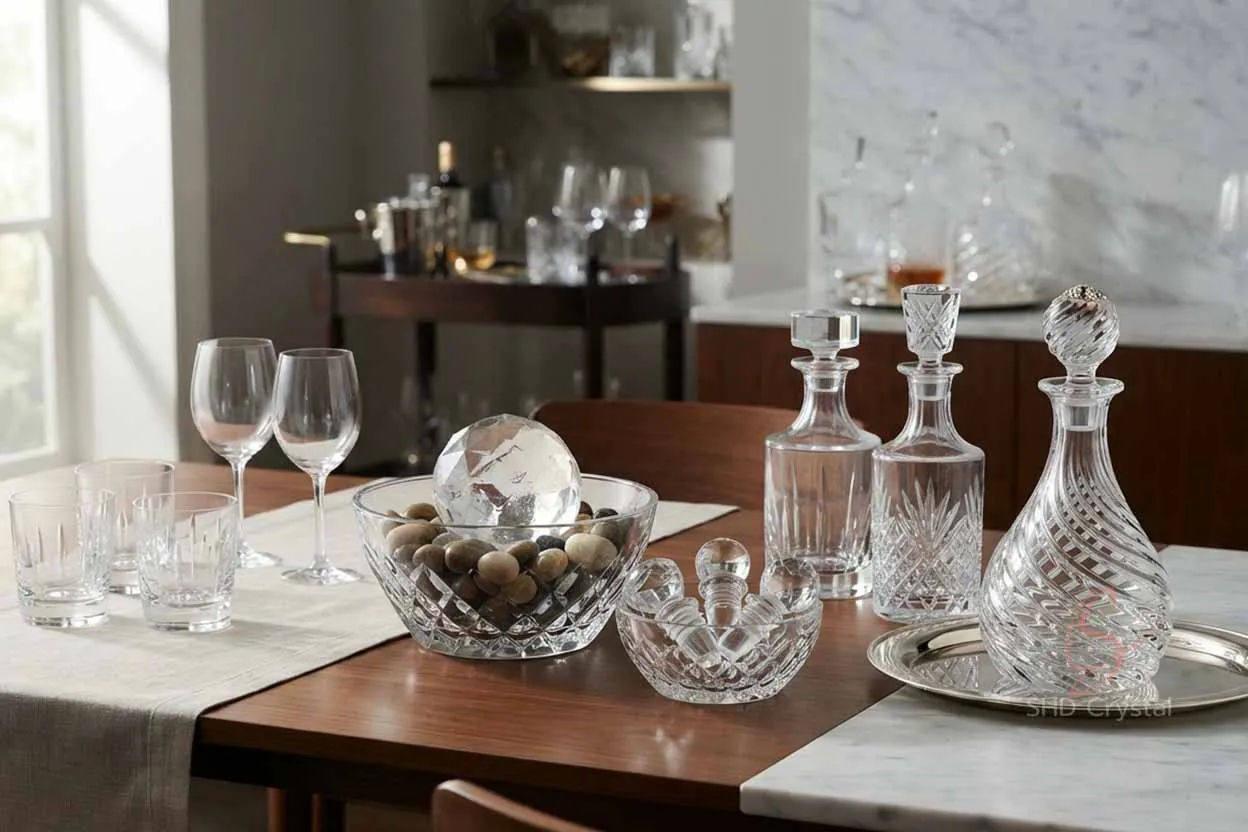
Crystal has traditionally been associated with a substantial hand feel. A heavier tumbler can communicate solidity before the drink is even poured. This effect is especially useful for whiskey glasses, decanters, and decorative serving pieces. But weight needs balance. A glass that feels reassuringly substantial is one thing. A glass that feels like a small workout is another.
For premium crystal products, base thickness and wall distribution should support the intended experience rather than simply maximizing material use.
Cutting and Refraction Create Visual Value
Facets, grooves, diamonds, and geometric cuts change how light moves across the glass. That optical activity is one of the reasons the market value of crystal glass can exceed that of visually simpler glassware.
However, more cutting does not automatically mean more value. Clean symmetry, polished surfaces, and well-controlled pattern depth usually create a stronger impression than decoration added everywhere simply because there was still some empty glass left.
This also explains why crystal glassware demand remains strong in gifting, hospitality, barware, and decorative table settings. The material performs particularly well where presentation matters.
The Occasion Helps Set the Price
A crystal tumbler in a supermarket and the same general style presented in a luxury gift box do not compete in exactly the same market.
Context changes perceived value. Wedding gifts, anniversary sets, hotel barware, executive gifts, and premium home collections all give crystal a stronger reason to exist. Premium crystal products often benefit from coordinated packaging, polishing, engraving, color accents, or customized patterns because buyers are purchasing an experience as much as a functional object.
Craftsmanship Still Needs Production Discipline
There is also a practical side behind the sparkle. Mold definition, wall thickness transition, annealing behavior, polishing, cutting accuracy, and batch consistency influence the final appearance.
A beautiful prototype does not guarantee a convincing collection. Several glasses displayed together quickly reveal differences in height, base thickness, pattern alignment, or polishing. For this reason, the market value of crystal glass depends partly on repeatability. Buyers may accept subtle handcrafted variation, but obvious inconsistency usually reduces perceived quality rather than increasing authenticity.

Premium Does Not Always Mean Traditional Lead Crystal
Modern crystal glassware demand also includes lead-free crystal and high-quality clear glass products designed to achieve a refined appearance without relying on traditional lead crystal composition. That gives brands more options. Some markets still value traditional crystal for heritage, density, and optical character. Others care more about the finished appearance, customization possibilities, and price-to-quality balance. The right material depends on what the product is expected to communicate.
Conclusion
The market value of crystal glass comes from a combination of material character, optical effect, craftsmanship, finishing, presentation, and occasion. Crystal earns its premium position most convincingly when the product feels intentional from rim to base. Sparkle gets attention, but good proportion and production quality are what keep the product from becoming expensive decoration with an identity crisis.
Developing Crystal Products With Stronger Market Appeal
For brands developing premium crystal products, SHD Crystal can support design review, forming, cutting, polishing, engraving, surface finishing, inspection, and packaging development. Understanding the intended market and crystal glassware demand early helps turn visual ideas into products whose appearance, production cost, and commercial positioning make sense together.

