


Mirror charger plates for events are often selected for the way they reflect candlelight, floral arrangements, and table colors. For wedding planners, event rental companies, banquet suppliers, hospitality distributors, and venue sourcing teams, however, the visual effect is only one part of the specification. Surface consistency, edge finish, stacking behavior, and protective packing all influence whether the plates remain practical across a real event program.
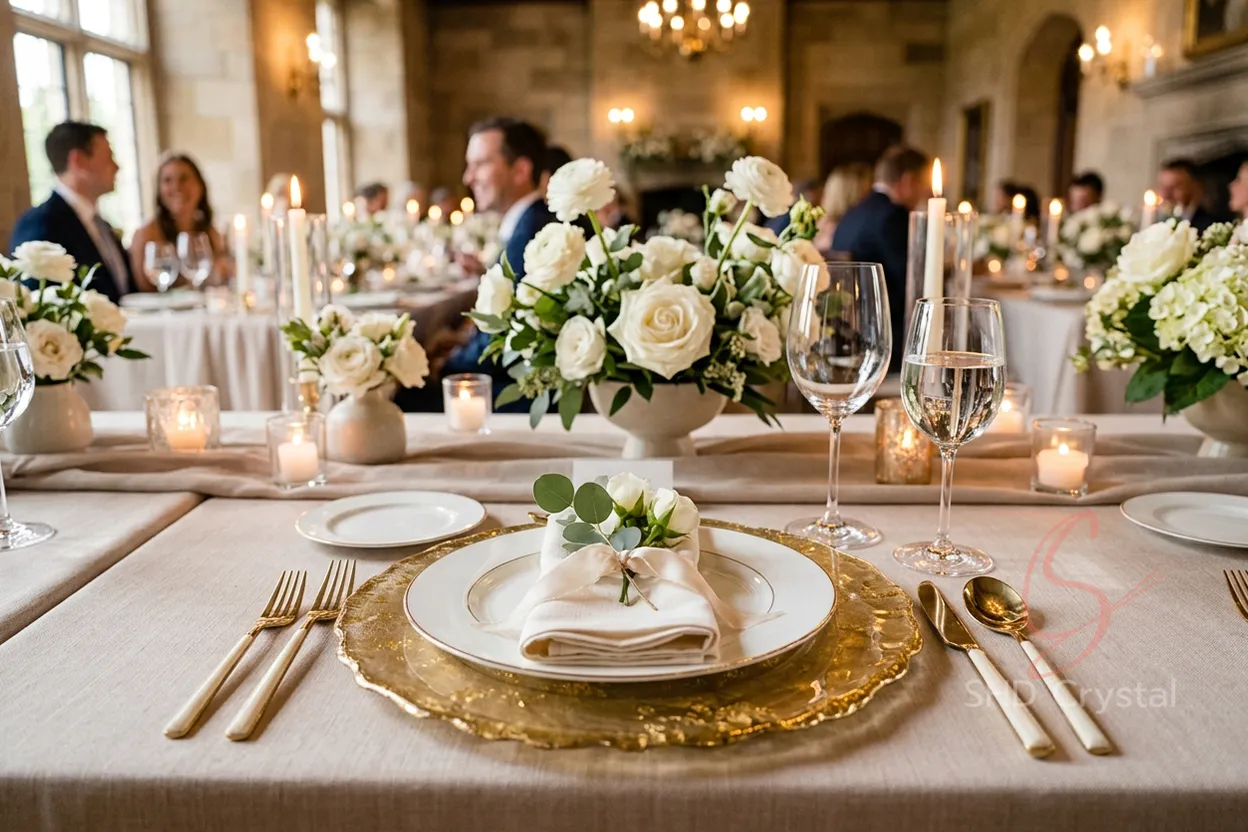
Mirror Charger Plates for Events Depend on Surface Control and Event Use
Mirror charger plates for events are often selected for the way they reflect candlelight, floral arrangements, and table colors. For wedding planners, event rental companies, banquet suppliers, hospitality distributors, and venue sourcing teams, however, the visual effect is only one part of the specification. Surface consistency, edge finish, stacking behavior, and protective packing all influence whether the plates remain practical across a real event program.
Mirror Charger Plates for Events Need More Than a Reflective Finish
Unlike ordinary glass charger plates, mirrored styles add another visual layer between the table linen and dinnerware. The reflective surface can make a place setting feel brighter, more layered, and more elegant under warm event lighting.
That same effect also makes variation easier to notice. Uneven reflective coating, small edge differences, or surface marks may become visible when many plates are arranged side by side. For this reason, event projects should be reviewed as a batch rather than judged only by one isolated sample.
Mirror Quality Changes With the Glass Body
The reflective result depends partly on the glass beneath it. Flatness, surface cleanliness, rim geometry, and the transition between the center and edge can all influence how uniform the finished plate appears.
During production, mold tolerance and polishing pressure are practical control factors. A slightly irregular rim may catch light differently, while excessive manual correction can create visible piece-to-piece differences. For glass charger plates, a balanced base also matters once dinnerware is placed on top, since instability becomes more noticeable during table setup.
Event Lighting Should Be Tested During Sampling
Mirror effects can look different under daylight, chandeliers, candles, or colored venue lighting. A sample that appears neutral in a factory inspection area may reflect surrounding colors much more strongly at the actual reception venue.
This is especially relevant for wedding charger plates used with gold cutlery, colored linens, layered place settings, or dense floral centerpieces. Reviewing several samples under lighting that is close to the intended venue environment gives sourcing teams a more realistic impression of the final table effect.
A common misunderstanding is that a stronger mirror effect is always better. In many event settings, a softer reflection may support the overall table styling more effectively and create a more balanced presentation.

Edge Finish and Handling Matter During Event Preparation
Charger plates are handled repeatedly during setup, clearing, storage, and transport. The rim needs to look refined while also remaining comfortable for staff to lift, carry, and stack.
For mirror tableware programs, edge treatment should be checked together with weight and profile. Heavy plates can feel substantial, but they also increase handling effort and carton weight. Wedding charger plates used in repeated event circulation may need a different balance between appearance and practicality than plates prepared for a single special event.
Packaging Protects Both Glass and Finish
Mirrored surfaces can show scratches and contact marks more easily than some textured finishes. Separators, stacking direction, and internal carton movement should therefore be discussed early rather than treated as a final packing detail.
Glass charger plates with raised borders may require additional spacing so adjacent pieces do not rub during export or venue transport. Packaging trials using production-representative samples are usually more useful than selecting a generic carton afterward. For event tableware projects, this step helps protect both the glass body and the reflective surface.
Conclusion
Mirror charger plates for events perform best when visual appearance and event logistics are considered together. Reflection, flatness, edge quality, weight, batch consistency, and packing all influence the result once hundreds of coordinated place settings are prepared.
Developing a More Consistent Mirror Tableware Program
For mirror charger plates for events, SHD Crystal can support sample review, custom mold development, surface finishing, inspection, and export packaging. Early discussion of event use, target quantity, reflective appearance, and stacking requirements can help develop wedding charger plates that are both visually coordinated and practical for commercial handling.

