


Recycled glass bottles are not a separate packaging category outside conventional glass containers. They remain part of the same bottle system used for beverages, wellness products, home fragrance, specialty foods, and other packaged goods. The difference lies mainly in how recycled glass content is incorporated into the material specification and how that choice fits the product, design, and production requirements.
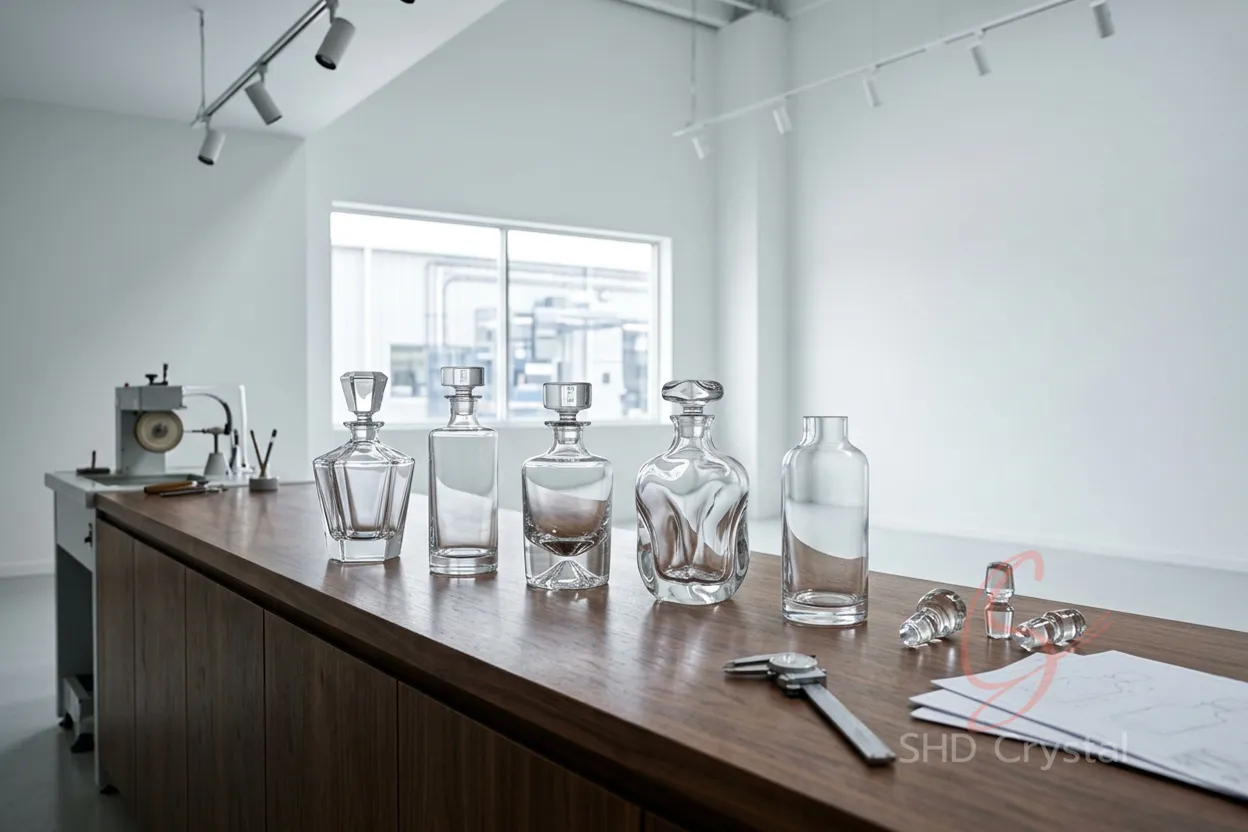
Recycled Glass Bottles in Modern Packaging
Recycled glass bottles are not a separate packaging category outside conventional glass containers. They remain part of the same bottle system used for beverages, wellness products, home fragrance, specialty foods, and other packaged goods. The difference lies mainly in how recycled glass content is incorporated into the material specification and how that choice fits the product, design, and production requirements.
For brands considering custom recycled glass bottles, the useful question is therefore not simply whether recycled glass "looks more sustainable." Bottle structure, glass color, closure fit, decoration, filling requirements, and repeat production still matter. In practical sustainable glass packaging, recycled content has to work together with all of these ordinary packaging considerations.
Recycled Glass Bottles Still Follow Mainstream Container Design Principles
The basic requirements do not disappear when recycled content is introduced. A beverage bottle still needs a suitable neck finish and closure. A fragrance container still needs to work with its stopper, diffuser component, or cap. A specialty food bottle still needs an appropriate opening, filling format, and labeling area.
For recycled glass bottles, capacity, wall distribution, shoulder geometry, base stability, and annealing remain important manufacturing considerations just as they are for other glass containers. This is why recycled content should be treated as one part of bottle development rather than as a substitute for good container design.
Recycled Content Does Not Automatically Create a "Recycled Look"
One misconception is that recycled glass must always appear slightly green, cloudy, bubbled, or visibly irregular. That is too simple. The finished appearance depends on factors such as raw material selection, recycled cullet quality, glass formulation, color requirements, and production control. Some brands deliberately choose green, amber, smoky, or lightly textured bottles because those visual directions support their product identity, but that appearance should not automatically be presented as a natural consequence of using recycled glass.
For custom recycled glass bottles, this distinction matters. A brand may want recycled content while still requiring relatively controlled color and surface appearance. Another project may intentionally accept more visible material character because it supports a natural or heritage-inspired design.
The target should be defined during development instead of assuming that all recycled-content bottles should look the same.
Recycled Content Changes Some Design Priorities
Different bottle colors, transparency targets, and production requirements can affect how recycled material is incorporated into the glass composition.
This means sample review becomes particularly useful when a project has strict expectations for color. Several bottles should be viewed together rather than judging one isolated sample, especially if multiple SKUs are expected to sit side by side.
For custom recycled glass bottles, decoration should also be tested on the actual glass. Printing contrast may change depending on bottle color. Frosting or coating can alter the visual character of the underlying glass, while labels may appear different on clear, green, amber, or smoky surfaces.
A good design allows the material, decoration, and product inside the bottle to work together.
Sustainable Glass Packaging Still Needs Functional Packaging Performance
Using recycled content does not remove normal packaging requirements. The bottle still needs to work with caps, pumps, corks, droppers, sprayers, or other components. It also needs to support filling, labeling, storage, packing, and transportation. For example, a specialty sauce bottle may use a green-toned recycled glass direction because it fits the brand image. But before production, the project still needs to review fill capacity, neck and cap compatibility, label readability, bottle weight, carton arrangement, and surface consistency.
This is the practical side of sustainable glass packaging. Environmental positioning cannot compensate for a bottle that is difficult to fill, seal, decorate, or transport reliably.
Markets Where Recycled Content Fits the Product Story
Recycled-content glass can make sense across many established packaging categories.
Beverage brands may use it as part of a broader material strategy. Wellness and personal-care collections may connect it with simpler, more restrained visual identities. Home fragrance brands can combine recycled-content containers with candles, diffusers, or refill concepts. Specialty food brands may use familiar bottle shapes while incorporating recycled material into the packaging specification.
These applications do not require the bottle to look intentionally rustic. In fact, recycled glass bottles can support both minimalist and decorative product directions. What matters is whether the material choice makes sense alongside the bottle design and the way the brand communicates its packaging. For sustainable glass packaging, this is usually more credible than relying on an exaggerated "eco look" alone.
Decoration Also Needs to Be Considered Carefully
A glass bottle may contain recycled material, but sustainability should still be considered across the complete package.
Complex coatings, opaque decorative layers, labels, metallic details, or mixed-material components can introduce additional considerations when recyclability is part of the packaging brief.
This does not mean decoration should be avoided. It means the decorative strategy should be discussed together with the intended sustainability objective.
For custom recycled glass bottles, a restrained finish may sometimes communicate the material direction more clearly than adding multiple decorative layers. In other projects, stronger decoration may still be appropriate because shelf identity is the priority.
There is no single correct answer. The design needs to match the actual project.
Repeat Production Requires Realistic Appearance Standards
One approved bottle is not enough to define a complete production expectation. For repeated orders, brands should identify which visual details are critical and what level of variation is acceptable. Glass color, transparency, decoration position, dimensions, neck fit, and overall surface appearance should be reviewed across several representative samples.
This is particularly useful for sustainable glass packaging programs that may expand into several bottle capacities or related product lines.
Instead of expecting recycled-content glass to behave according to a vague "natural" standard, it is better to define measurable and visual references during sampling.
Conclusion
Recycled glass bottles should be understood as part of mainstream glass packaging rather than as a completely separate type of container. Their development still depends on bottle structure, closure compatibility, color planning, decoration, forming control, and repeat production.
For custom recycled glass bottles, recycled content becomes one additional design and material consideration within the wider packaging process. Strong sustainable glass packaging comes from balancing that material choice with actual product performance rather than relying on recycled content as a marketing statement alone.
Developing Recycled Glass Packaging With SHD Crystal
At SHD Crystal, recycled-content bottle projects can begin with the same practical questions as other glass container programs: what will the bottle contain, what closure will it use, what color and appearance are expected, and how will the finished package be decorated and transported?
We support recycled glass bottles through design discussion, sample review, forming evaluation, surface finishing, component coordination, inspection, and production planning. For brands developing custom recycled glass bottles and broader sustainable glass packaging, defining the recycled-content objective together with color, structure, decoration, and use requirements early can create a much clearer path toward repeat production.

