


For many buyers, the question of Scotch glasses vs whiskey glasses starts with a simple confusion: are they actually different products? In most commercial glassware projects, the answer is not completely fixed. "Scotch glass" usually refers to a glass used for Scotch whisky drinking or tasting, while "whiskey glass" is a broader term that may include tumblers, tasting glasses, snifters, rocks glasses, and highball glasses.
Scotch Glasses vs Whiskey Glasses: The Real Difference
The main difference is not always the material or manufacturing method. It is usually the drinking purpose. Scotch is a type of whisky, so many glasses used for Scotch can also be used for bourbon, rye, Irish whiskey, Japanese whisky, and other spirits. However, when people search for Scotch glasses vs whiskey glasses, they often want to know which shape is better for neat tasting, aroma, ice service, or gift sets.
A Scotch-focused glass often emphasizes aroma concentration and careful sipping. This is why tulip-shaped glasses, nosing glasses, and Glencairn-style glasses are often associated with Scotch tasting. Their narrower openings help direct aroma toward the nose, while the rounded bowl gives enough room for the spirit to breathe.
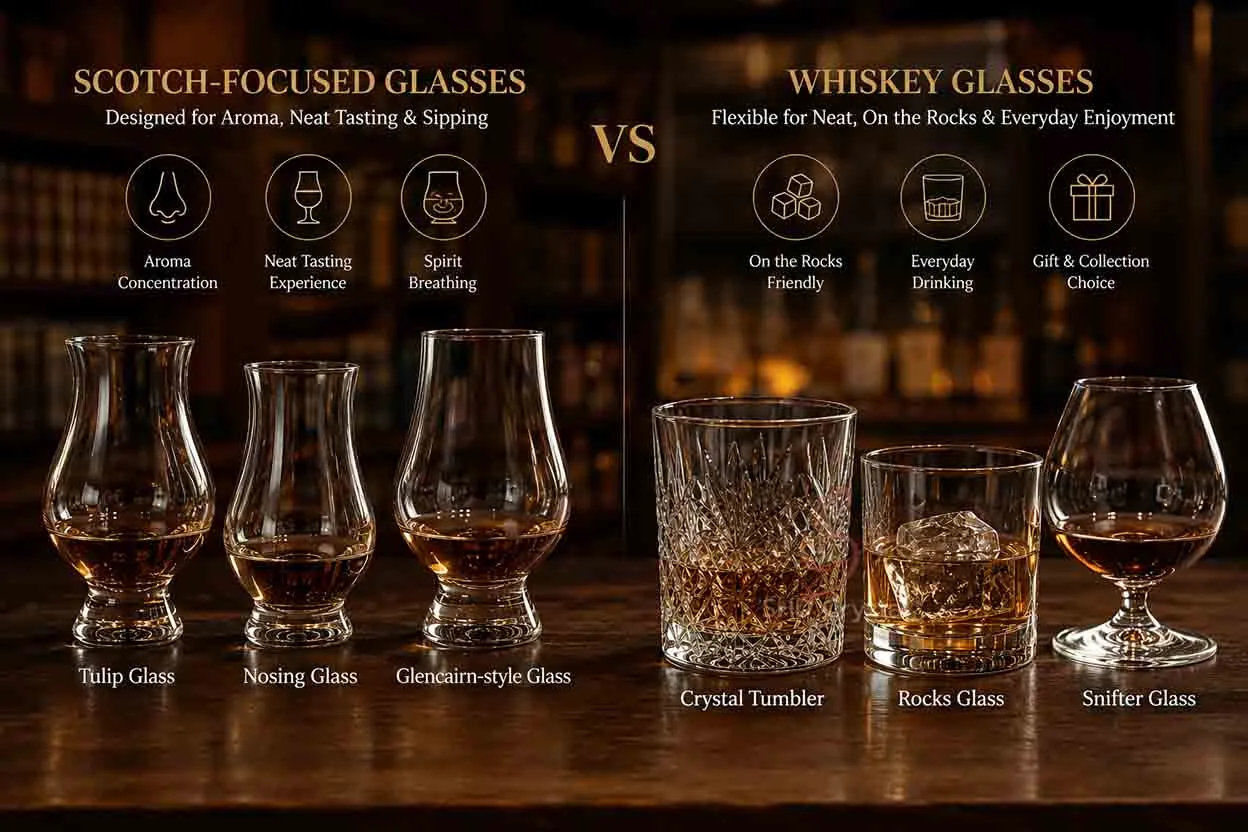
A whiskey glass, in a broader sense, may be more flexible. It can refer to crystal whiskey tumblers for casual drinking, rocks glasses for ice service, or premium tasting glasses for neat spirits. For brands and hospitality projects, the better question is not only "Scotch or whiskey," but "what drinking experience should the glass support?"
Common Glass Types Used for Scotch and Whiskey
Whiskey tasting glasses are often chosen for neat pours and tasting flights. They usually have a bowl that narrows near the rim, helping the drinker notice aroma more clearly. These glasses are suitable for distilleries, tasting rooms, premium bar menus, and gift collections.
Crystal whiskey tumblers are more familiar in restaurants, home bars, hotels, and retail drinkware sets. Their heavy base, straight or slightly curved wall, and stable feel make them suitable for whiskey on the rocks, old fashioned cocktails, and casual spirit service. They may not concentrate aroma as strongly as a tasting glass, but they create a classic and substantial drinking impression.

Snifter-style glasses can be used for aged spirits and slower sipping. Their rounded bowl gives space for swirling, while the narrower top helps hold aroma. However, they may feel more formal and less practical for high-volume bar service.
Highball glasses are not usually considered Scotch tasting glasses, but they are useful for whiskey-based mixed drinks such as Scotch and soda, whiskey ginger, or long cocktails. For a complete barware line, these tall glasses may be included alongside tumblers and tasting glasses.
How to Choose the Right Glass for Different Projects
When reviewing Scotch glasses vs whiskey glasses for a commercial project, the first factor is the target use. A distillery tasting set may need whiskey tasting glasses with clear aroma performance. A hotel bar may prefer crystal whiskey tumblers because they feel stable, premium, and easy to use in daily service. A retail gift set may combine a tumbler shape with engraved decoration, colored packaging, or a heavier base.
The second factor is capacity. A small tasting glass may be ideal for controlled pours, but it may not work for ice or cocktails. A large tumbler may look impressive, but if it is too wide, a neat pour can look too small. Buyers should confirm the real serving style before approving the shape.
The third factor is rim and base design. A thin, smooth rim improves drinking comfort, while a stable base supports better handling. For crystal whiskey tumblers, base weight often affects perceived quality, but excessive weight can increase shipping cost and carton pressure.
The fourth factor is decoration. Logo engraving, cut patterns, thick bases, faceted surfaces, and gift packaging are common in custom whiskey glassware. These elements should be reviewed together because decoration can affect visual balance, production consistency, and packaging safety.
Project Selection Notes for Custom Barware
For SHD Crystal, whiskey glassware development often starts with the buyer’s selling scenario. A bar supplier may need durable tumblers for repeated service. A premium spirits brand may want a tasting glass that presents aroma and branding clearly. A giftware company may care more about visual weight, engraving position, and packaging presentation.
In one typical development review, a buyer may request one glass for both Scotch tasting and general whiskey drinking. In this situation, the design team should not simply choose the most decorative shape. A practical solution may be a medium-capacity tulip tumbler or a refined rocks glass with a slightly narrowed upper body. This type of shape can support neat pours better than a wide tumbler while remaining more familiar than a formal nosing glass.

This is where Scotch glasses vs whiskey glasses becomes a useful product planning topic. The choice is not about one winner. It is about matching glass shape with drinking purpose, brand positioning, and final sales channel.
Frequently Asked Questions
FAQ-1 | Are Scotch glasses and whiskey glasses the same?
They can overlap. Scotch glasses are usually designed or marketed for Scotch whisky drinking, while whiskey glasses cover a wider range of spirits and serving styles. The difference is mainly about use, shape, and presentation rather than a completely separate product category.
FAQ-2 | What glass is best for tasting Scotch?
Whiskey tasting glasses, nosing glasses, and Glencairn-style glasses are commonly used for Scotch tasting because their shape helps concentrate aroma. For casual drinking, crystal whiskey tumblers are also widely used, especially when serving whiskey neat or with ice.
FAQ-3 | Can brands customize whiskey glasses for different markets?
Yes. Brands can customize shape, capacity, base thickness, cutting pattern, logo engraving, color effect, and packaging. For projects comparing Scotch glasses vs whiskey glasses, sample review is important because the same design may perform differently for tasting, ice service, gifting, or bar use.
Conclusion
The comparison of Scotch glasses vs whiskey glasses is really a comparison of drinking purpose. Scotch-focused glasses often highlight aroma and slow tasting, while broader whiskey glasses may include tumblers, rocks glasses, snifters, and highball formats for different service needs.
For brands developing whiskey tasting glasses, crystal whiskey tumblers, or custom Scotch glassware collections, SHD Crystal can support design evaluation, sample development, production coordination, inspection, and packaging preparation for practical barware projects.

