


A stained glass container usually refers to a glass container with a colored, tinted, or decorative surface effect. For brands developing candles, cosmetics, gifts, home fragrance, or specialty packaging, color is not only a visual detail. It influences product identity, shelf presentation, perceived value, and how the container fits the final application.
From a manufacturing perspective, creating a stained glass effect requires more than choosing an attractive color. Glass composition, surface condition, container shape, decoration method, coating stability, and inspection requirements all affect the final result. This is why glass container coloring should be planned as part of product development rather than treated as a simple finishing step.
What Makes A Stained Glass Container Different?
A stained glass container is different from a plain clear jar because its value comes from the interaction between glass transparency and color expression. Some containers use a soft translucent tint, while others use a stronger opaque coating, frosted color, gradient finish, or decorative layer.
For packaging projects, the goal is not always to make the glass completely colorful. In many cases, the best result is a controlled balance between visibility, surface effect, and brand style. A candle jar may need warm color depth. A cosmetic container may require a clean matte appearance. A gift jar may focus on decorative impact or seasonal color matching.
SHD Crystal supports these projects by helping customers evaluate how the intended visual effect can be matched with a practical manufacturing method.
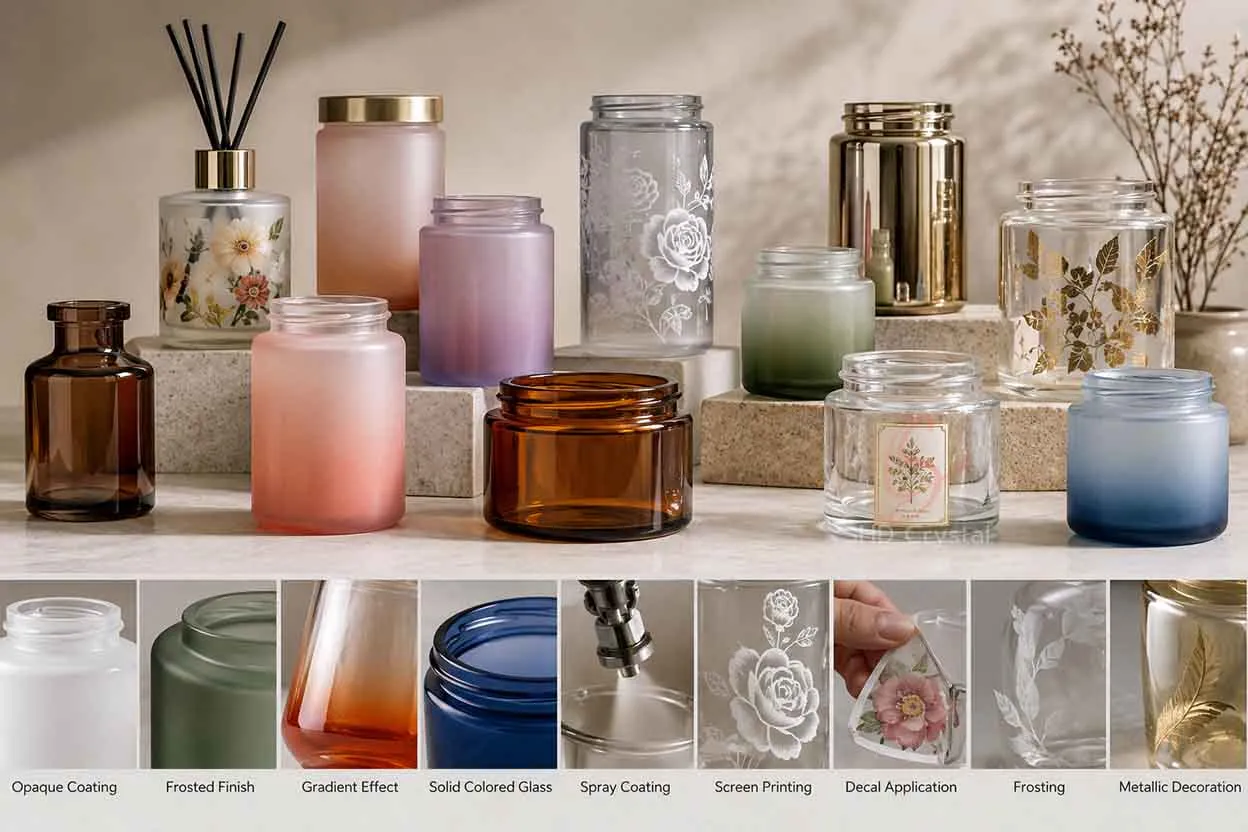
Common Glass Container Coloring Methods
There are several ways to create colored glass container effects. One method is body-colored glass, where color is introduced into the glass material during production. This can create a stable and integrated color effect, but it usually requires more planning around material formula, production batch, and order quantity; Another method is surface decoration, such as spraying, screen printing, decals, frosting, or metallic decorative finishes. These methods are often more flexible for custom packaging because they can be applied after the container has been formed.
For many custom stained glass containers, exterior color coating is one of the most common approaches. It allows brands to achieve a wide range of colors and surface finishes without changing the entire glass composition.
The Most Common Method: Exterior Spray Coating
Exterior spray coating is widely used in glass container coloring because it provides flexibility, color variety, and relatively efficient customization for different packaging projects.
In this process, the glass container is first cleaned and prepared to improve coating adhesion. Surface condition matters because dust, oil, moisture, or uneven handling can affect the final finish. After preparation, the selected coating is sprayed onto the outer surface of the container. Depending on the design, the finish may be transparent, semi-transparent, matte, glossy, frosted, gradient, or solid color.
After spraying, drying or curing is required to help the coating stabilize. This stage is important because insufficient curing may affect adhesion, surface hardness, or long-term appearance. The finished containers then need inspection for color consistency, surface coverage, visible defects, and batch uniformity.
This method is common because it works well for many packaging categories. It can help a simple clear jar become a branded candle container, cosmetic jar, or decorative gift package without requiring a fully new glass formula.
What Buyers Should Evaluate Before Choosing A Coloring Method
A successful stained glass container project depends on matching the coloring method with the intended use. Not every finish is suitable for every container shape or application.
Curved surfaces, narrow necks, heavy bases, and sharp shoulders can influence coating coverage and visual consistency. A matte finish may show surface marks differently from a glossy finish. A transparent tint may reveal glass thickness variation more clearly than an opaque coating.
Application also matters. For candle packaging, buyers may focus on color atmosphere, heat-related use conditions, and visual harmony with fragrance positioning. For cosmetic packaging, appearance consistency and surface refinement may be more important. For food or beverage-related containers, decoration position and material suitability should be evaluated carefully, especially when the container may contact contents directly.
In many projects, exterior decoration is preferred because it helps create the desired look while avoiding direct contact between the coating and the product inside. However, final suitability still depends on the product type, use environment, and applicable testing requirements.
How SHD Crystal Supports Custom Stained Glass Containers
For custom stained glass containers, SHD Crystal focuses on connecting design ideas with manufacturing feasibility. A color reference may look attractive on paper or screen, but the final result can change depending on glass thickness, lighting, surface finish, and production process.
During development, SHD Crystal can support jar selection, color discussion, sample evaluation, coating method planning, and production inspection standards. This helps customers compare different finishing routes before committing to bulk production.
The most efficient projects usually begin with clear information: target container shape, color reference, desired finish, application category, expected quantity, and packaging requirements. With these details, the manufacturer can better recommend whether exterior spray coating, colored glass, frosting, printing, or another decorative process is more suitable.
Conclusion
A stained glass container is not created by color alone. Its final quality depends on glass material, container shape, surface preparation, coloring method, curing control, and inspection consistency.
Among different glass container coloring methods, exterior spray coating is one of the most common choices for packaging customization because it offers broad color flexibility and works well for many container types. However, the best method should always be selected according to product use, desired appearance, production stability, and cost expectations.
SHD Crystal supports brands developing custom stained glass containers through material discussion, decoration planning, sample review, and production coordination. With early evaluation, brands can create colored glass packaging that is visually distinctive, practical for production, and suitable for their target market.

