


A dining table does not always need heavy decoration to look memorable. Sometimes, the texture of the glass itself can create the atmosphere. For hotels, restaurants, wedding suppliers, retail brands, and custom tableware projects, textured glass bowls can bring depth, reflection, and a vintage-inspired feeling to everyday serving pieces.
How Textured Glass Bowls Create Visual Depth
Textured glass bowls are designed with raised, pressed, ribbed, faceted, beaded, or relief-style surfaces. These details change how light moves across the glass, making the bowl look more decorative than a plain transparent vessel. When placed under dining room lighting, a textured bowl can create soft reflections that make desserts, salads, fruit, snacks, or side dishes look more refined.
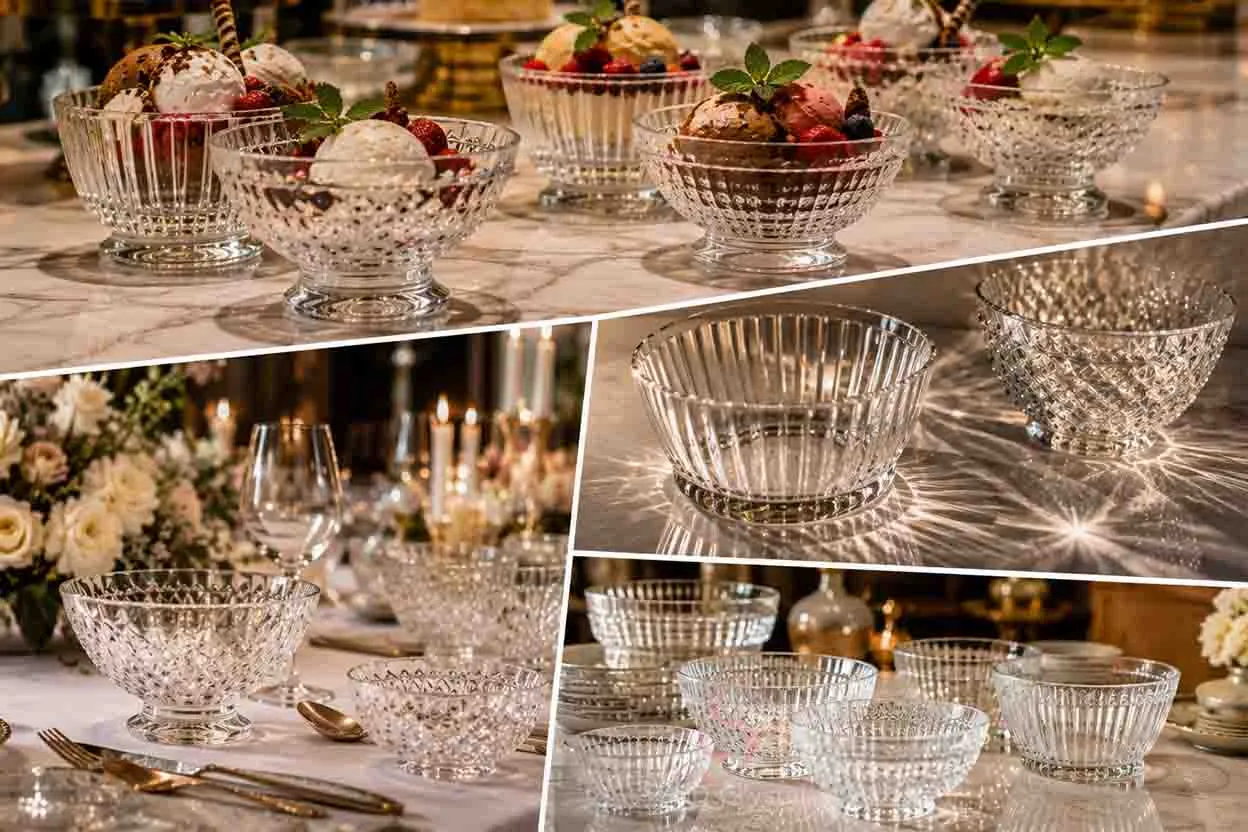
This is why textured glassware is often connected with vintage crystal dinnerware. Many vintage-style pieces use floral patterns, diamond cuts, scalloped rims, vertical ribs, or beaded edges to create a layered table setting. Modern glassware projects can borrow these visual elements without becoming old-fashioned. The goal is to keep the nostalgic charm while making the product suitable for current hospitality, retail, and event use.
Vintage Style Does Not Mean Outdated Design
A successful vintage-inspired bowl should feel warm, elegant, and intentional. If the pattern is too heavy, the product may look crowded. If the texture is too shallow, the visual effect may disappear once food is served inside. For premium glass bowls, the balance between pattern depth, transparency, rim smoothness, and base stability is especially important.
Different textures create different moods. Ribbed glass feels clean and structured. Diamond patterns feel classic and formal. Floral relief can create a romantic table style. Hammered or irregular textures may feel more handmade and artistic. For a coordinated dinnerware collection, the bowl texture should also match plates, goblets, dessert cups, or serving trays.
Practical Notes for Custom Glass Bowl Projects
When developing textured glass bowls, buyers should review more than appearance. Bowl size, usable depth, rim thickness, stacking ability, mold detail, surface clarity, and packaging protection all affect the final product. A bowl may look beautiful in a sample photo, but if the rim feels rough or the base is unstable, it may not work well for commercial use.
For SHD Crystal, this kind of project usually starts with the buyer’s target scene. A hotel buffet may need durable bowls with stable bases and easy handling. A wedding supplier may prefer romantic patterns that photograph well under warm lighting. A retail brand may focus on shelf appeal, gift-box presentation, and collection consistency.
In one typical review process, a buyer may request bowls inspired by vintage crystal dinnerware, but still expect modern production consistency. The design team needs to translate the reference style into workable mold details, check whether the texture can be clearly formed, and confirm whether the finished bowl can be safely packed for shipment.
What Makes Premium Glass Bowls Feel More Valuable
Premium glass bowls usually stand out through clarity, weight balance, polished edges, controlled texture, and refined proportions. A high-end bowl should not only look decorative; it should also feel comfortable to hold and practical to use.
For textured designs, finishing control is very important. The raised areas should look clean, the pattern should remain consistent, and the rim should feel smooth. If the bowl includes a scalloped edge or relief detail, inspection should focus on both beauty and safety. For hospitality and event projects, batch consistency also matters because many pieces will be displayed together on the same table.
FAQ
Q01 | Are textured glass bowls suitable for modern table settings?
Yes. Textured glass bowls can work well in modern table settings when the pattern is balanced. Simple ribbed, faceted, or lightly embossed designs can add detail without making the table look too traditional.
Q02 | What is the difference between vintage crystal dinnerware and modern textured glassware?
Vintage crystal dinnerware often uses classic decorative patterns, heavier visual detail, and traditional shapes. Modern textured glassware may borrow these elements but adjust the shape, thickness, and finishing to suit current dining, retail, and hospitality needs.
Q03 | What should buyers check when choosing premium glass bowls?
Buyers should check glass clarity, texture depth, rim smoothness, base stability, stacking needs, packaging safety, and batch consistency. For premium glass bowls, the product should look elegant while remaining practical for real service or retail use.
Conclusion
Textured glass bowls are a strong choice for brands that want tableware with more visual character than plain glass. Through ribbed surfaces, pressed patterns, scalloped rims, or relief details, they can connect modern table settings with the charm of vintage crystal dinnerware.
For brands developing textured glass bowls, vintage-inspired serving pieces, or premium glass bowls for hospitality, wedding, retail, or giftware projects, SHD Crystal can support design review, mold development, sample evaluation, production coordination, inspection, and protective packaging preparation.

