


In custom drinkware development, some products are made to follow standard shapes, while others are made to be remembered. A unique crystal decanter belongs to the second category. It is not only a container for wine or spirits, but also a sculptural object that reflects brand style, table presentation, and design ambition. For this reason, non-standard making and hand-led design play an important role in decanter development.
Why a Unique Crystal Decanter Often Requires Non-Standard Making
A unique crystal decanter rarely begins with a ready-made mold. In many projects, the buyer starts with a visual idea, an object reference, or a storytelling concept rather than a standard bottle shape. That means the development process must translate an artistic concept into a functional vessel that can actually hold liquid, pour smoothly, and remain stable on the table.
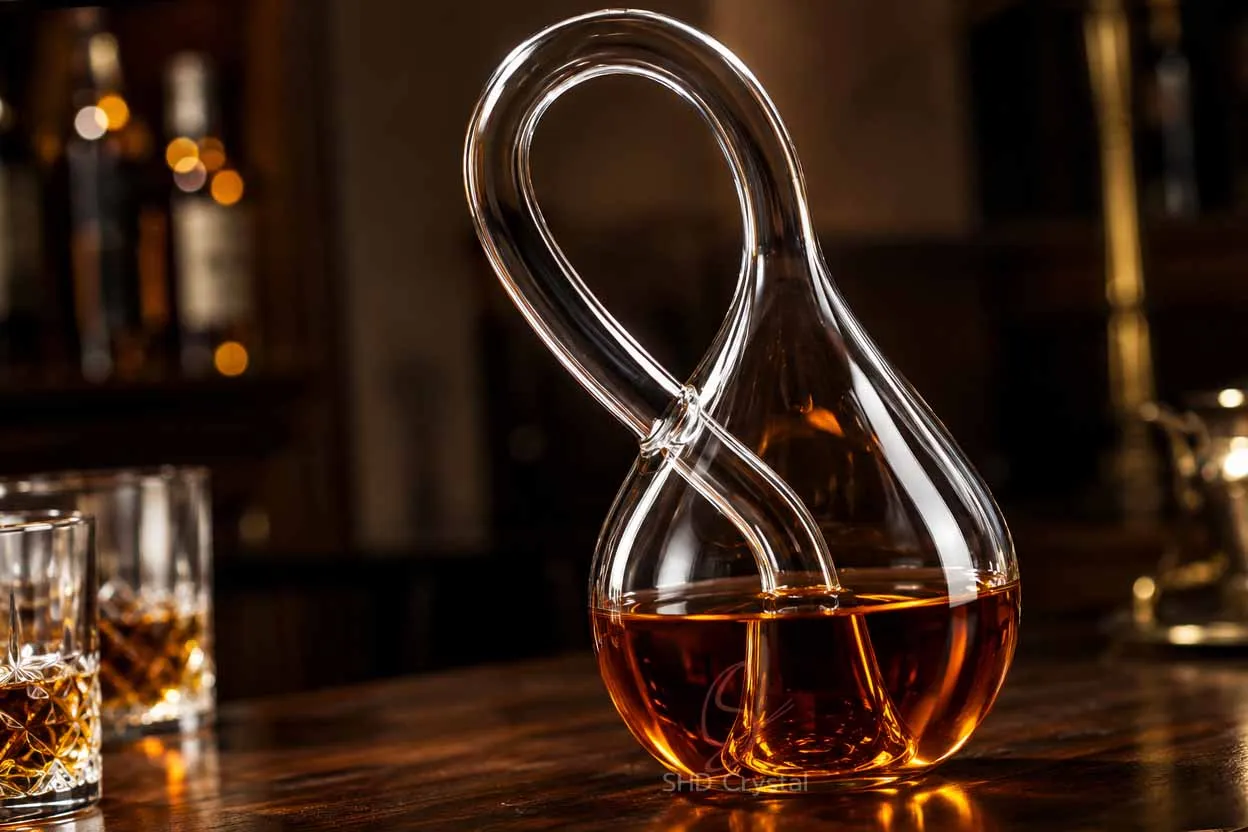
This is where non-standard making becomes necessary. The curve of the body, the angle of the neck, the balance of the handle, and the flow path of the liquid must all be reviewed together. Unlike simple cylindrical glassware, a decanter often needs more shape adjustment during concept development, especially when the form includes asymmetry, sculptural extensions, or decorative relief.
Hand Design and Forming Give the Decanter Its Character
For artistic decanter projects, hand-led development is often the most valuable stage. A sketch may define the personality of the product, but hand shaping, model adjustment, and sample review give it practical form. This is especially true when the product falls into the personalized glassware category, where the buyer wants more than a standard elegant silhouette.
A handcrafted approach allows the team to evaluate how the body volume, neck opening, pouring angle, and decorative details work together. It also helps refine the decanter base design, which is one of the most important structural areas. A beautiful upper form means little if the decanter feels unstable when filled or awkward when lifted.
For SHD Crystal, this kind of project requires close coordination between design review, sample development, forming feasibility, finishing, and packaging. The goal is not simply to make an unusual object. The goal is to turn a creative idea into a workable glass product.
Fun Stories from the Project: An Octopus-Inspired Unique Crystal Decanter
One memorable project involved a unique crystal decanter shaped around an octopus concept. The buyer did not want a standard round body with a decorative pattern. Instead, they wanted the animal form itself to become the structure of the vessel.
In the concept, one octopus tentacle was designed as the handle, giving the user a natural gripping point. Another tentacle was developed into the spout and pouring outlet, which meant the line and thickness of that section had to support both visual drama and liquid flow. The octopus head became the bottle opening, serving as the point where wine or spirits would be filled into the decanter.
This project showed why hand-led adjustment matters in personalized glassware. The shape could not be judged only from the front view. The team needed to review balance, pouring direction, handle comfort, neck opening size, and the decanter base design so the piece would stand securely despite its sculptural silhouette. It was a strong example of how artistic storytelling and practical forming must work together.

What Buyers Should Check in Custom Decanter Projects
When developing a unique crystal decanter, buyers should first confirm the intended use. Is the decanter meant for wine aeration, spirit service, display, gifting, or a collector-style retail item? The answer affects the body size, neck opening, spout design, and overall visual direction.
Second, the decanter base design should be reviewed early. A non-standard body may shift the weight distribution, especially if the project includes a large handle, extended decorative form, or uneven silhouette.
Third, decoration and finishing should match the concept. Some projects look better with clear polished crystal, while others benefit from engraving, frosting, color accents, or mixed surface textures. In personalized glassware development, visual impact should be balanced with production repeatability and packing safety.
FAQs
Q01 | What makes a decanter "unique" in custom development?
A unique decanter usually has a non-standard silhouette, artistic inspiration, or special structural feature that goes beyond ordinary drinkware shapes. It may combine sculptural form with practical pouring function.
Q02 | Why is decanter base design so important?
The base supports balance, stability, and safe table use. In a sculptural decanter, decanter base design becomes even more important because the upper body may be asymmetrical or visually heavy.
Q03 | Is personalized glassware suitable for commercial projects?
Yes. Personalized glassware can work well for hospitality programs, premium gifting, collector pieces, promotional launches, and branded drinkware lines, as long as the design is reviewed carefully for function, forming feasibility, and packaging.
Conclusion
A unique crystal decanter is one of the clearest examples of how glassware can move beyond standard production and become a statement object. Through non-standard making, hand design, and careful forming review, a decanter can express both artistic identity and practical use. From balance to pouring performance, every detail matters.

For brands developing a unique crystal decanter, refining decanter base design, or creating personalized glassware for special projects, SHD Crystal can support concept review, sample development, production coordination, inspection, and packaging preparation.

