


The value of hand-blown glassware comes from the level of manual skill, production control, and design flexibility required to achieve the intended result—not simply from the fact that the glass is handmade.
From a manufacturer's perspective, this distinction matters. A simple hand-blown vessel and a complex sculptural glass product may both be described as handmade, yet the production difficulty behind them can be very different. Understanding that difference helps designers, brands, and buyers evaluate handmade glass more realistically.
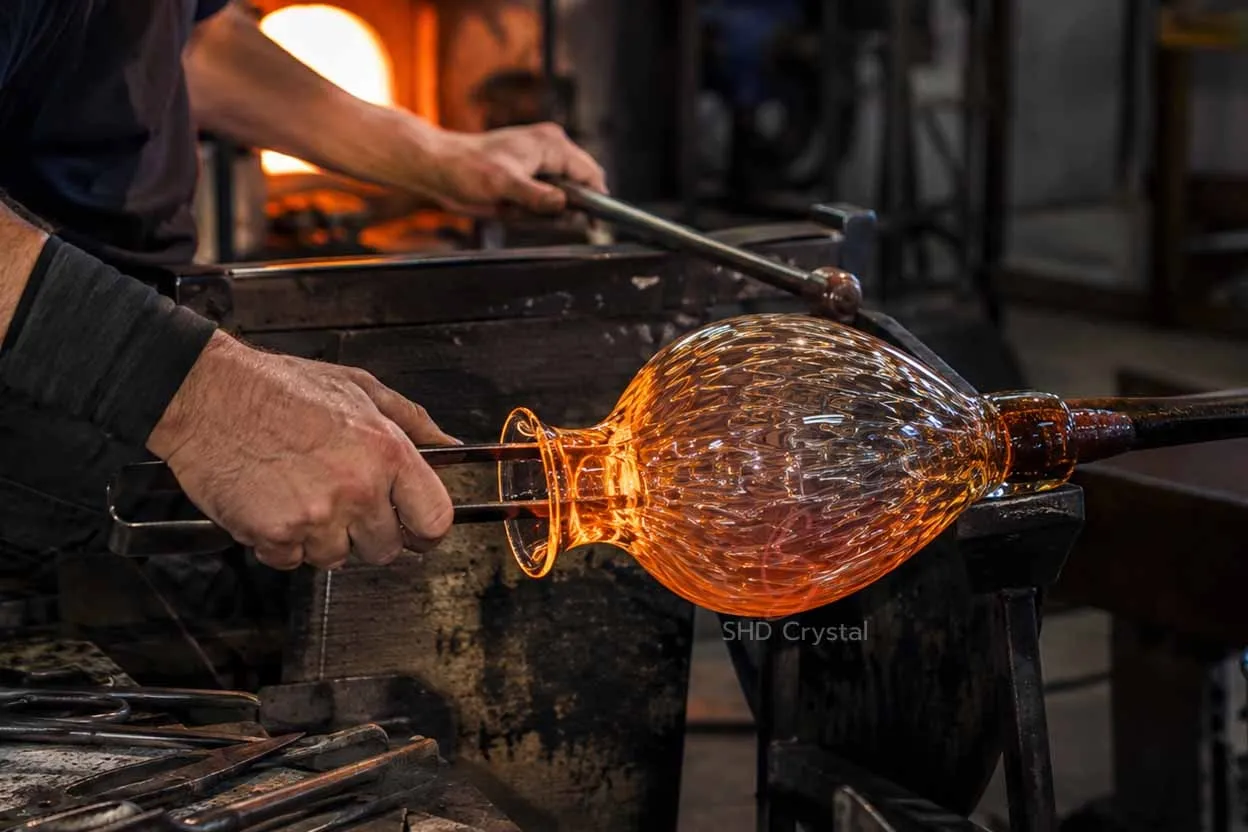
What Determines the Value of Hand-Blown Glassware?
The value of hand-blown glassware is mainly influenced by four factors: forming difficulty, control of proportion and thickness, finishing requirements, and the consistency expected across production. Unlike highly automated forming, hand-blown production relies more heavily on the glassmaker controlling the material while it remains hot and workable. Shape, opening size, body proportion, wall distribution, and decorative details may all require continuous adjustment during forming.
This is where hand-blown glass craftsmanship creates measurable manufacturing value.
The important question is not simply, "Was this made by hand?"
A better question is:
How much manual control was required to produce this design successfully and repeat it across multiple pieces? That difference is especially important in commercial glassware production.
Complex Shapes Require More Than Manual Labor
Handmade value should not be measured by labor time alone. Certain designs are difficult because the glass must maintain a specific proportion while being shaped. Others may involve thick and thin transitions, narrow openings, asymmetrical forms, applied elements, or decorative details that need to be positioned while the glass is still hot.
Even apparently simple designs can demand considerable control. For example, a clean transparent vessel leaves little visual distraction. Changes in wall thickness, profile, symmetry, or base balance can be easier to notice than on a highly textured product.
From a manufacturing standpoint, the real complexity of hand-blown glass craftsmanship often lies in controlling these details consistently rather than simply creating an unusual shape once.
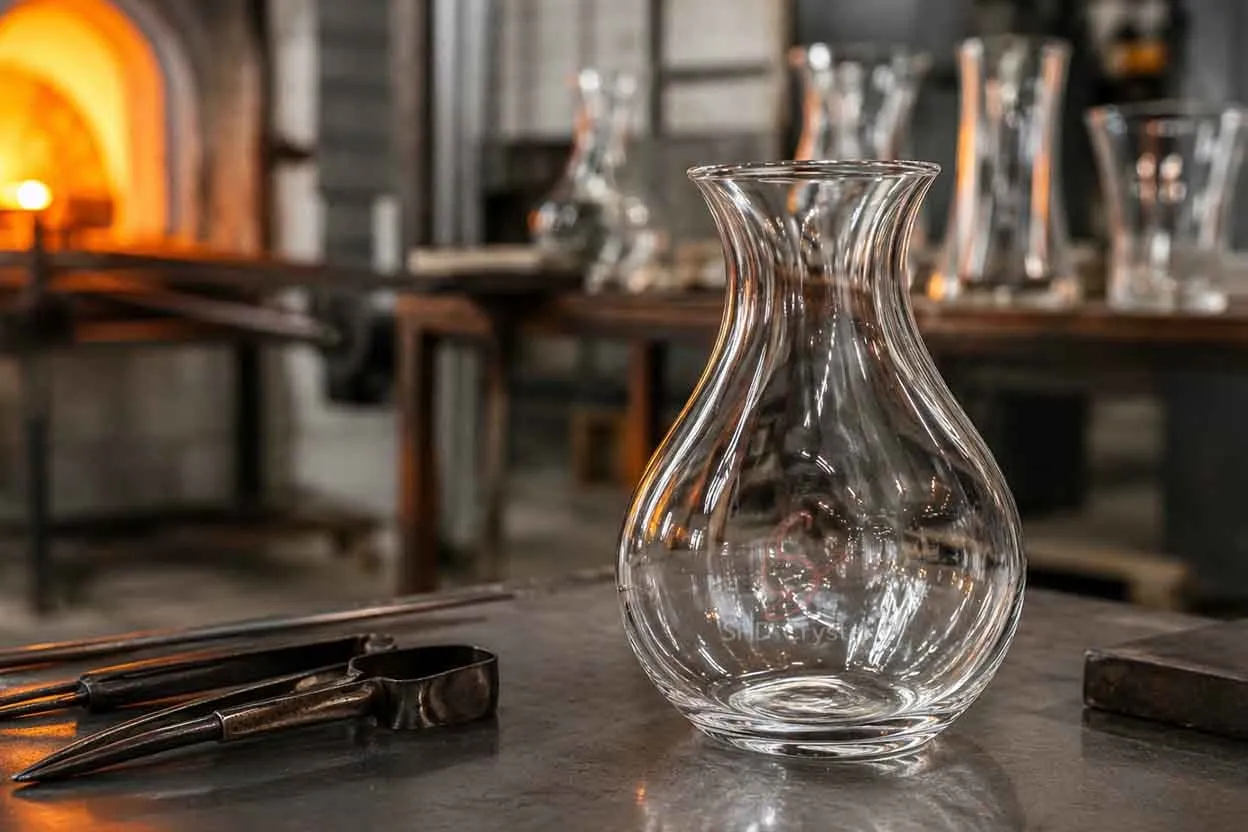
A Good Sample Is Only the Beginning
This is one of the biggest differences between artistic glassmaking and commercial manufacturing. Producing one successful hand-blown piece demonstrates that a design is possible. Producing the same design repeatedly introduces a different challenge.
For a commercial order, manufacturers must consider whether the intended profile, dimensions, functional areas, and visual character can remain within an acceptable range throughout the production batch.
Some variation is expected in handmade glassware. Small differences in dimensions, thickness, bubbles, or surface characteristics may be part of the manufacturing method.
However, handmade variation and uncontrolled defects are not the same thing.
The manufacturing value of hand-blown glass lies partly in preserving handcrafted character while keeping important functional and visual features under control.
This balance becomes particularly important for tableware, barware, decorative collections, and products that must fit other components.
Custom Design Can Increase the Value of Handmade Production
The role of manual production becomes even clearer in custom hand-blown glassware. A custom project may require a particular silhouette, color effect, wall distribution, decorative feature, opening, or visual proportion that is difficult to reproduce through a standardized automated process.
In these situations, hand-blown production offers design flexibility. But greater flexibility also creates more manufacturing decisions. A manufacturer needs to consider not only whether the desired appearance can be achieved, but also whether the design can be reproduced reliably enough for the intended order.
This is why manufacturability should be evaluated during product development rather than after a sample has already been approved. For custom hand-blown glassware, a visually impressive design is not necessarily a production-ready design.
Hand-Blown Does Not Automatically Mean Better
Another important manufacturing principle is that handmade and automated glass production should not be treated as a simple quality ranking. Automated production is often better suited to products where high repeatability, standardized dimensions, and larger-volume production are priorities.
Hand-blown production becomes more relevant when the design depends on manual shaping, distinctive proportions, decorative effects, or greater flexibility during development.
Therefore, the value of hand-blown glassware depends on whether manual production actually contributes something important to the product. If an automated process can achieve the required shape, appearance, consistency, and production objectives efficiently, using hand-blown production purely for a "handmade" label may add little practical value.
From a manufacturer's perspective, the best production method is the one that supports the design and commercial requirements of the project.
How Should Buyers Evaluate Hand-Blown Glassware?
Instead of evaluating handmade glassware only by price or appearance, buyers can ask several practical questions:
-Which parts of the design require manual forming?
-What level of dimensional or visual variation is acceptable?
-Which features must remain consistent across the order?
-Does the product need to fit lids, bases, metal parts, or other components?
-Is hand-blown production necessary for the intended design effect?
These questions help separate genuine manufacturing complexity from the general marketing value associated with the word "handmade." They also create clearer expectations between designers, buyers, and manufacturers before production begins.
Conclusion
The value of hand-blown glassware is not created by handmade production alone. It comes from the combination of skilled forming, design difficulty, production control, finishing requirements, and the ability to reproduce the intended character across a commercial order.
From a manufacturer's perspective, the strongest reason to choose hand-blown production is not simply that it is traditional or handcrafted. Its real value appears when manual control enables a design, form, or visual effect that better serves the product concept.
SHD Crystal works with both automated and handmade glass production according to different product requirements. If you are evaluating the value of hand-blown glassware for a new product or developing custom hand-blown glassware, contact our team to discuss the design and determine an appropriate manufacturing approach.

