


In hospitality environments, a water carafe is judged by more than how it looks on the table. It may be filled, carried, poured, cleared, washed, and stored many times during routine service. For restaurants, hotels, meeting spaces, and catering programs, a water carafe manufacturer therefore needs to consider handling efficiency alongside transparency, proportions, and table presentation.
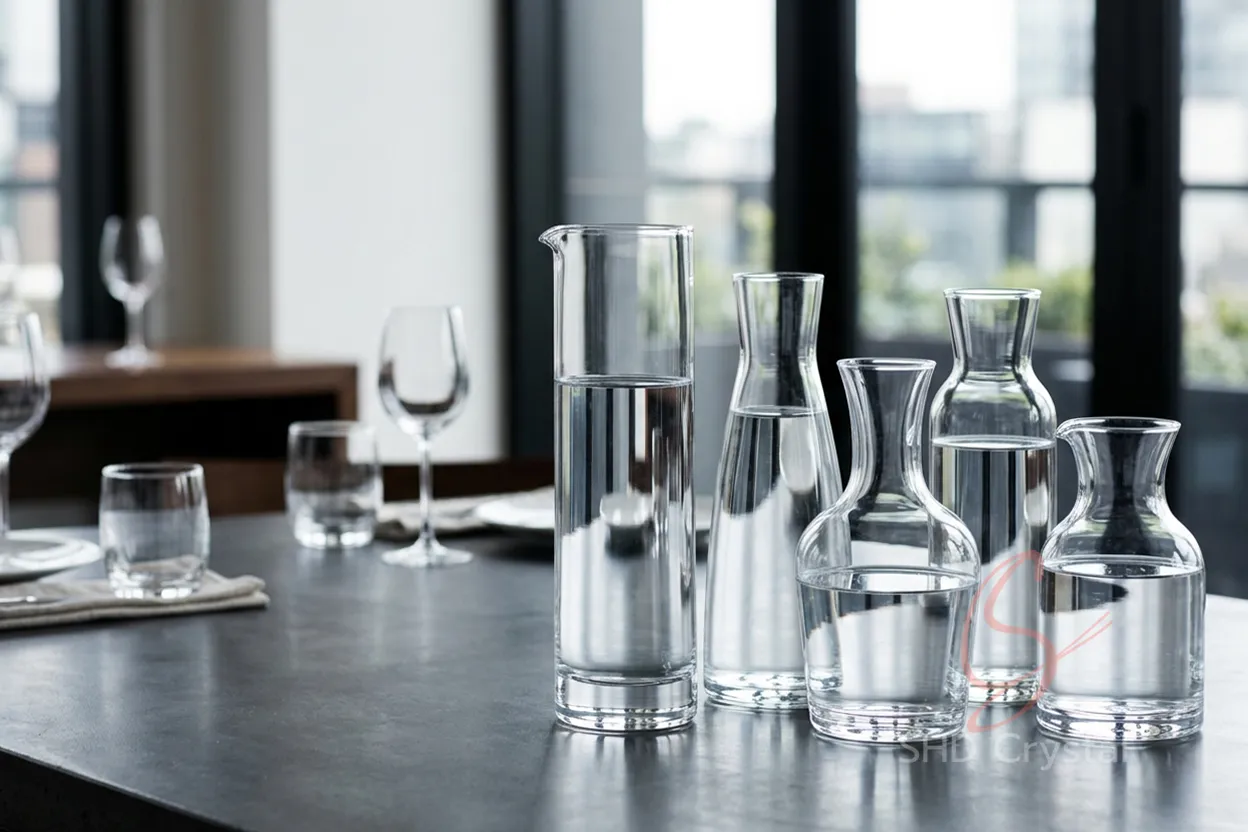
Water Carafe Manufacturer for Hospitality Projects
In hospitality environments, a water carafe is judged by more than how it looks on the table. It may be filled, carried, poured, cleared, washed, and stored many times during routine service. For restaurants, hotels, meeting spaces, and catering programs, a water carafe manufacturer therefore needs to consider handling efficiency alongside transparency, proportions, and table presentation.
For buyers developing custom glass carafes, small structural decisions can influence everyday use. Capacity, body diameter, neck width, filled weight, base stability, and pouring geometry should all reflect the service environment rather than appearance alone.
Water Carafe Manufacturer Design Should Begin With Service Flow
A carafe used in fine dining may remain on the table for long periods, while one used for conference catering may move repeatedly between filling stations and guest tables. These different workflows influence the most practical capacity, body shape, neck width, and overall weight.
A glass carafe supplier should therefore understand the intended service environment before dimensions are finalized. A larger capacity may reduce refill frequency, but it also increases filled weight. A narrow body can save table space, while an opening that is too narrow may make filling and cleaning less convenient. Good hospitality glassware usually solves several of these requirements at the same time.
Pouring Geometry Deserves More Attention Than Decoration
The relationship between the neck, rim, body, and center of gravity affects pouring comfort. If the body becomes too heavy relative to the neck, staff may need more wrist movement to control the pour. An unstable or poorly balanced base creates another problem during busy table service.
For custom glass carafes, the preferred proportion depends on both capacity and expected handling frequency. A water carafe manufacturer should therefore review the vessel when filled, because the weight of water can change its balance considerably compared with an empty sample. This is also why ergonomics should not be judged only from drawings or product photography.
Project Experience Reveals Issues Drawings Cannot Show
In practical hospitality projects, the first physical sample often reveals details that are difficult to judge from a drawing. A carafe may look balanced when empty but feel heavier than expected once filled. In another situation, an elegant narrow opening may make everyday cleaning less convenient for restaurant or hotel staff.
During development, these issues can often be improved through small adjustments to the neck proportion, shoulder curve, body diameter, or base weight without changing the overall design concept. For custom glass carafes, evaluating pouring comfort, filled balance, cleaning access, and storage space during sampling helps reduce operational problems before repeat production begins.
Glass Distribution Affects Weight and Durability
Glass thickness should not be treated as a simple indicator of quality. Excessive thickness can add unnecessary weight, while uneven glass distribution can affect balance, appearance, and cooling behavior.
During forming, glass temperature, material distribution, mold condition, and annealing need consistent control. A reliable glass carafe supplier should pay particular attention to the transition between the base, body, shoulder, and neck because these areas may cool differently.
For hospitality programs using many carafes together, repeatability also matters. Similar weight, rim shape, base stability, and overall proportions help create a more consistent service experience across a table setting.
Cleaning and Storage Create Hidden Design Constraints
Highly sculptural carafes may look distinctive but can complicate daily operations. Narrow openings can restrict cleaning access, while very wide bases may use excessive space in dishwashing racks, storage shelves, or serving trays.
For this reason, custom glass carafes intended for commercial hospitality should be reviewed against real cleaning and storage routines whenever possible. A water carafe manufacturer can often adjust shoulder curves, neck proportions, or base diameter while preserving the original visual character.
These practical considerations are especially important for hotel groups, restaurant programs, and other projects where the same glassware may be used repeatedly.
Repeat Orders Should Be Considered From the Beginning
Commercial glassware eventually requires replacement. A hospitality project should therefore consider whether tooling, dimensional references, finishing standards, and approved samples can support future replenishment. A dependable glass carafe supplier should help define the features that matter most for repeat production, such as capacity, overall height, base stability, rim shape, and decoration position. This becomes particularly important when the carafes belong to a coordinated tableware collection.
Conclusion
A reliable water carafe manufacturer connects vessel design with the realities of pouring, carrying, washing, storage, and replacement. Capacity, balance, glass distribution, annealing control, and production consistency all influence whether a carafe remains practical throughout repeated hospitality service.
Developing Carafes Around Real Hospitality Needs
SHD Crystal supports custom glass carafes through proportion review, mold development, sampling, forming, finishing, inspection, and repeat production. As a glass carafe supplier, SHD Crystal works with hospitality and tableware projects to balance visual design with practical service requirements. Early discussion with a water carafe manufacturer about capacity, handling, cleaning, storage, and target quantity can help create a more workable product specification.

