


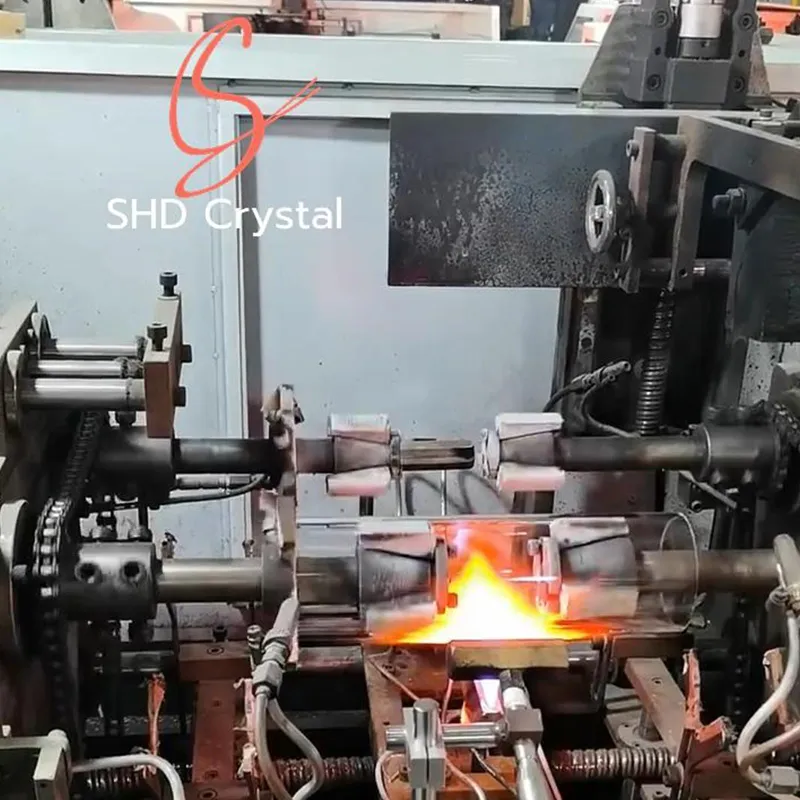
Glass Flame Forming with Localized Thermal Shaping
This footage shows glass flame forming, a different processing method from the mold-based bottle and jar forming seen on conventional container production lines.
The glass component is held horizontally by the equipment and rotated while burners apply concentrated heat to a specific area. As the temperature rises, the heated glass begins to glow orange-red, indicating that the targeted section has softened sufficiently for further shaping.
Rotation is particularly important during glass flame working. By continuously turning the component while heat is applied, the equipment can expose the circumference more evenly to the flame while mechanical tooling controls the shape of the softened area.
Rather than reheating and reshaping the entire glass body, this type of glass thermal forming concentrates on a localized section. It can therefore be used when particular structural areas of a glass component require additional shaping after the initial body has already been formed.
The close-up provides a clear view of the relationship between flame, rotation, and glass component shaping, demonstrating a more localized thermal processing approach than conventional full-body mold forming.

